Research and exhibitions on the origins of everyday working life
Work shapes more of a human life than almost anything else. Nariway is an independent research institution dedicated to recovering where that arrangement came from and putting it in front of the public.
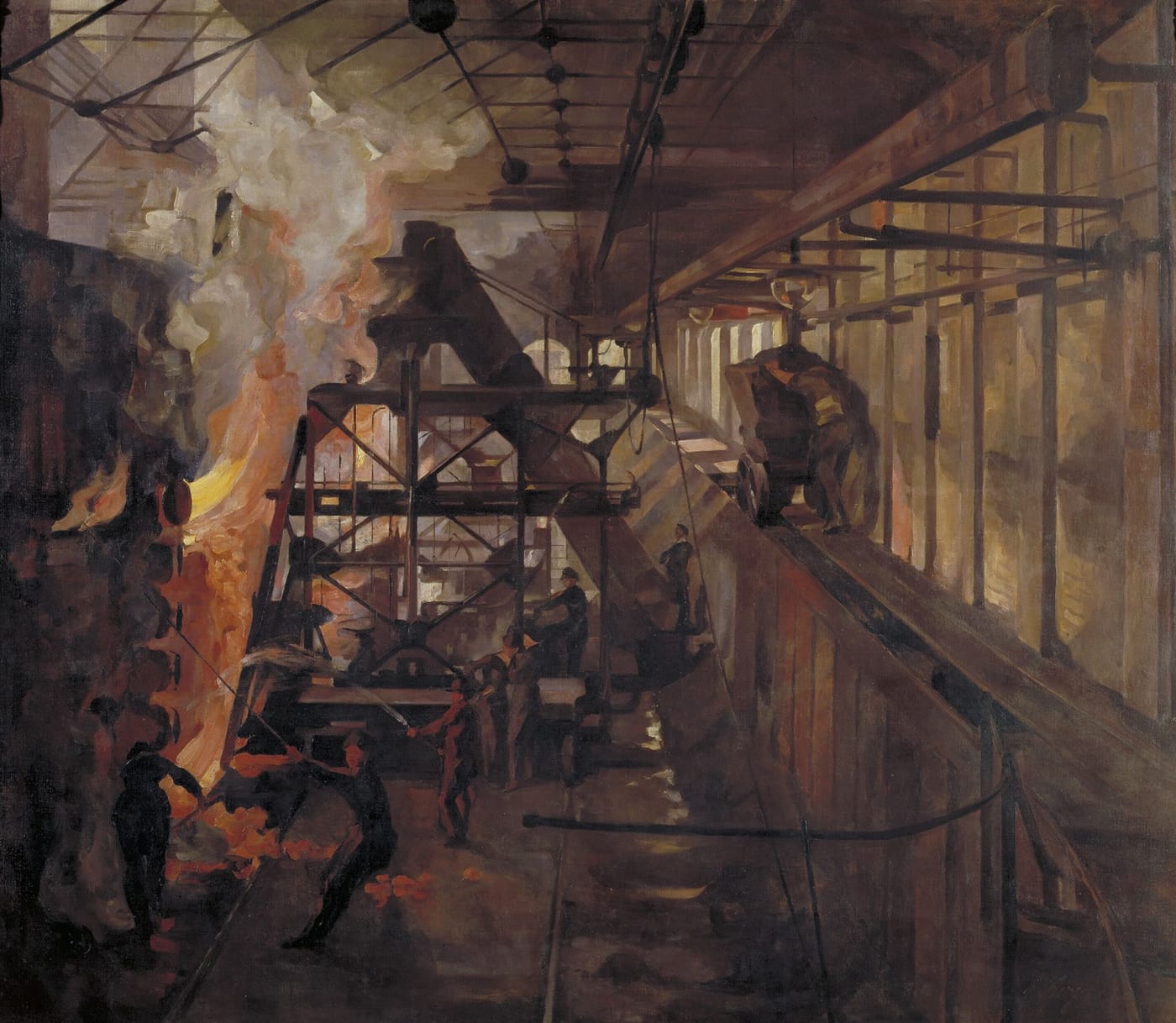
Anna Airy, Women Working in a Gas Retort House, 1918
From the archive
Etymology
Feierabend
Germans have a word for the moment the workday ends. It means celebration evening.
Case Study
Songlines
Aboriginal Australians coordinated travel, trade, and ceremony across a continent for tens of thousands of years, with no central authority of any kind.
Invention
Computer
It was a job title before it was a machine. English used the word for a person from 1613, and NASA still employed human computers in the 1960s.
The archive holds nearly 600 entries on the words, practices, and systems of working life. Every exhibition is drawn from it, and all of it is free to read.
Etymologies
What did the word mean before it meant this?
Inventions
When did this become normal?
Thinkers
Who saw it first?
Case Studies
What has already worked elsewhere?
Exhibition in development
Extinct Professions
Fossils of the working world
Every generation believes its own jobs are permanent. A lamplighter tended several hundred street lamps a shift, walking the route at dusk and again at dawn, until electric lighting arrived in the 1880s and ended the trade within a generation. The switchboard operator, ice cutter, and elevator operator followed, and the research keeps finding more.
The exhibition gathers the tools, uniforms, and photographs these workers left behind. Computer was a job title before it was a machine, and the people who held it were mostly women.
- Objects
- A cord switchboard, a lamplighter's pole, ice tongs, a typing pool desk, NASA human-computer photographs
- Audience
- School groups, families, anyone who has held a job
- Scale
- A single wall to a full gallery
For museums, libraries, and university galleries
Exhibitions are developed with the institution that presents them.
Nariway originates exhibitions from its own research. The archive supplies the premise, object list, wall text, and education material. The presenting institution brings its gallery, its fabricators, and its audience, so that every exhibition takes the shape of the place that hosts it.
Discuss an exhibition