Gallery
Work as the subject
The gallery arranges works of art in which work is the subject, from antiquity to the present. For almost the entire span, the works show fields, forges, looms, kitchens, and markets. Desks, offices, and screens appear only at the end.
I. Antiquity
5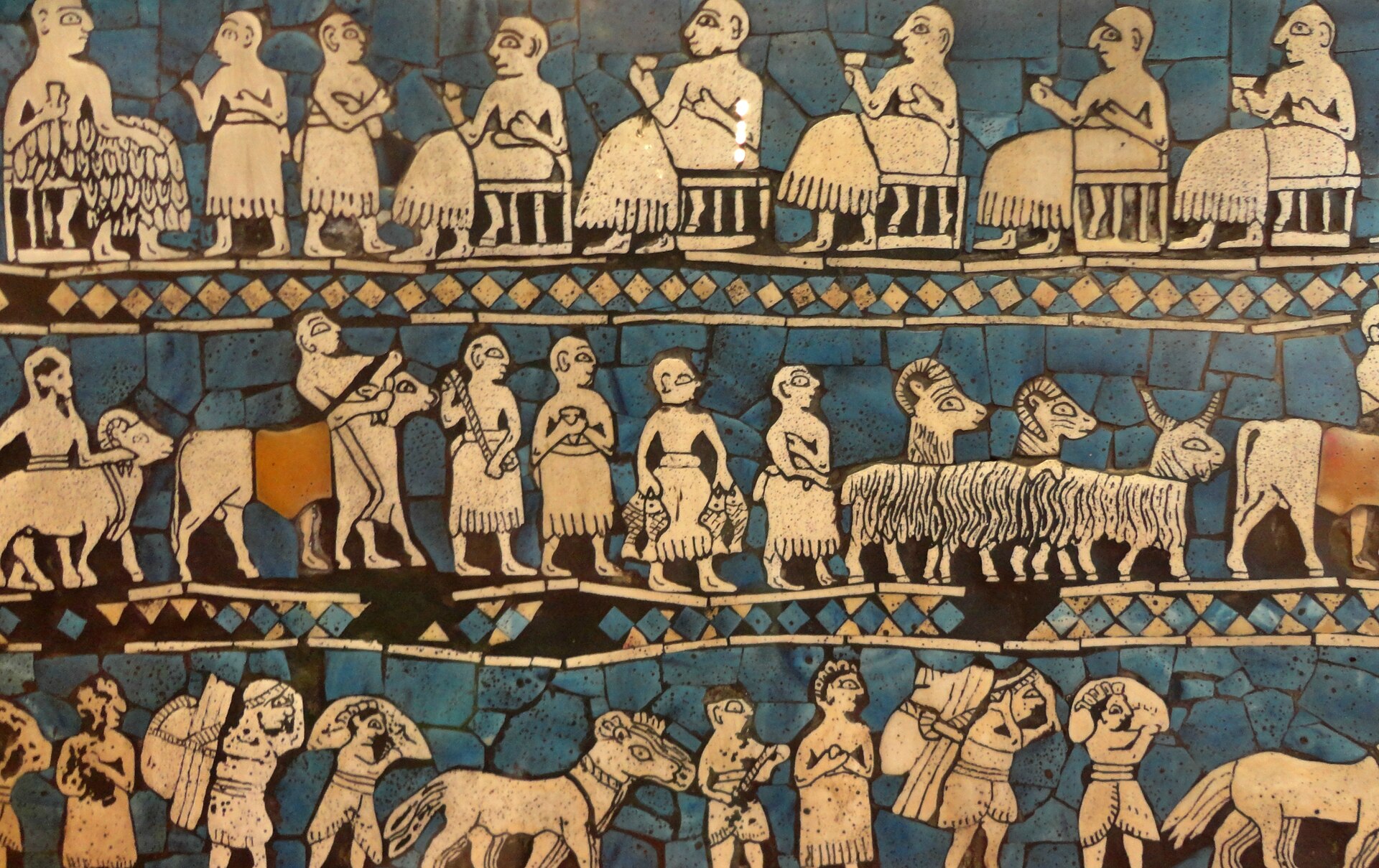
Antiquity · Mesopotamia
Standard of Ur, peace panel (farming and tribute)
Unknown, c. 2600 BCE
Rows of laborers bringing produce and animals up to the king, the earliest picture of an economy delivering its surplus.
Standard of Ur (Peace panel), British Museum; photo Juan Carlos Fonseca Mata, via Wikimedia Commons (CC BY-SA 4.0)

Antiquity · Egypt
Seated Scribe
Unknown, c. 2500 BCE
The office worker of antiquity, alert with a papyrus on his lap, four and a half thousand years before the cubicle.
Louvre (E 3023); photo Shonagon, via Wikimedia Commons (CC0)
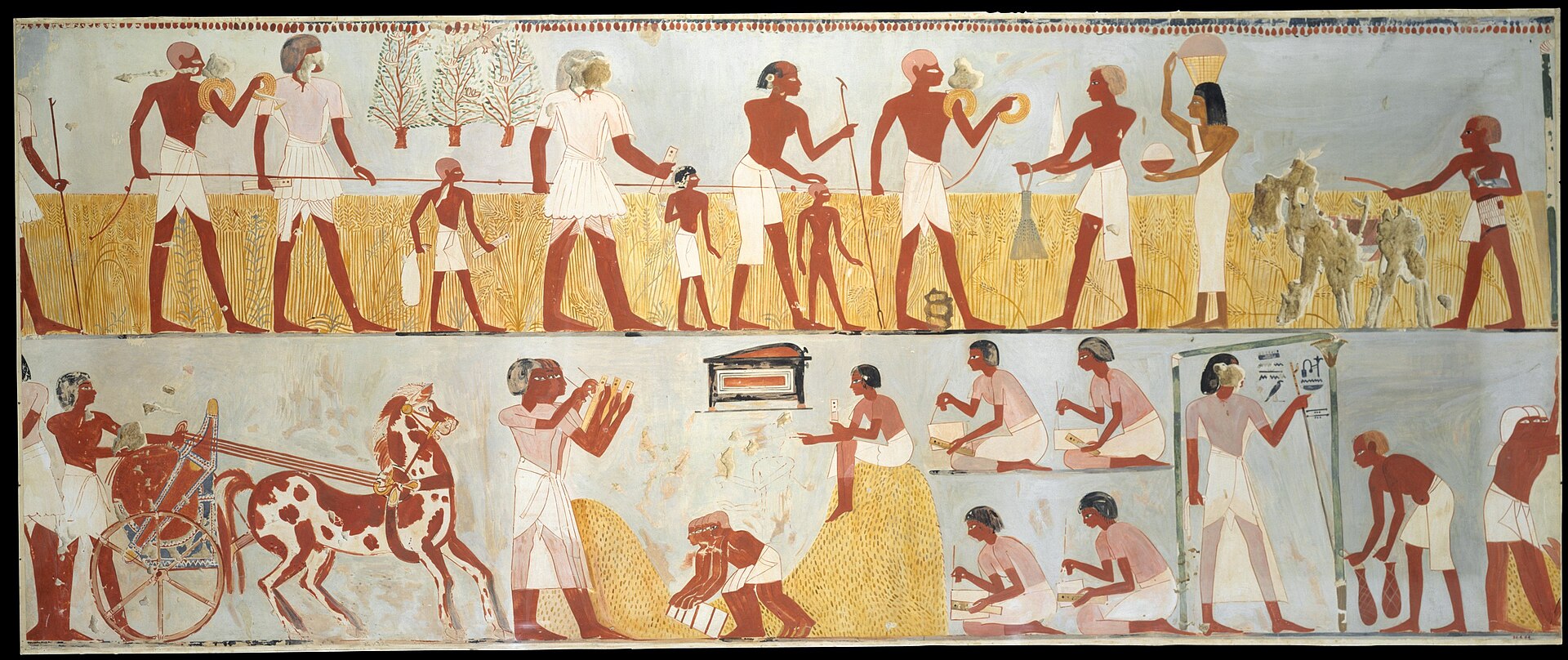
Antiquity · Egypt
Agricultural cycle (plowing, harvest, surveying)
Unknown (Tomb of Menna), c. 1400 BCE
The state's fields, surveyed and taxed, painted so the dead man could keep supervising the harvest.
Facsimile by Charles K. Wilkinson; The Metropolitan Museum of Art
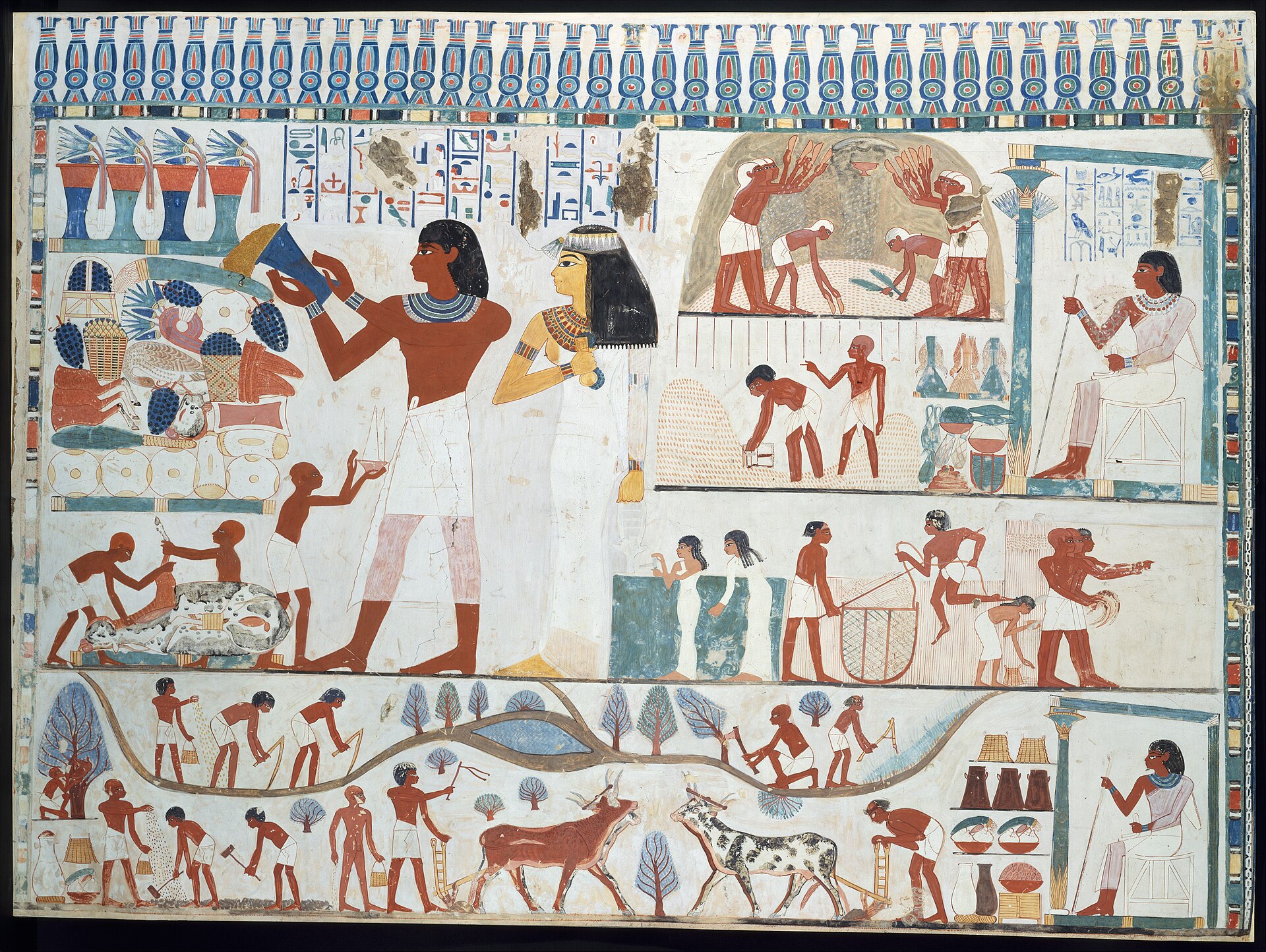
Antiquity · Egypt
Harvest, winemaking, fowling
Unknown (Tomb of Nakht), c. 1400 BCE
Field and vineyard work recorded on a scribe's tomb so the labor would continue in the afterlife.
Facsimile by Norman de Garis Davies; The Metropolitan Museum of Art
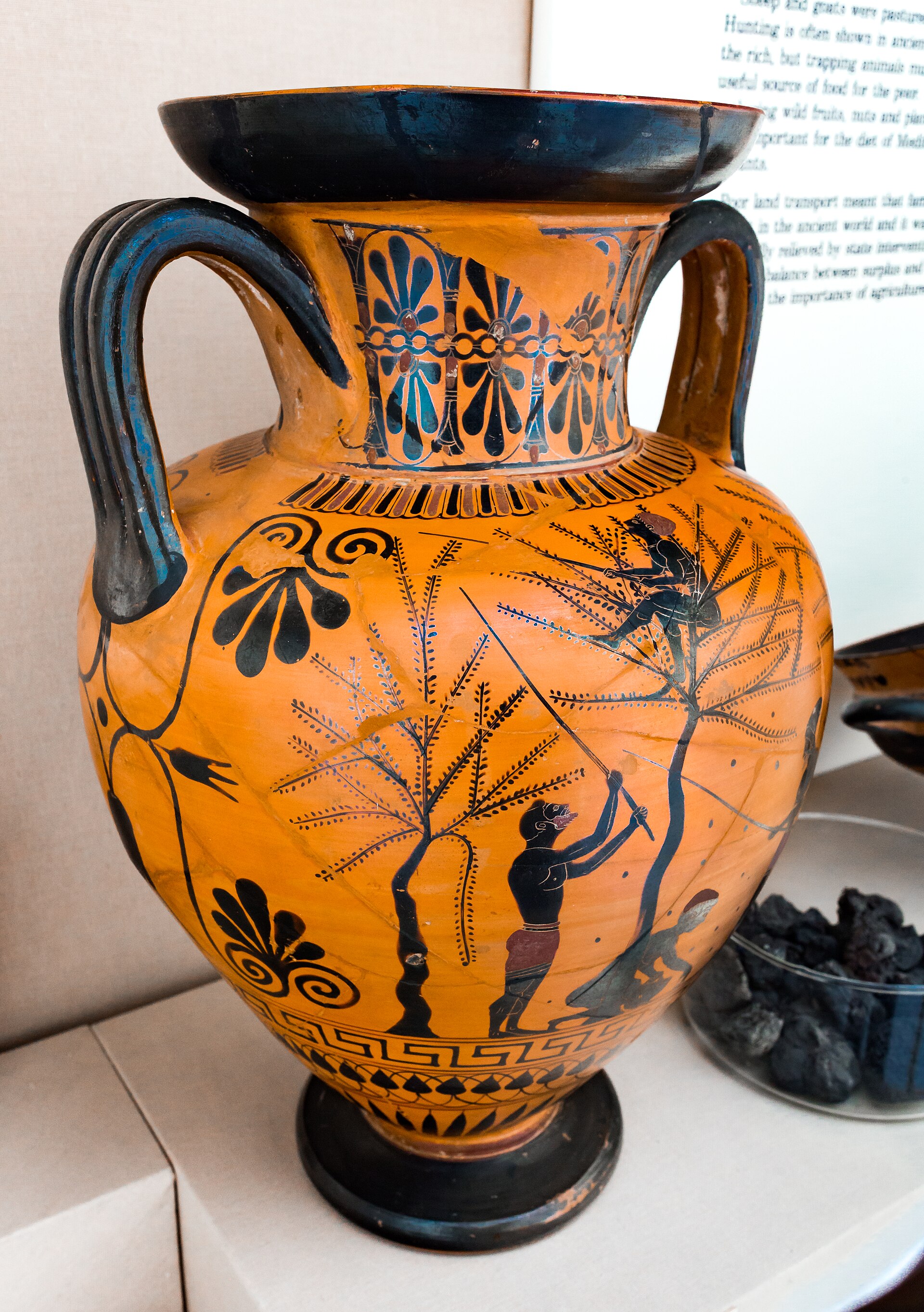
Antiquity · Greece
Attic vase, olive harvest
Unknown, c. 520 BCE
Men beating olives from the trees, the ordinary autumn work of Attica painted on a pot made to hold its oil.
Antimenes Painter, olive-gathering amphora, British Museum B226 (1837,0609.42); photo ArchaiOptix, via Wikimedia Commons (CC BY-SA 4.0)
II. Medieval
8
Medieval · China
Court Ladies Preparing Newly Woven Silk
Attributed to Emperor Huizong (after Zhang Xuan), early 12th c.
The handscroll shows court women pounding, sewing and ironing lengths of newly woven silk.
Attributed to Emperor Huizong (after Zhang Xuan), Court Ladies Preparing Newly Woven Silk, early 12th c. Museum of Fine Arts, Boston. Public domain via Wikimedia Commons.
Medieval · Europe
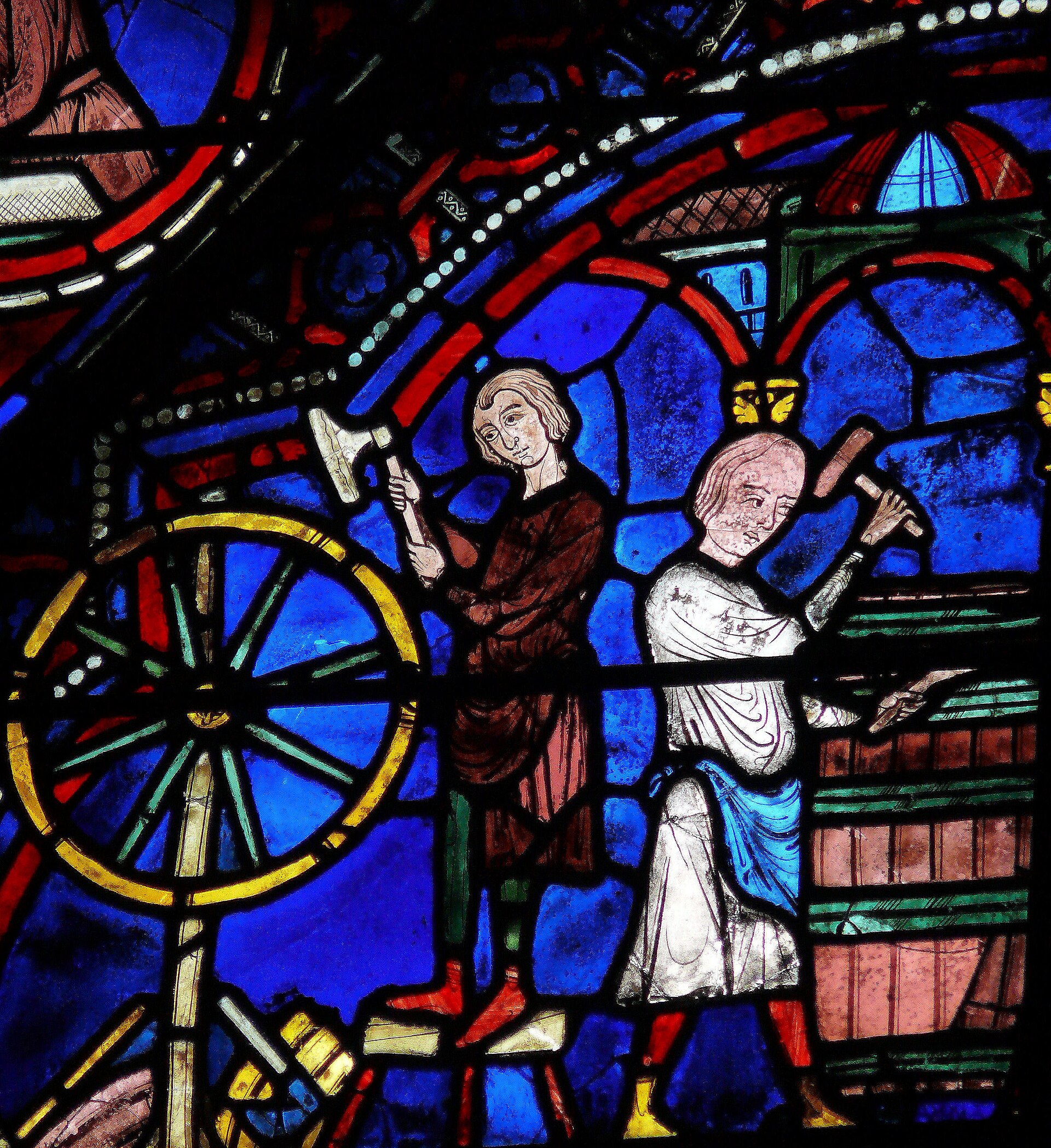
Chartres Cathedral trade windows (bakers, wheelwrights, furriers)
Unknown, c. 1200-25
The guilds paid for the windows and signed them, so the cathedral records not only saints but the shoemakers and wheelwrights who paid the bill.
Photo: MOSSOT, via Wikimedia Commons (CC BY-SA 3.0)
Medieval · China
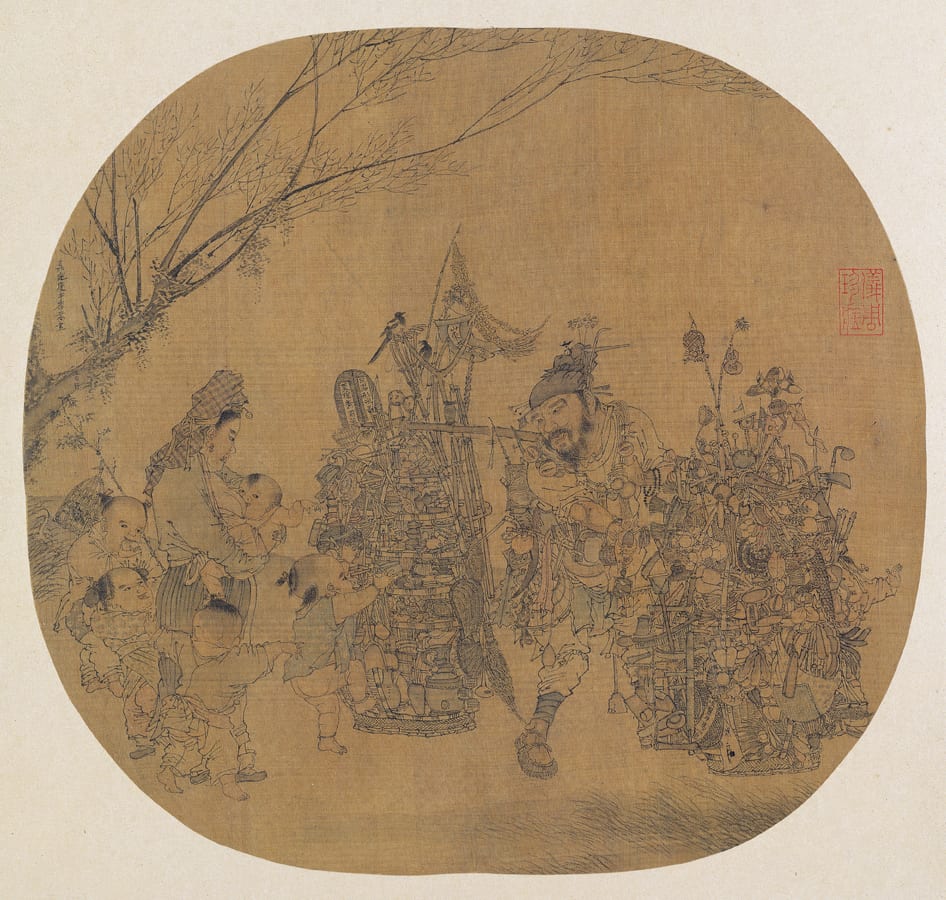
The Knickknack Peddler
Li Song, c. 1210
A peddler laden with wares is surrounded by children and a mother in a village setting.
Li Song, The Knickknack Peddler, c. 1210. National Palace Museum, Taipei. Public domain via Wikimedia Commons.
Medieval · China
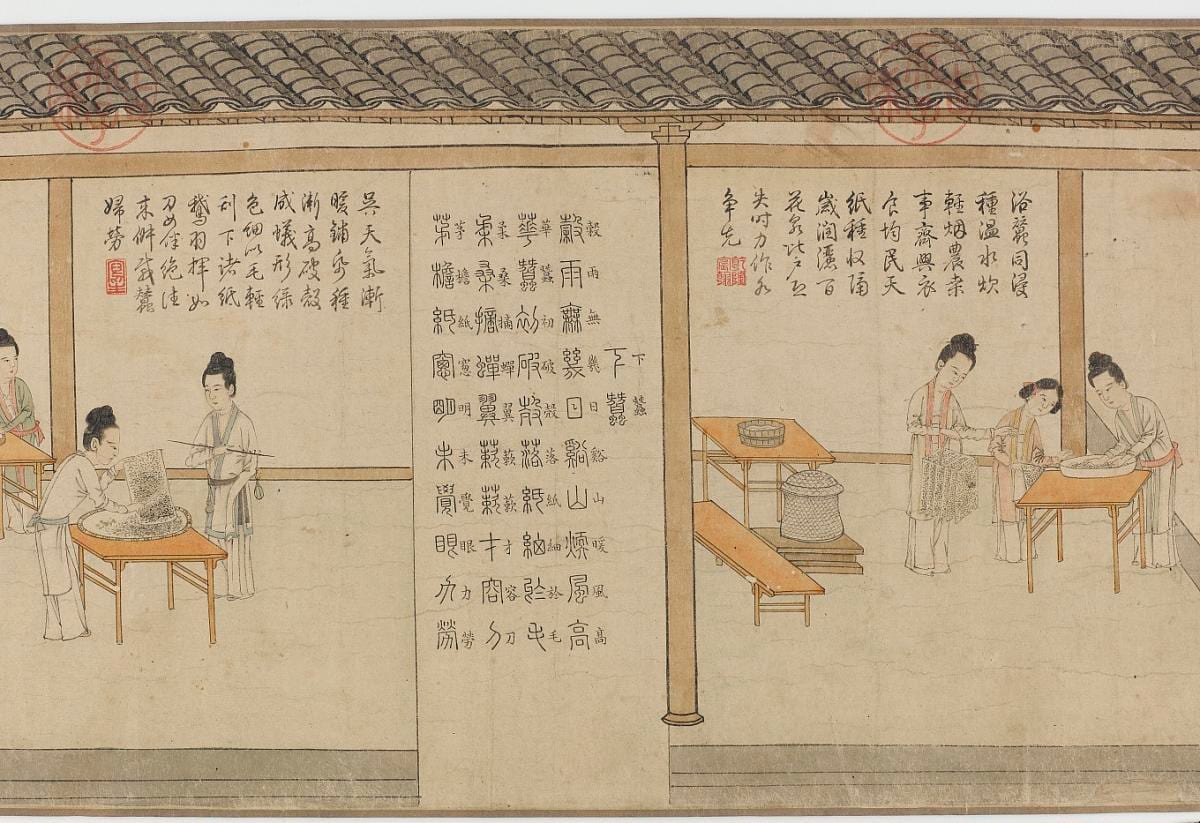
Pictures of Tilling and Weaving (silk weaving)
Attributed to Cheng Qi (after Lou Shou), 13th c.
The scroll copies Lou Shou's images and depicts the successive steps of sericulture and silk weaving.
Attributed to Cheng Qi (after Lou Shou), Pictures of Tilling and Weaving (silk weaving), 13th c. Freer Gallery of Art, Smithsonian. Public domain via National Museum of Asian Art.
Medieval · Europe
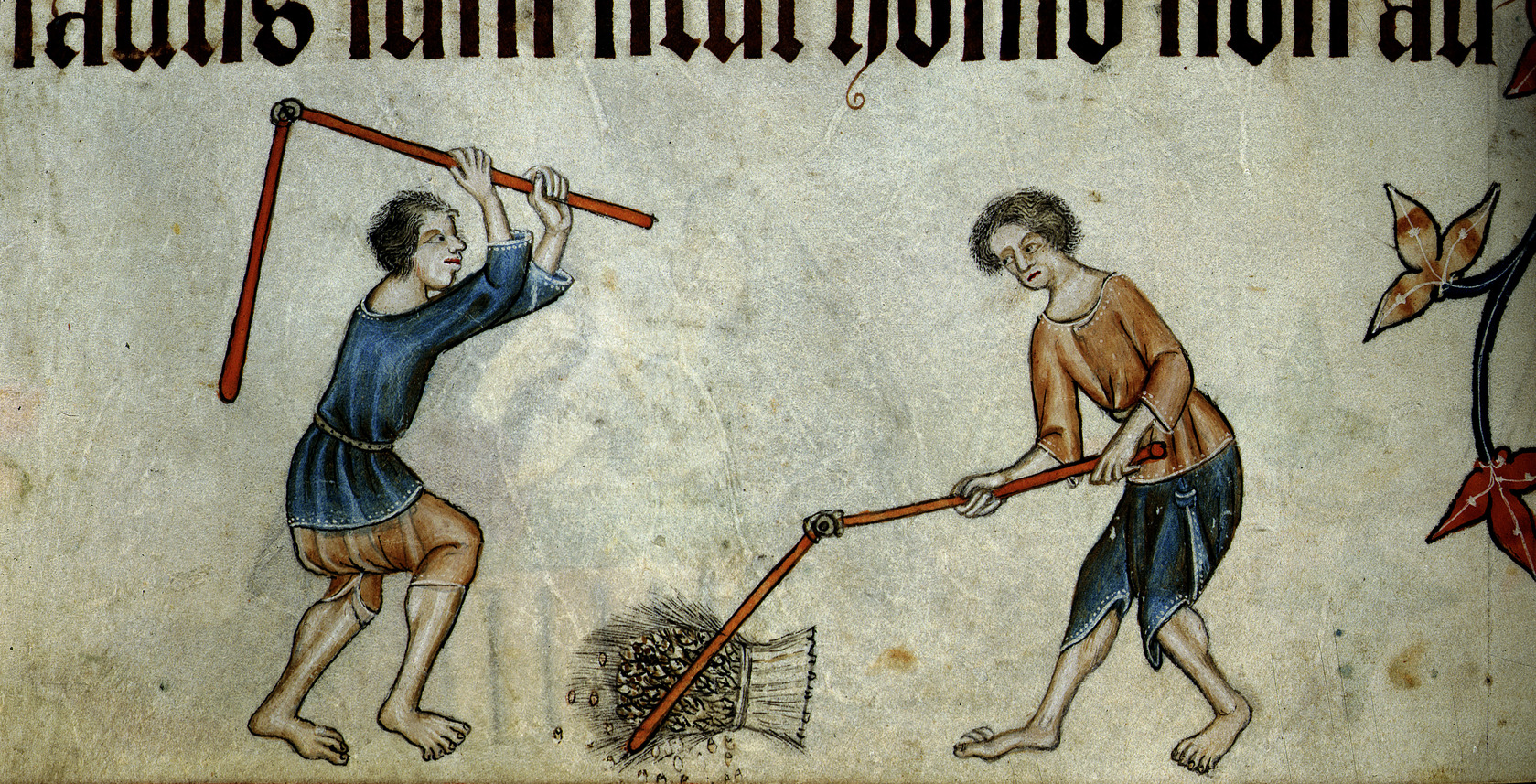
The Luttrell Psalter (plowing, harrowing, harvest)
Unknown, c. 1325-40
In the margins of a psalter, an English lord had every stage of the farming year drawn, the peasants who made his wealth.
British Library (Add MS 42130), via Wikimedia Commons (CC0)
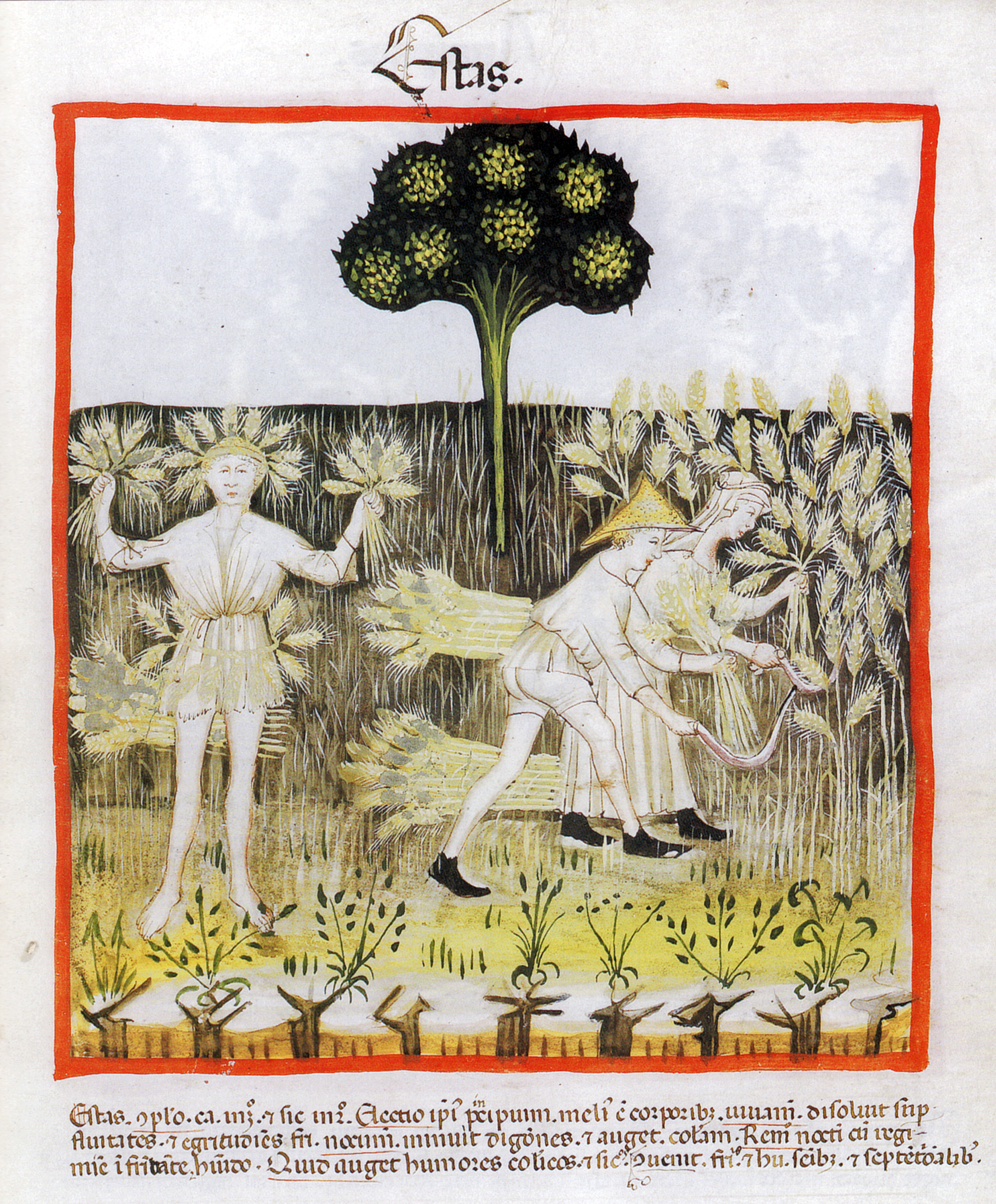
Medieval · Europe
Tacuinum Sanitatis (harvest, food and textile work)
Unknown, late 14th c.
A health handbook that had to show where food and cloth came from, so it became a catalogue of everyday work.
Tacuinum Sanitatis (BnF, Paris), via Wikimedia Commons
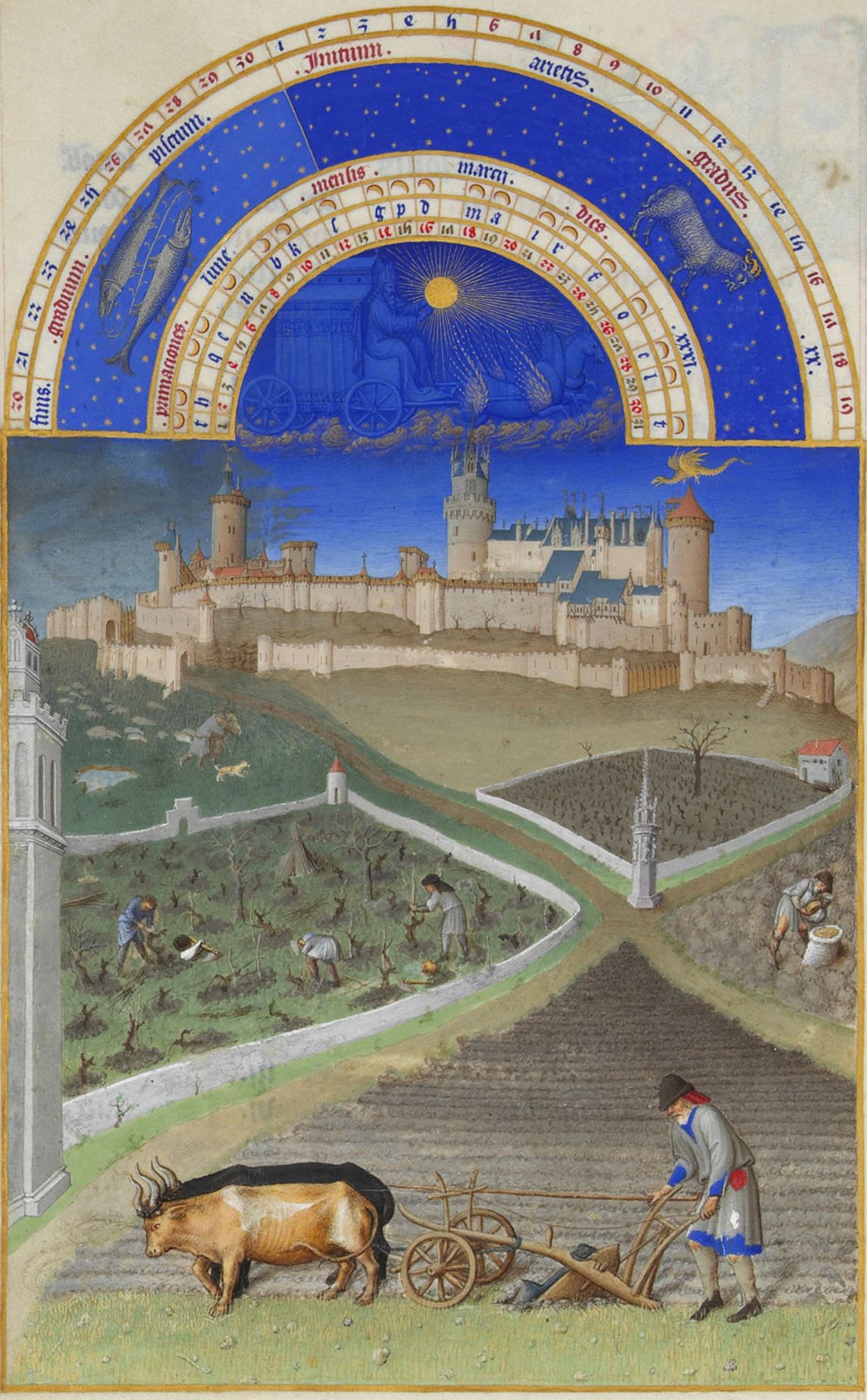
Medieval · Europe
Tres Riches Heures, March / June / October (plowing, haymaking, sowing)
Limbourg Brothers, c. 1416
The peasants' year set beneath the duke's castles, the work that paid for the gold in the margins.
Musée Condé, Chantilly, via Wikimedia Commons
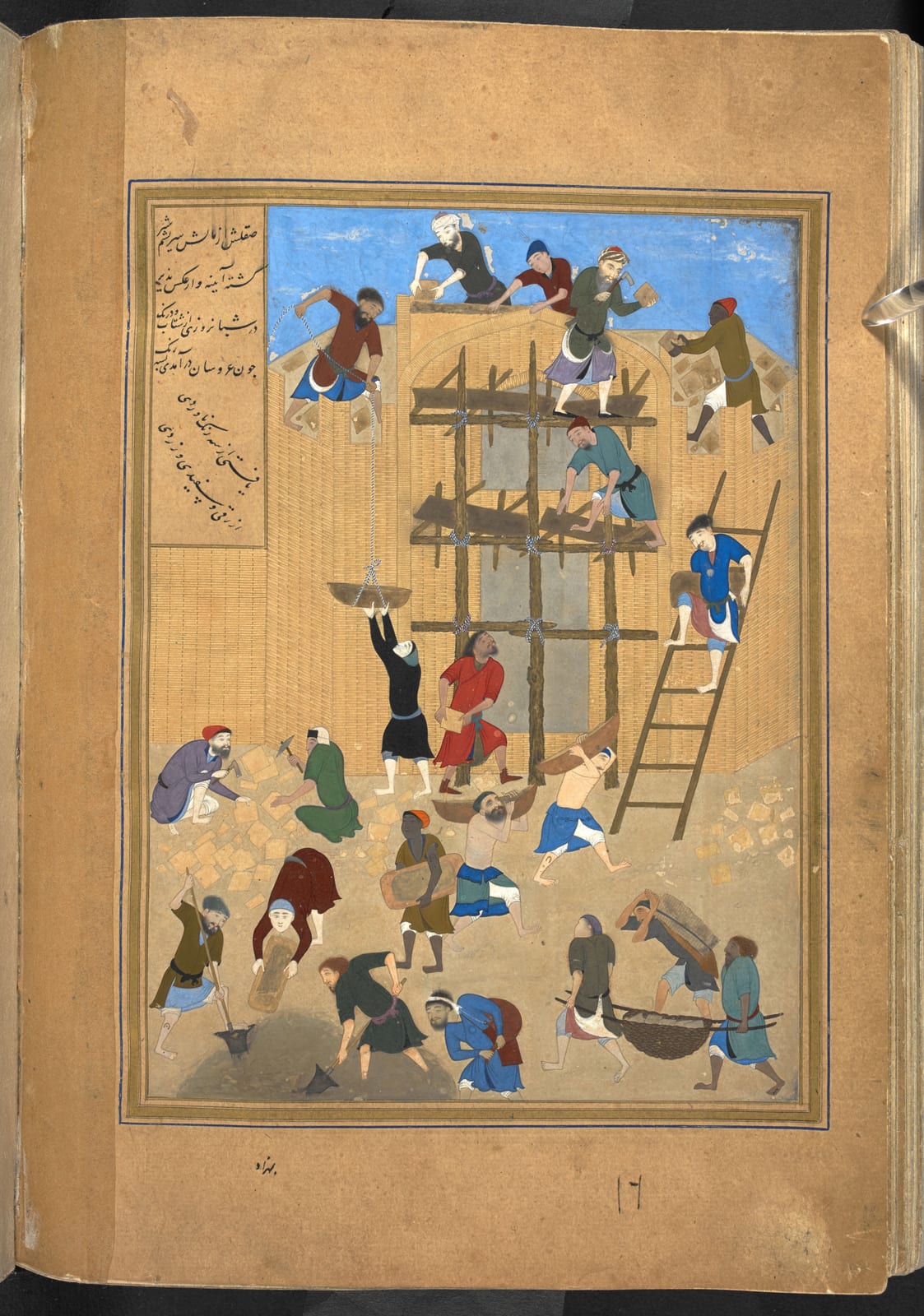
Medieval · Persia & the Islamic world
Construction of a palace, Persian manuscript
Unknown, 15th c.
Brickmakers, carriers, and masons raising a royal building, the labor drawn as carefully as the prince who ordered it.
British Library (Or. 6810), via Wikimedia Commons
III. Renaissance & Early Modern
13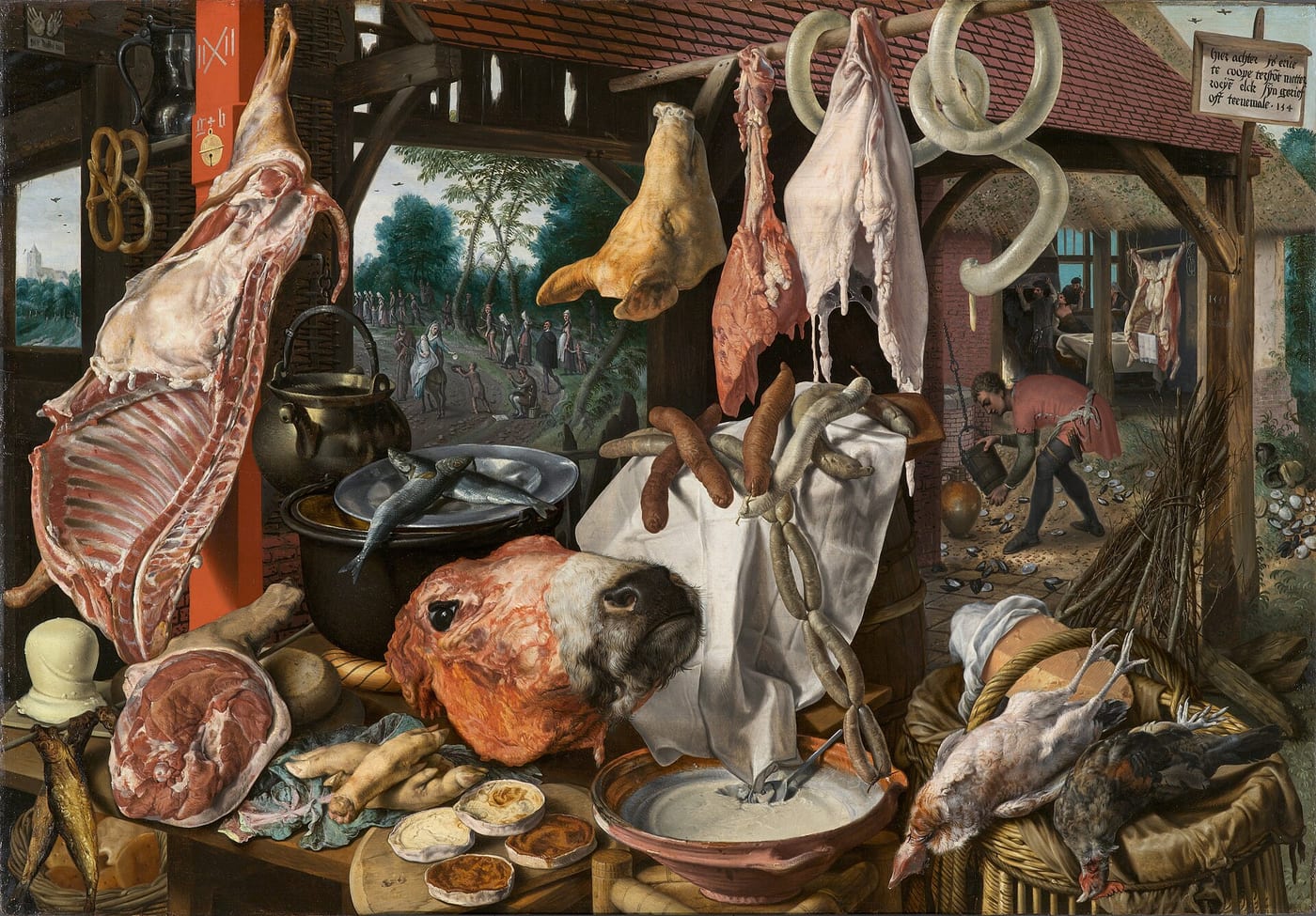
Renaissance & Early Modern · Europe
The Butcher's Stall
Pieter Aertsen, 1551
A butcher's stall is piled with cuts of meat and slaughtered animals, showing the trade and produce of the meat market.
Pieter Aertsen, The Butcher's Stall, 1551. Uppsala University. Public domain via Wikimedia Commons.
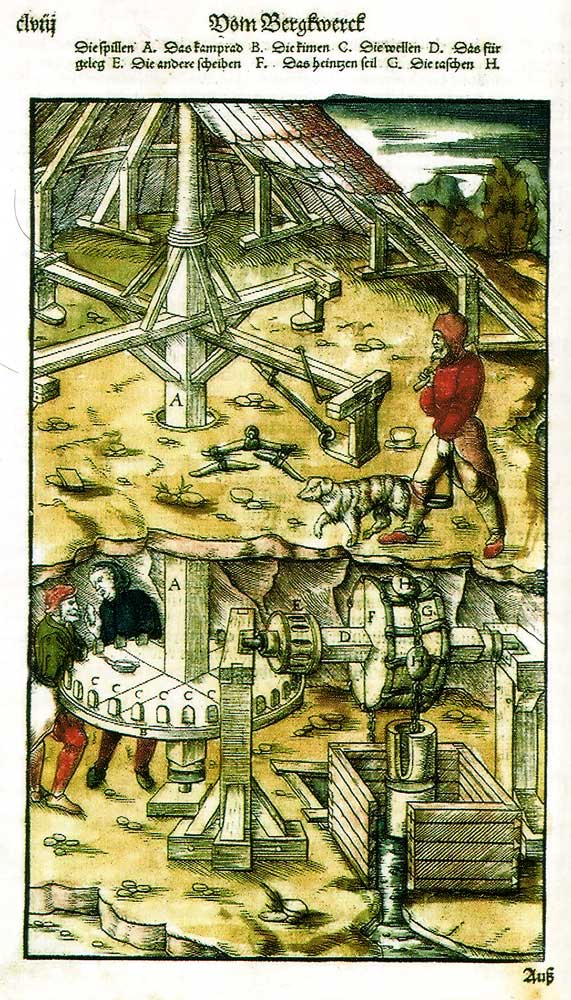
Renaissance & Early Modern · Europe
De re metallica (mining and smelting)
Georgius Agricola, 1556
The first technical manual of mining, its woodcuts showing every machine and every miner two centuries before the Industrial Revolution.
Georgius Agricola, De re metallica (1556), via Wikimedia Commons
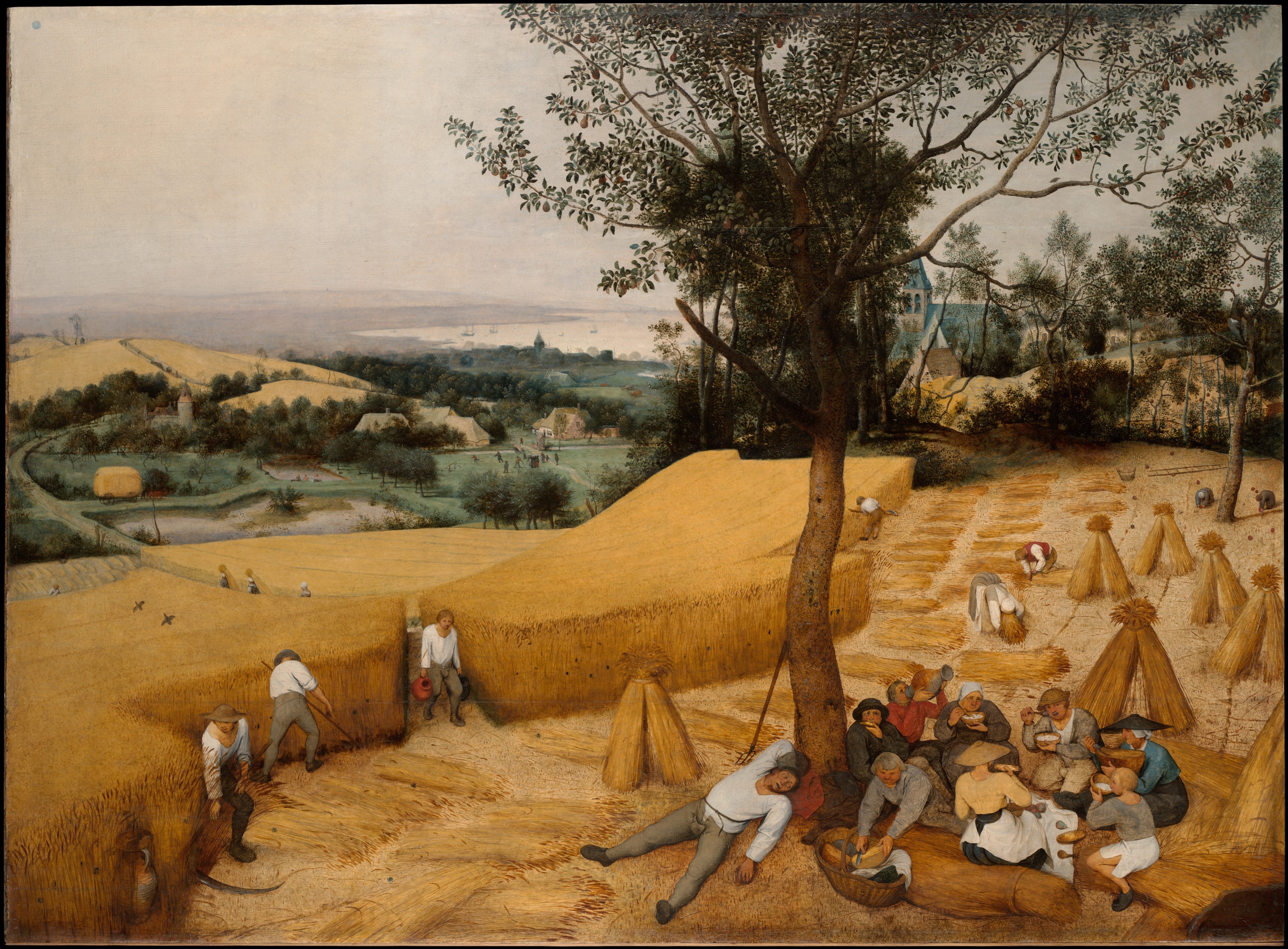
Renaissance & Early Modern · Europe
The Harvesters
Pieter Bruegel the Elder, 1565
The wheat field is the workplace of nearly everyone alive in 1565, and the meal under the tree is the whole of the lunch break.
In The Curse and the Calling
The Metropolitan Museum of Art
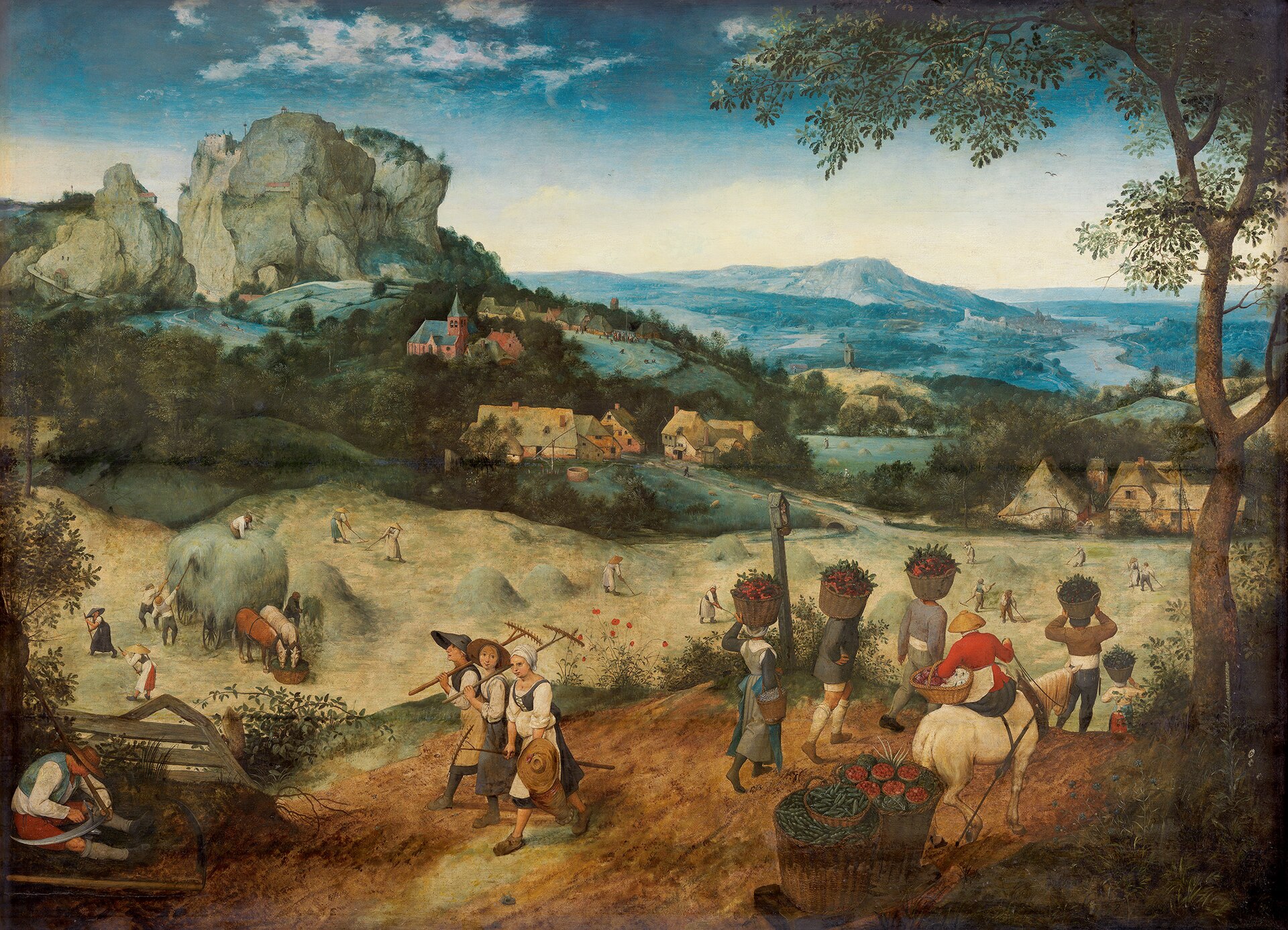
Renaissance & Early Modern · Europe
Haymaking (The Hay Harvest)
Pieter Bruegel the Elder, 1565
The summer half of the peasant year, scythes and rakes and baskets moving through a green valley.
Lobkowicz Collections, Prague, via Wikimedia Commons
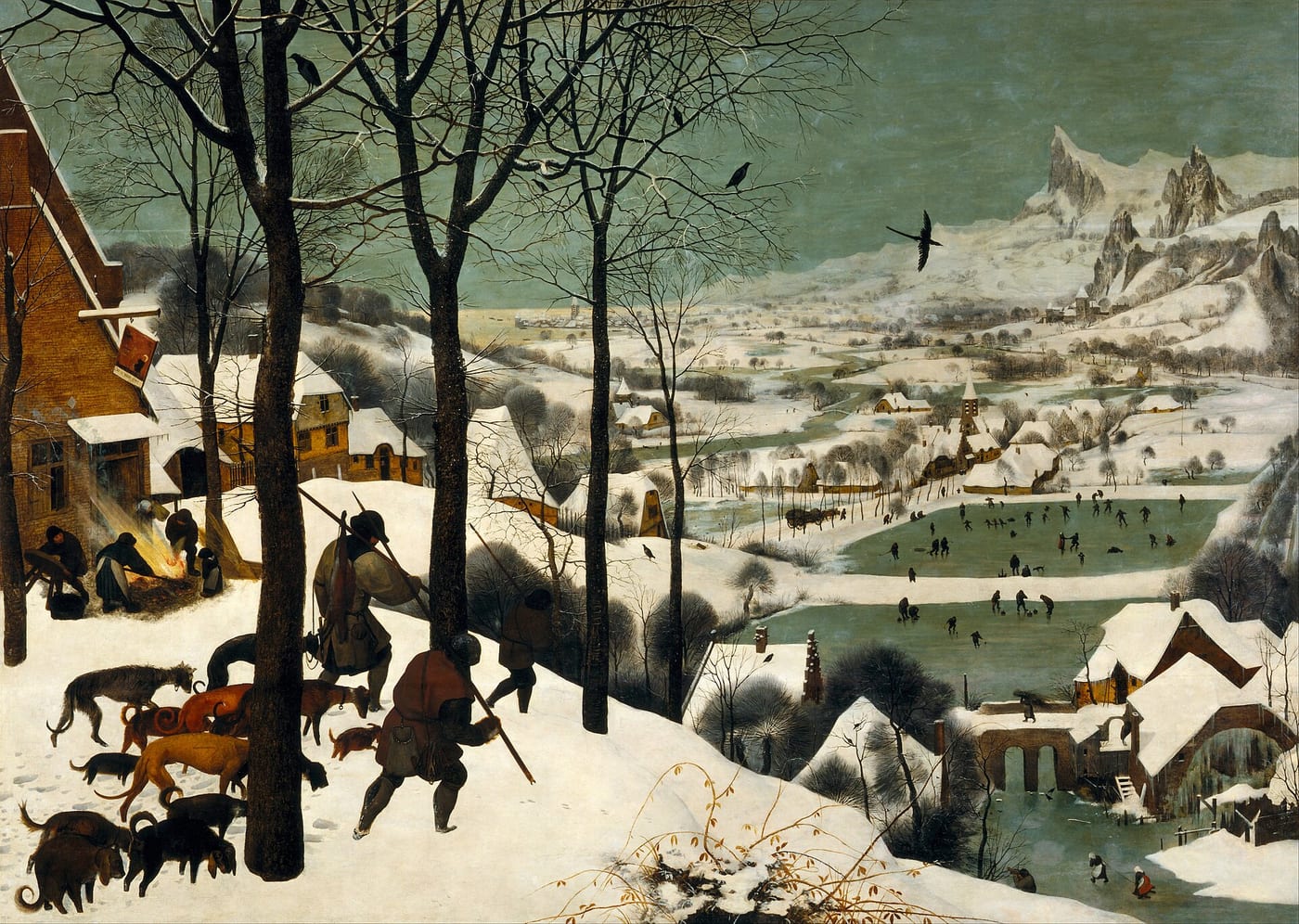
Renaissance & Early Modern · Europe
Hunters in the Snow
Pieter Bruegel the Elder, 1565
Hunters return through a snow-covered village while below villagers tend fires and go about winter tasks, part of a cycle depicting seasonal rural labor.
Pieter Bruegel the Elder, Hunters in the Snow, 1565. Kunsthistorisches Museum, Vienna. Public domain via Wikimedia Commons.
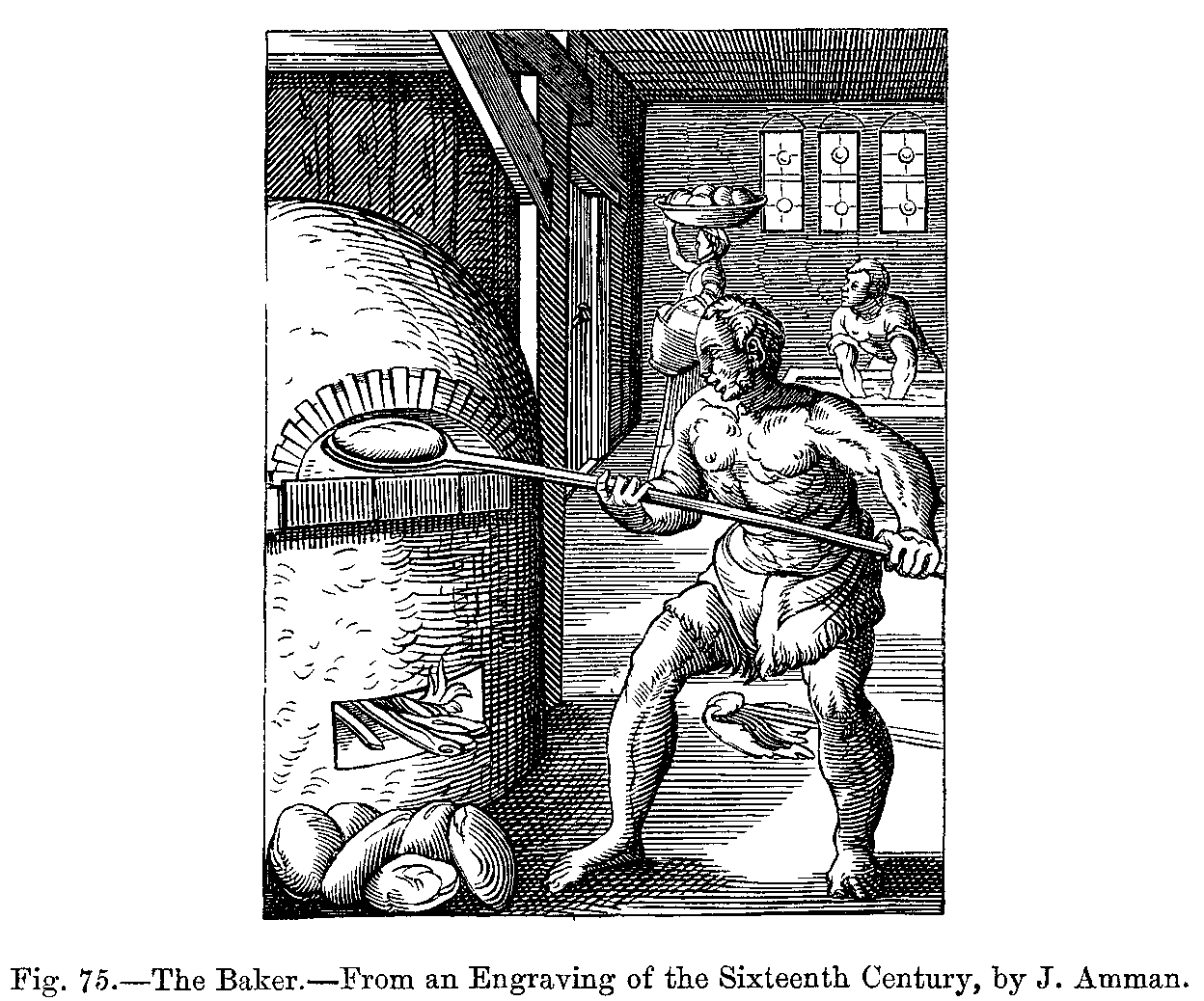
Renaissance & Early Modern · Europe
The Book of Trades (Standebuch)
Jost Amman and Hans Sachs, 1568
A hundred and fourteen trades, each with its worker and tools, the first printed catalogue of who did what.
Jost Amman, Das Staendebuch (The Book of Trades), 1568, via Wikimedia Commons
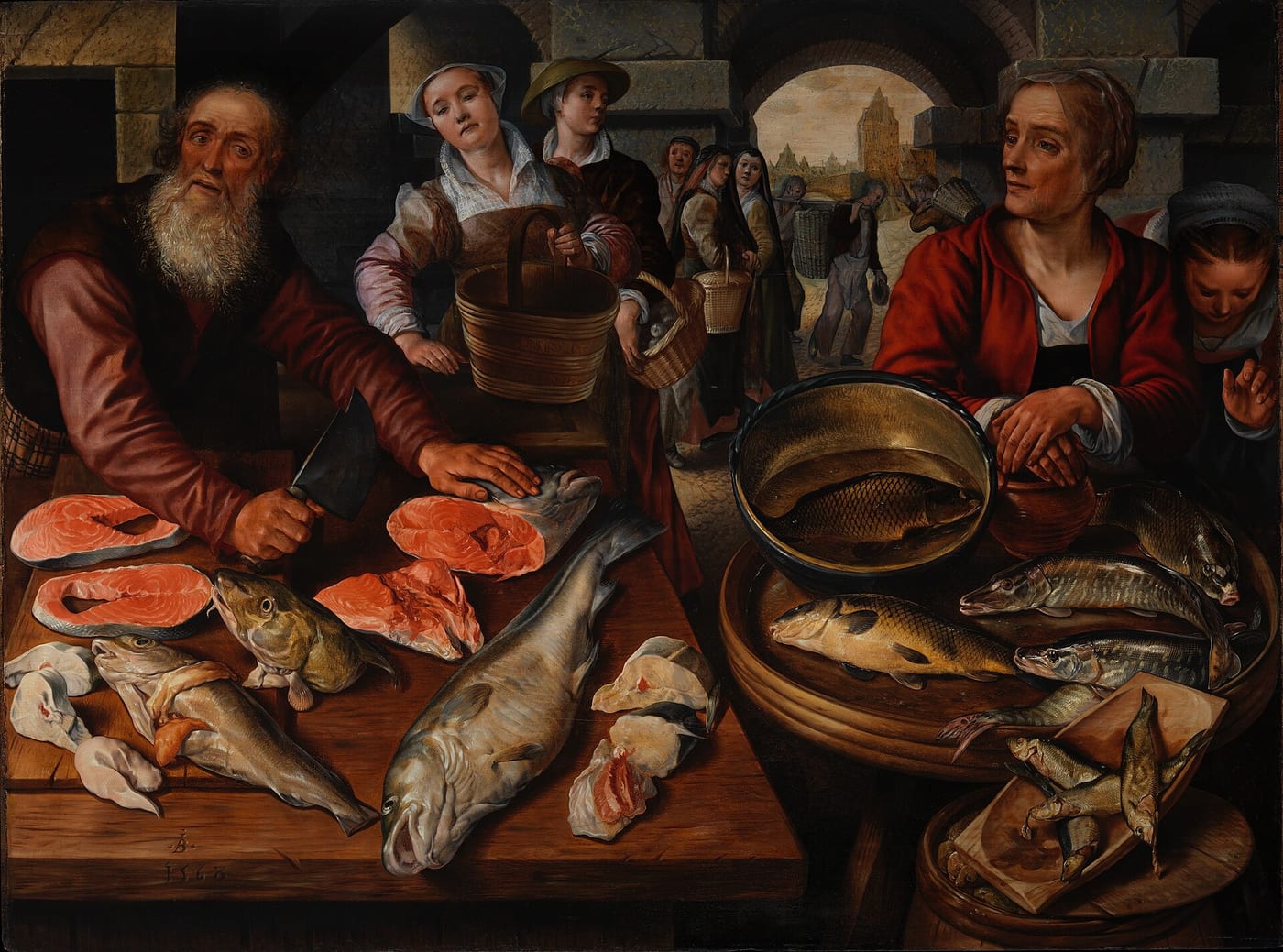
Renaissance & Early Modern · Europe
The Fish Market
Joachim Beuckelaer, 1574
Vendors display an abundance of fish and seafood for sale, depicting the work of the fishmonger and market trade.
Joachim Beuckelaer, The Fish Market. Metropolitan Museum of Art. Public domain (CC0) via Wikimedia Commons.
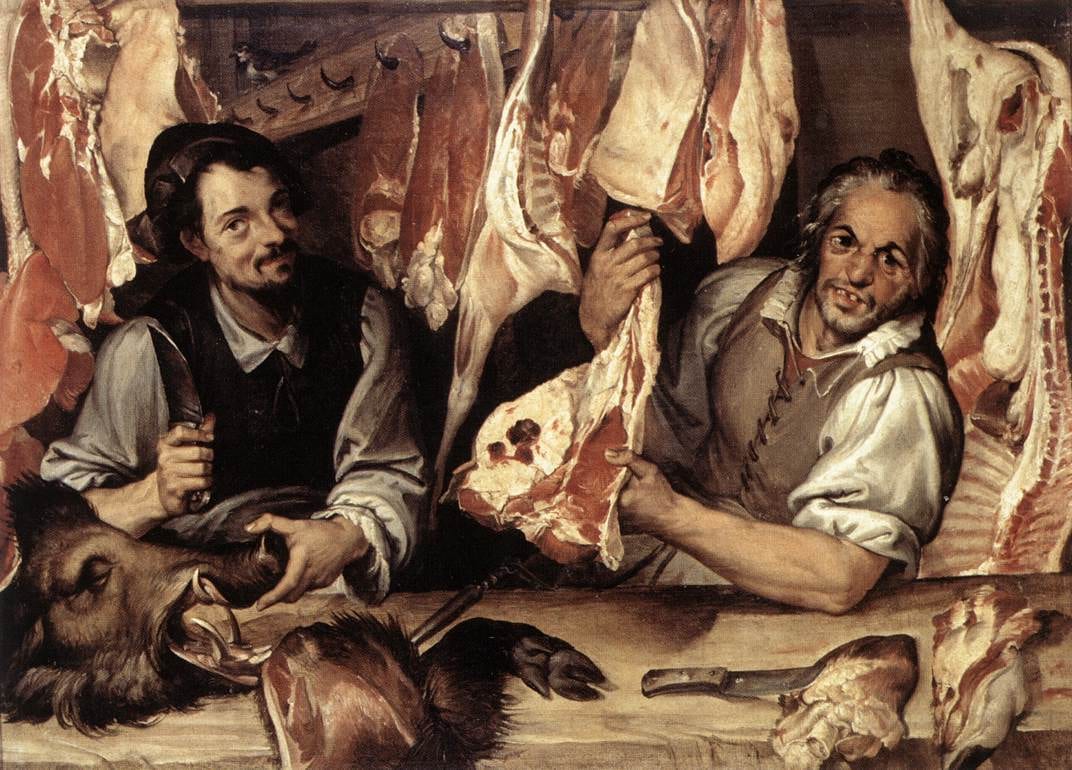
Renaissance & Early Modern · Europe
The Butcher's Shop
Bartolomeo Passerotti, c. 1580
Butchers handle and display meat in their shop, depicting the labor and goods of the butchering trade.
Bartolomeo Passerotti, The Butcher's Shop, c. 1580. Galleria Nazionale d'Arte Antica, Rome. Public domain via Wikimedia Commons.
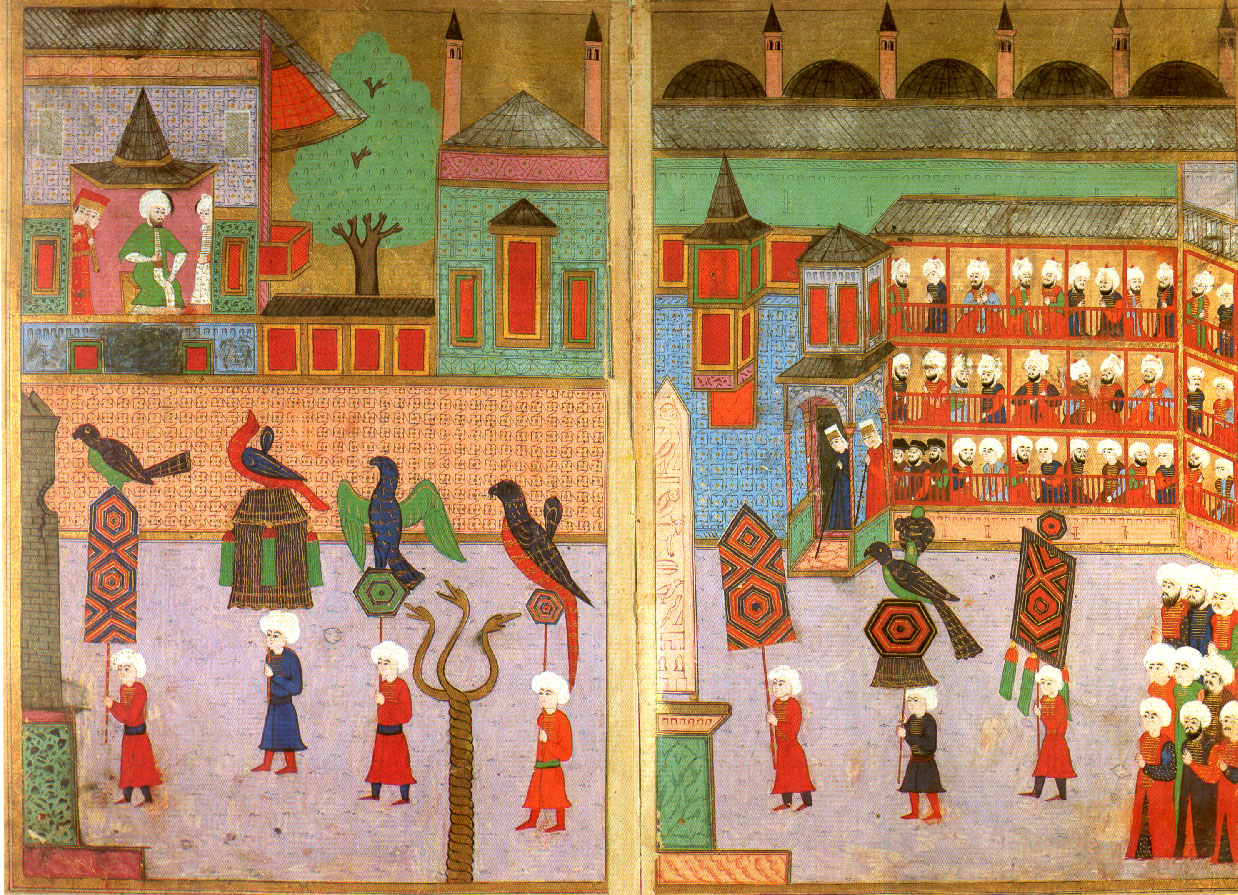
Renaissance & Early Modern · Persia & the Islamic world
Surname-i Humayun (guild processions)
Ottoman court workshop, c. 1582-88
Ottoman guilds paraded their trades before the sultan, and the court painters recorded every craft in the procession.
Surname-i Humayun (Topkapi Palace Museum), via Wikimedia Commons
Renaissance & Early Modern · Europe
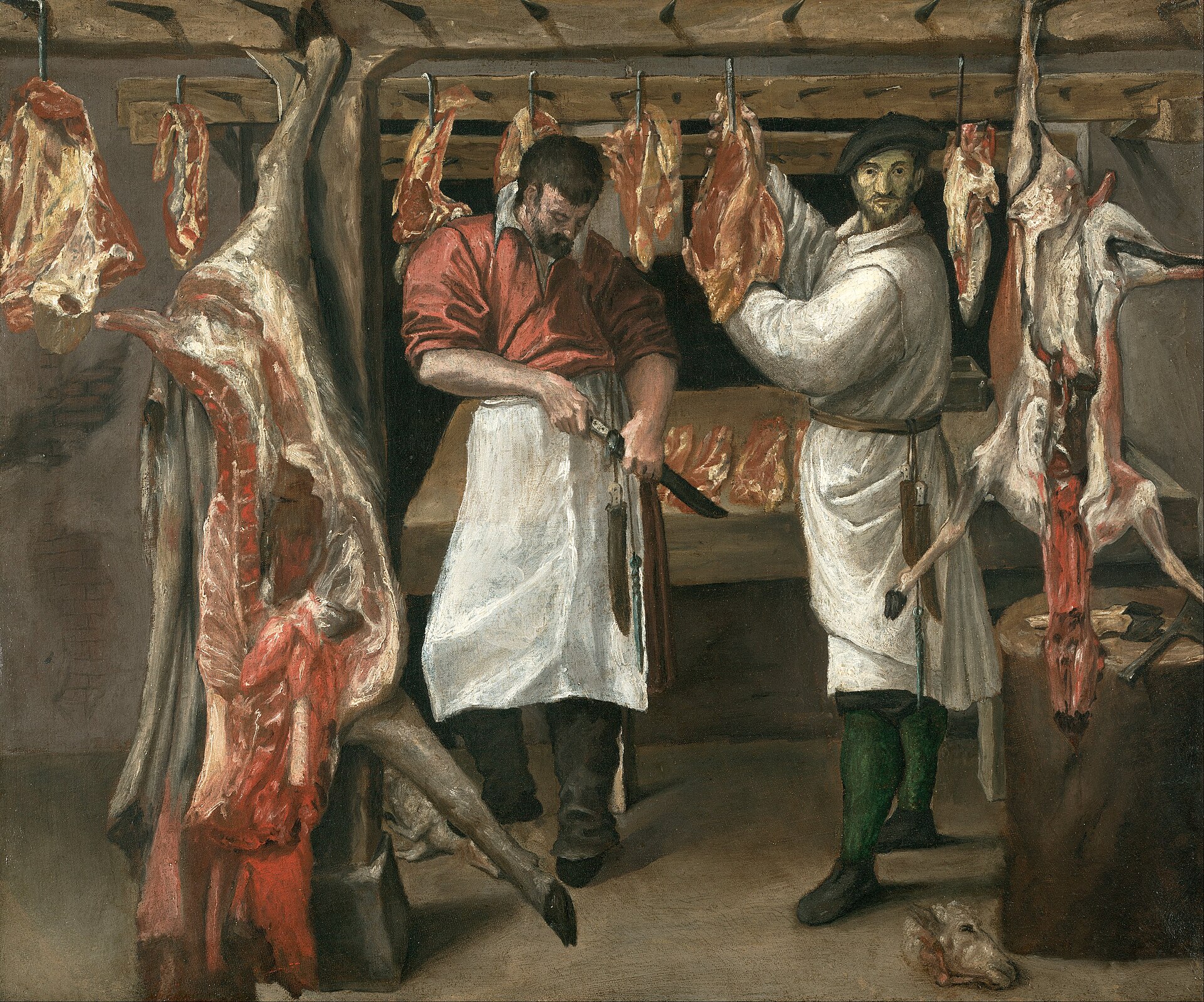
The Butcher's Shop
Annibale Carracci, c. 1583
Butchers weighing and cutting meat, ordinary tradesmen given the size and seriousness of history painting.
Christ Church Picture Gallery, Oxford, via Wikimedia Commons
Renaissance & Early Modern · India
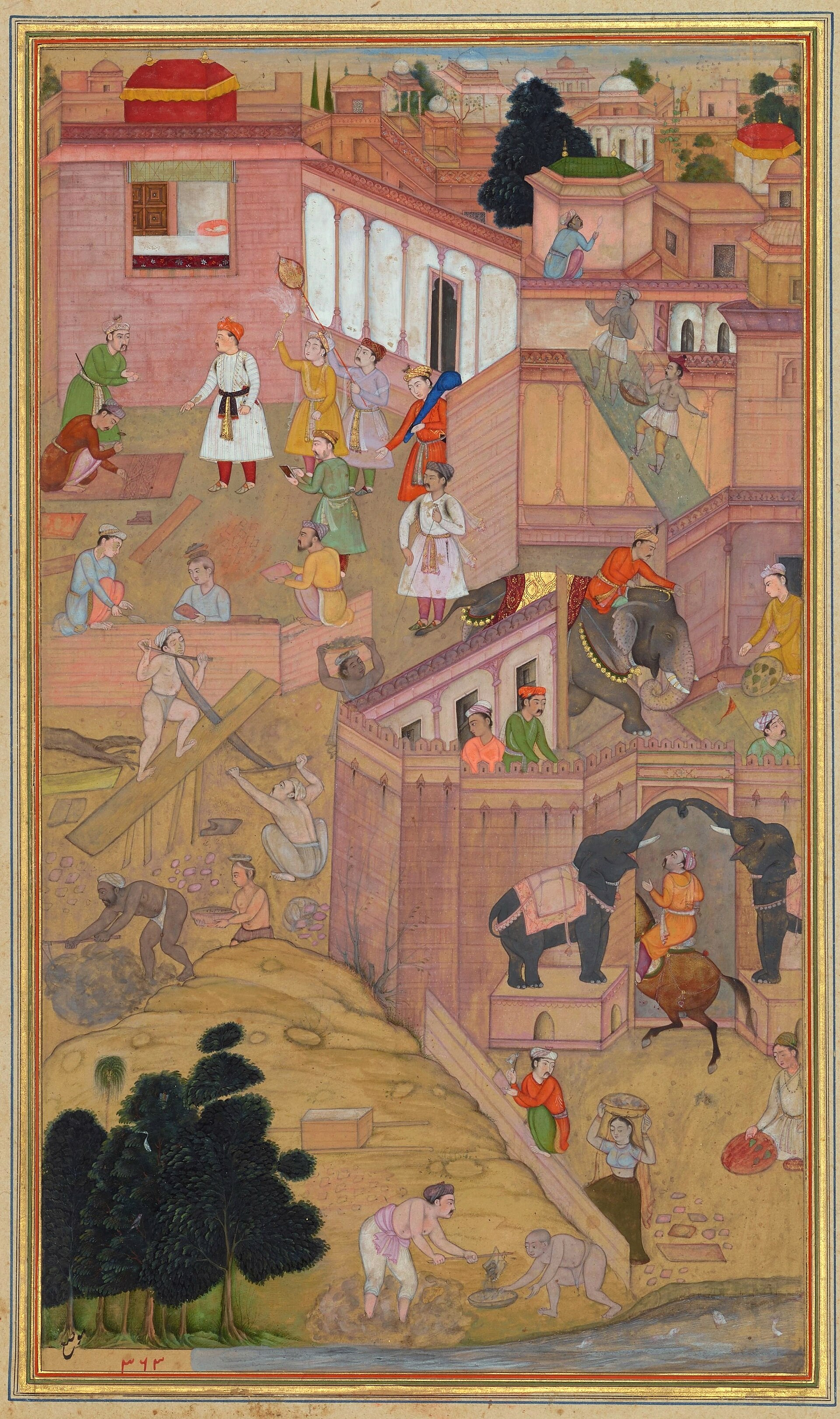
Construction of Fatehpur Sikri
Akbarnama workshop, c. 1590
Stonemasons, carriers, and carvers raising Akbar's new capital, Mughal labor recorded with the precision of a census.
Akbarnama (Chester Beatty Library), via Wikimedia Commons
Renaissance & Early Modern · India
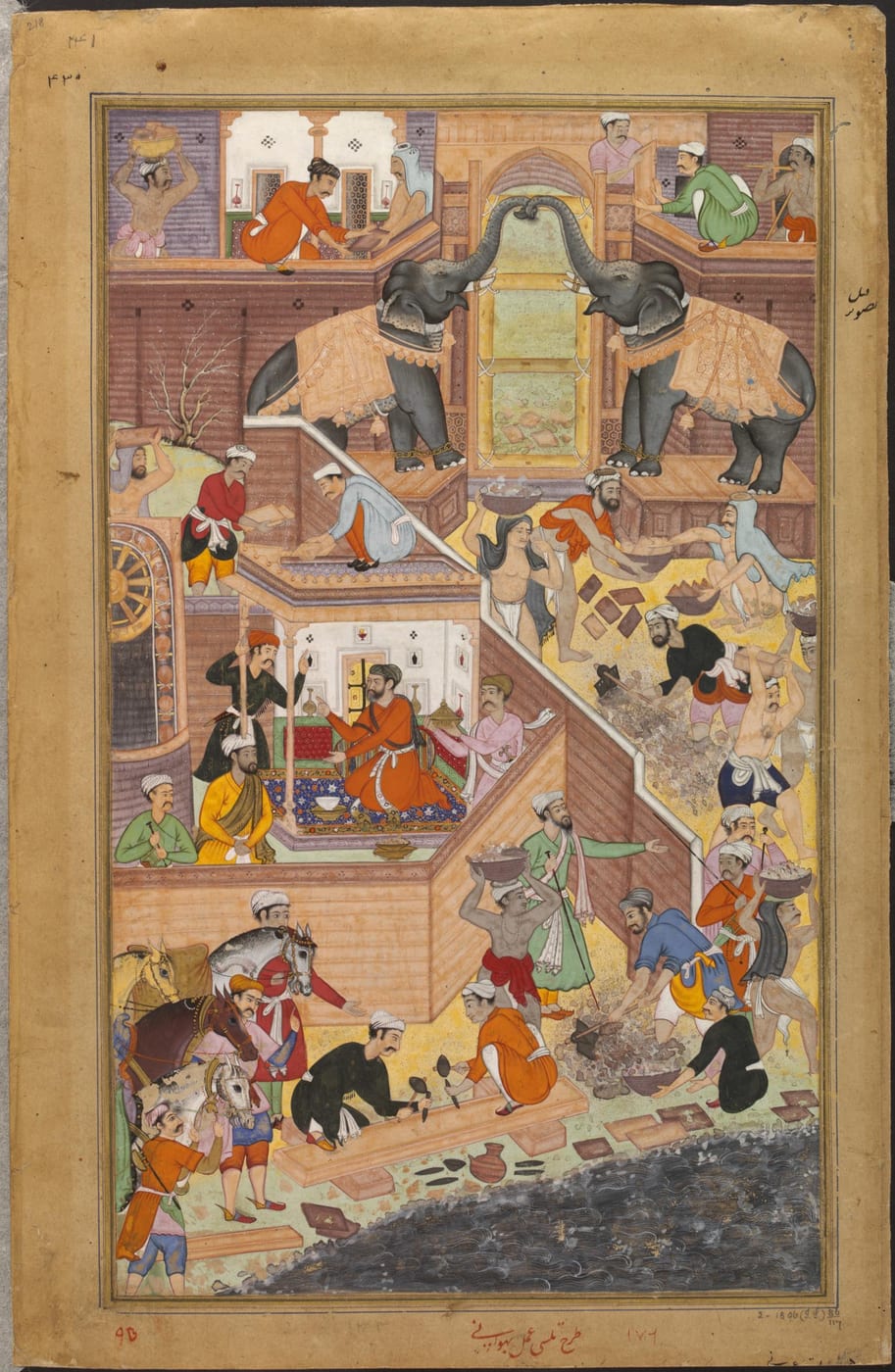
Workmen Building the City of Fatehpur Sikri
Akbarnama workshop, c. 1590
The Akbarnama folio depicts stonemasons and laborers cutting, carrying and setting stone during the building of Fatehpur Sikri.
Akbarnama workshop (Tulsi), Workmen Building the City of Fatehpur Sikri, c. 1590. Victoria and Albert Museum, London. Public domain via Wikimedia Commons.
Renaissance & Early Modern · Europe
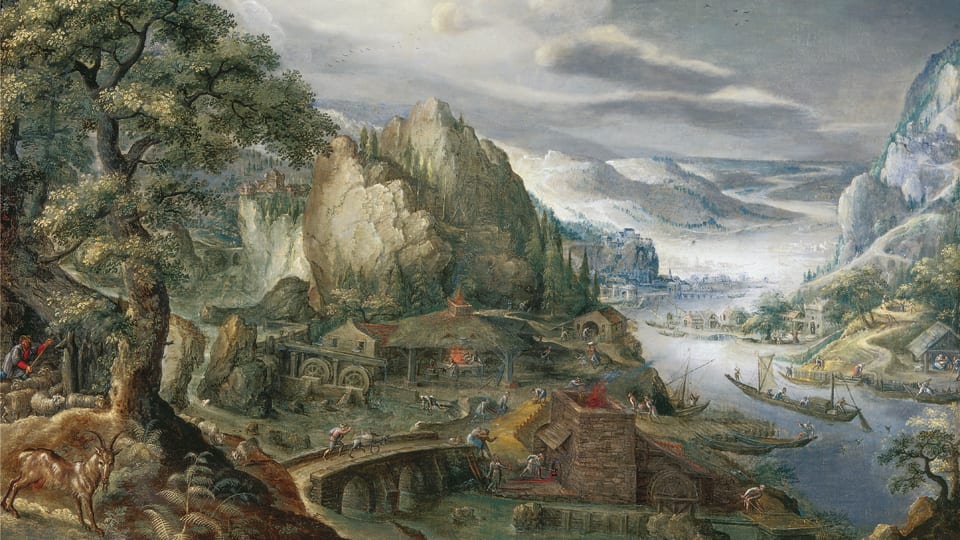
River Valley with an Iron Smelter
Marten van Valckenborch, c. 1600
A river landscape incorporates an early iron smelting operation, showing pre-industrial metalworking labor set within the countryside.
Marten van Valckenborch, River Valley with an Iron Smelter, c. 1600. Public domain via Wikimedia Commons.
IV. 17th & 18th c.
27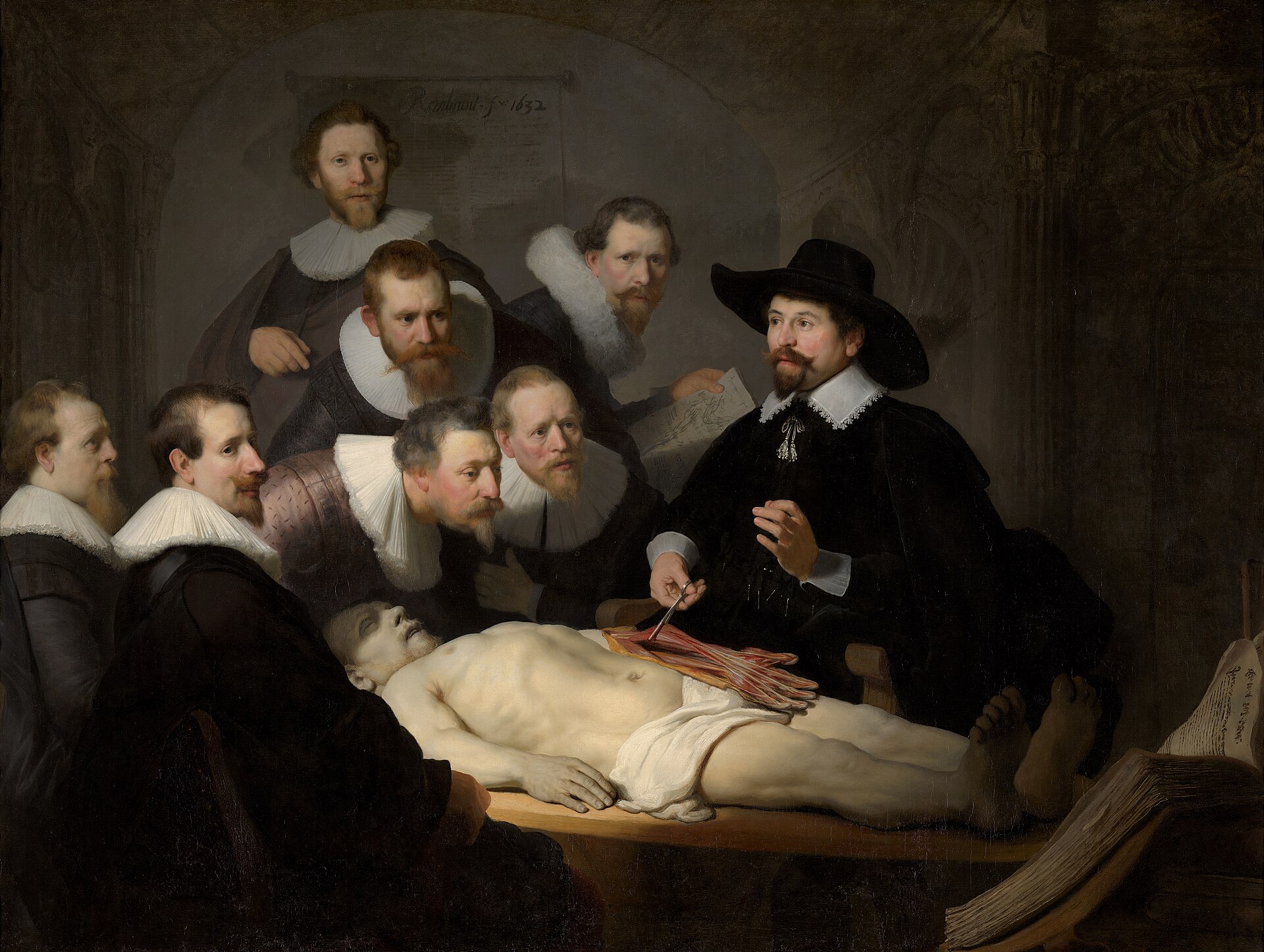
17th & 18th c. · Europe
The Anatomy Lesson of Dr. Nicolaes Tulp
Rembrandt van Rijn, 1632
A surgeon lecturing over a corpse, a profession performing itself for a group portrait.
Mauritshuis, The Hague, via Wikimedia Commons
17th & 18th c. · Europe
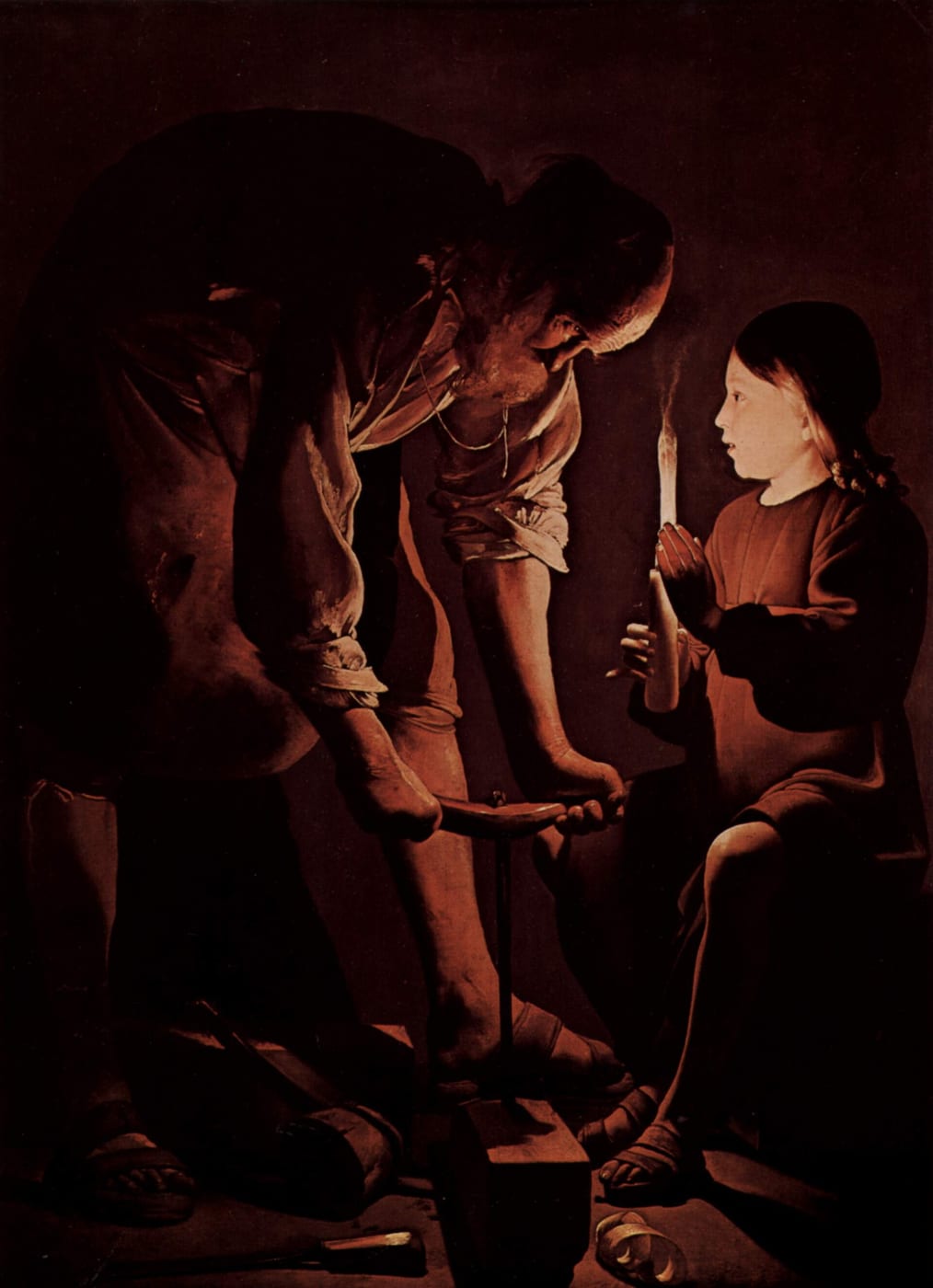
Saint Joseph the Carpenter
Georges de La Tour, c. 1642
Joseph works with an auger by candlelight as the child Jesus holds a light, depicting the manual labor of carpentry.
Georges de La Tour, Saint Joseph the Carpenter, c. 1642. Musee du Louvre. Public domain via Wikimedia Commons.
17th & 18th c. · Europe
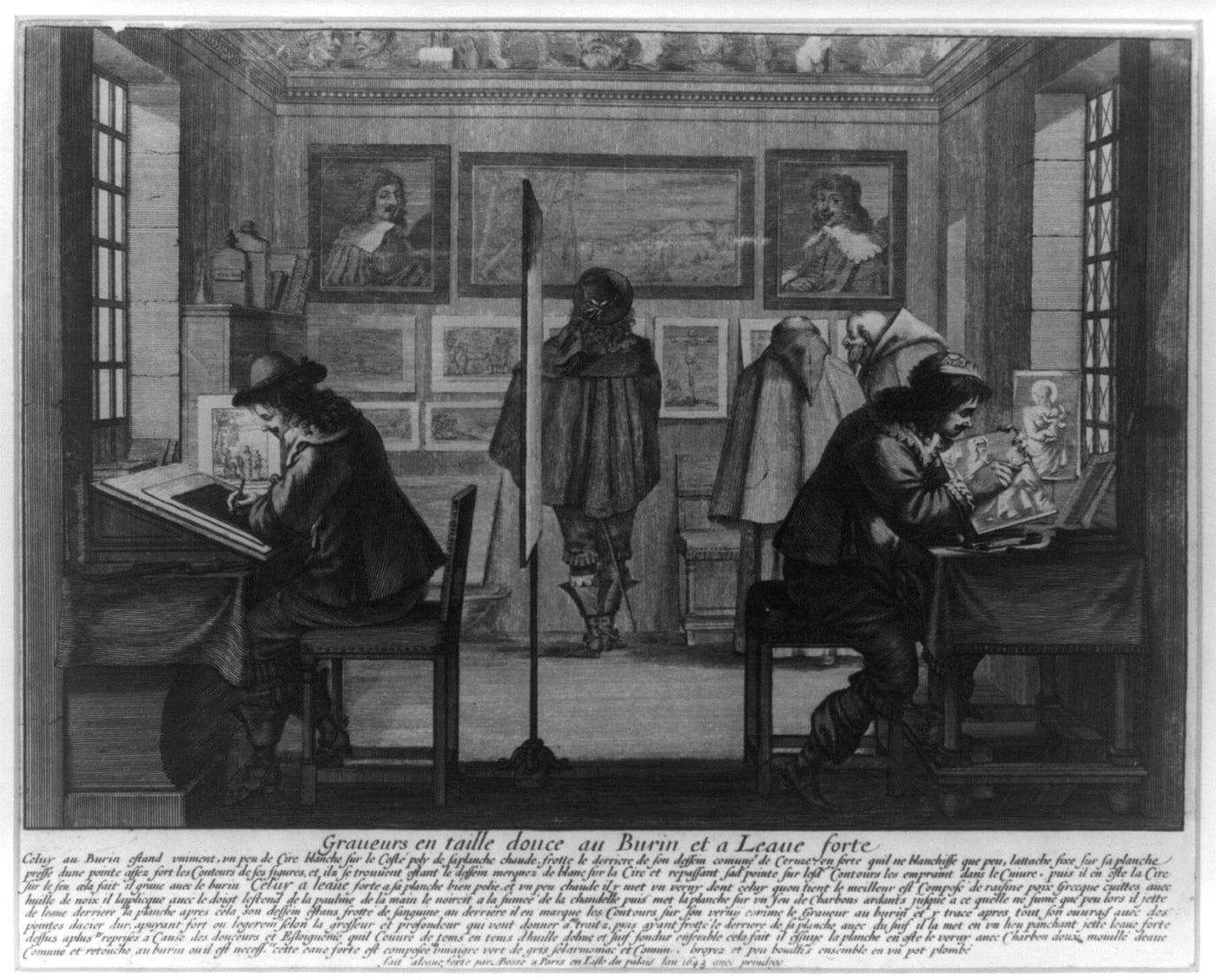
The Engraver and the Etcher
Abraham Bosse, 1643
The print shows engravers and etchers at work in a printmaking studio, documenting the tools and tasks of the intaglio trade.
Abraham Bosse, The Engraver and the Etcher, 1643. Bibliotheque nationale de France. Public domain via Wikimedia Commons.
17th & 18th c. · Europe
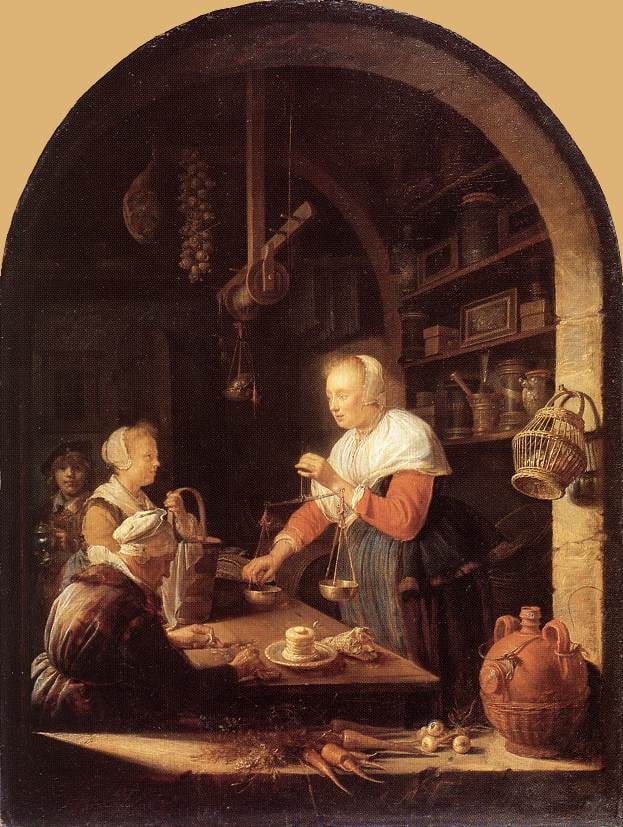
The Grocer's Shop
Gerrit Dou, 1647
A woman weighs and sells goods at a village grocer's counter, depicting the work of small-scale retail trade.
Gerrit Dou, The Grocer's Shop, 1647. Musee du Louvre. Public domain via Wikimedia Commons.
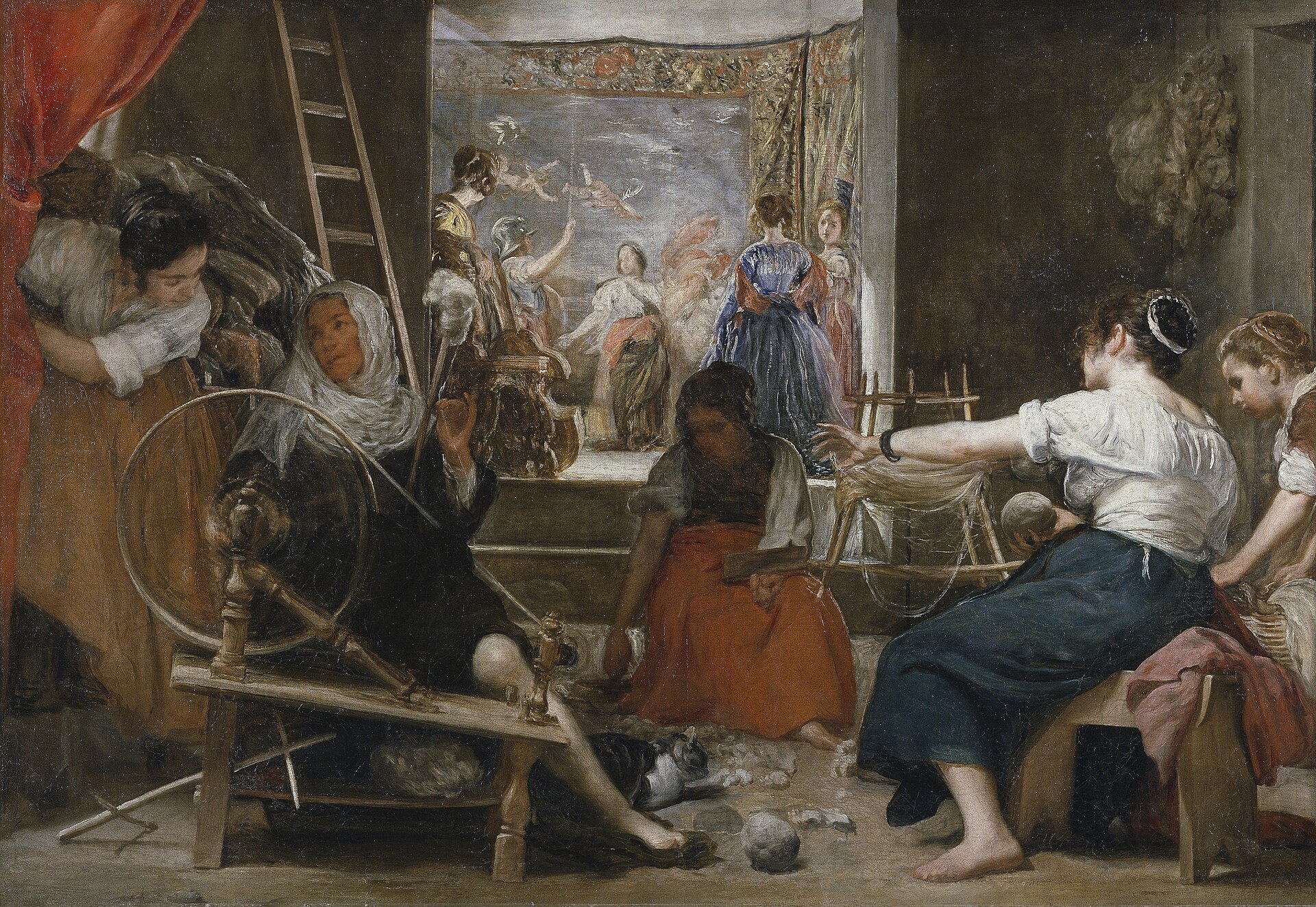
17th & 18th c. · Europe
The Spinners (Las Hilanderas)
Diego Velazquez, c. 1657
A royal tapestry workshop in front, myth behind, so the weaving women become the real subject of a painting about weaving.
Museo del Prado, Madrid, via Wikimedia Commons
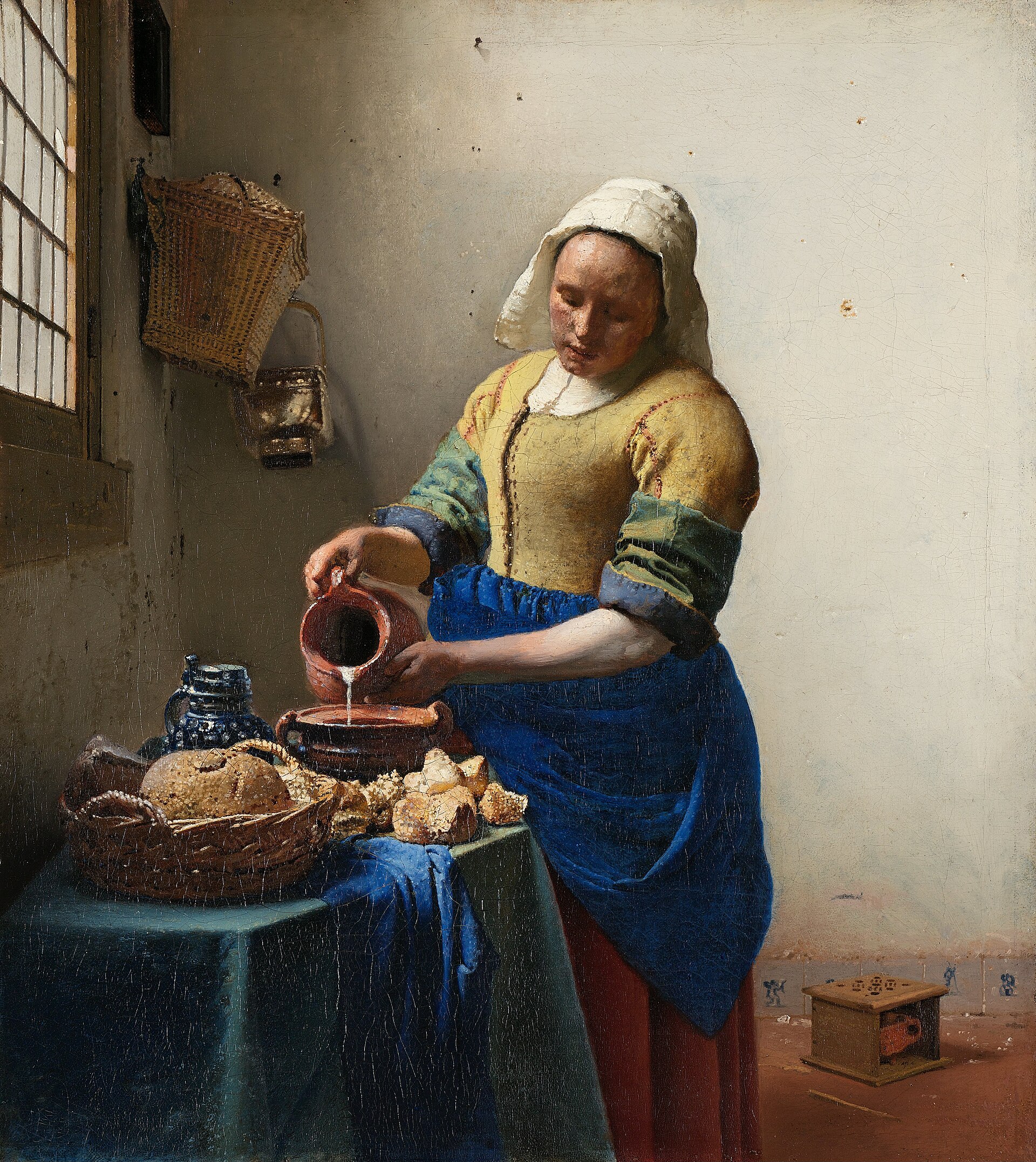
17th & 18th c. · Europe
The Milkmaid
Johannes Vermeer, c. 1658
A kitchen maid pouring milk, made as still and monumental as a cathedral figure, domestic work raised to reverence.
Rijksmuseum, Amsterdam, via Wikimedia Commons
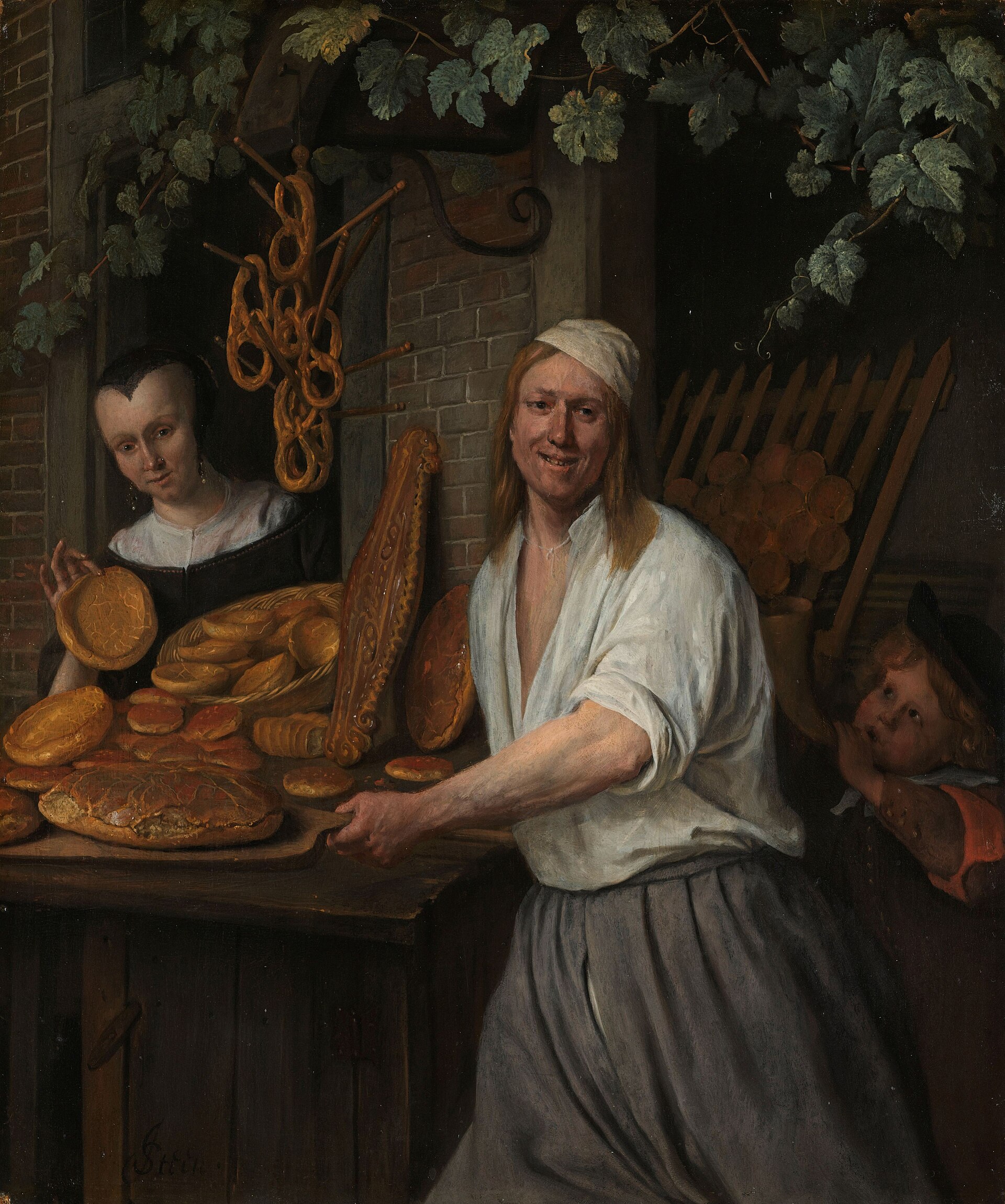
17th & 18th c. · Europe
The Baker Arent Oostwaard and his Wife
Jan Steen, 1658
A baker and his wife showing off the morning's bread, small-business pride four centuries old.
Rijksmuseum, Amsterdam (CC0)
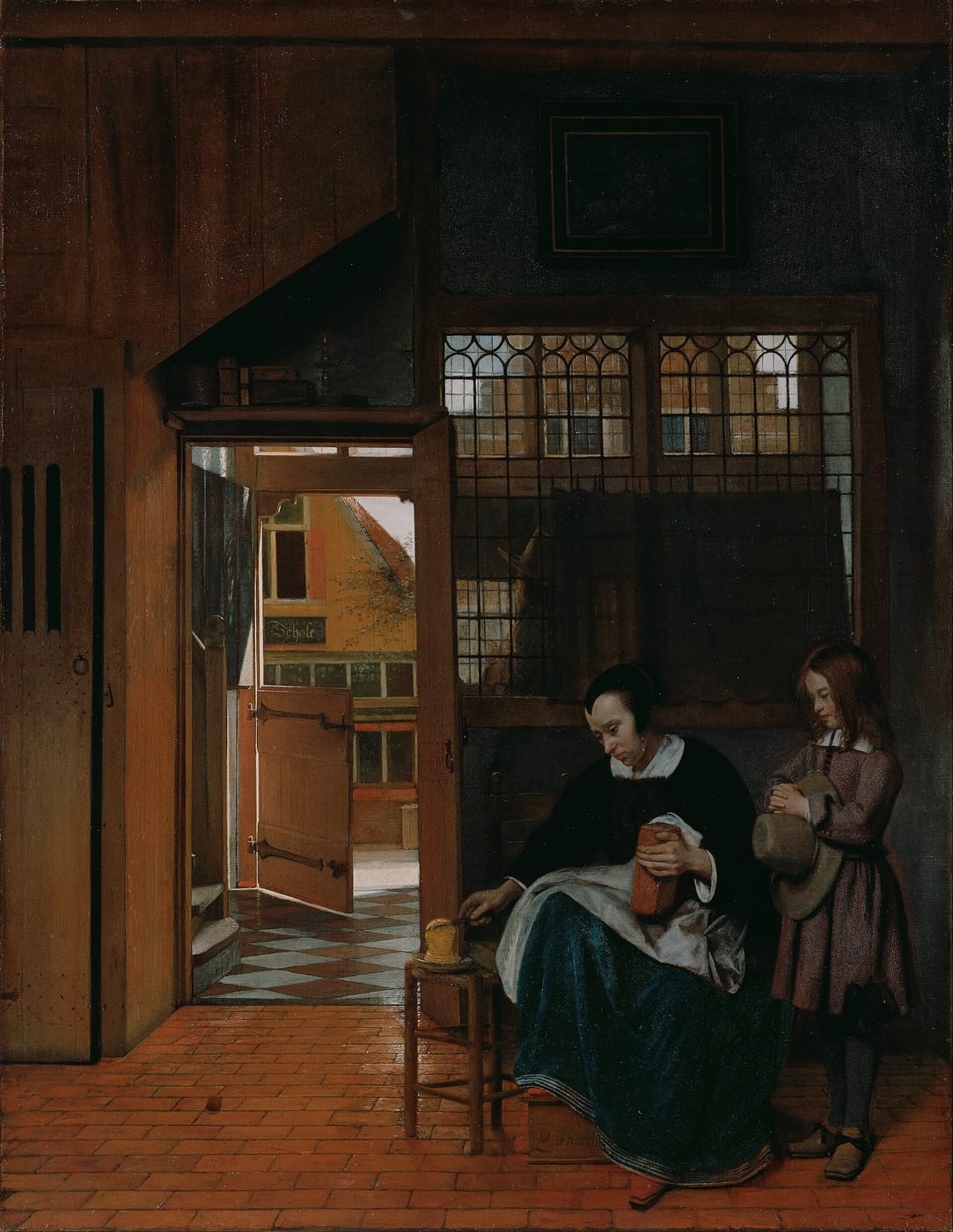
17th & 18th c. · Europe
A Woman Preparing Bread and Butter for a Boy
Pieter de Hooch, c. 1660-63
A woman hands buttered bread to a boy in a sunlit Dutch domestic interior.
Pieter de Hooch, A Woman Preparing Bread and Butter for a Boy, c. 1660-63. J. Paul Getty Museum, Los Angeles. Public domain via Wikimedia Commons.
17th & 18th c. · Europe
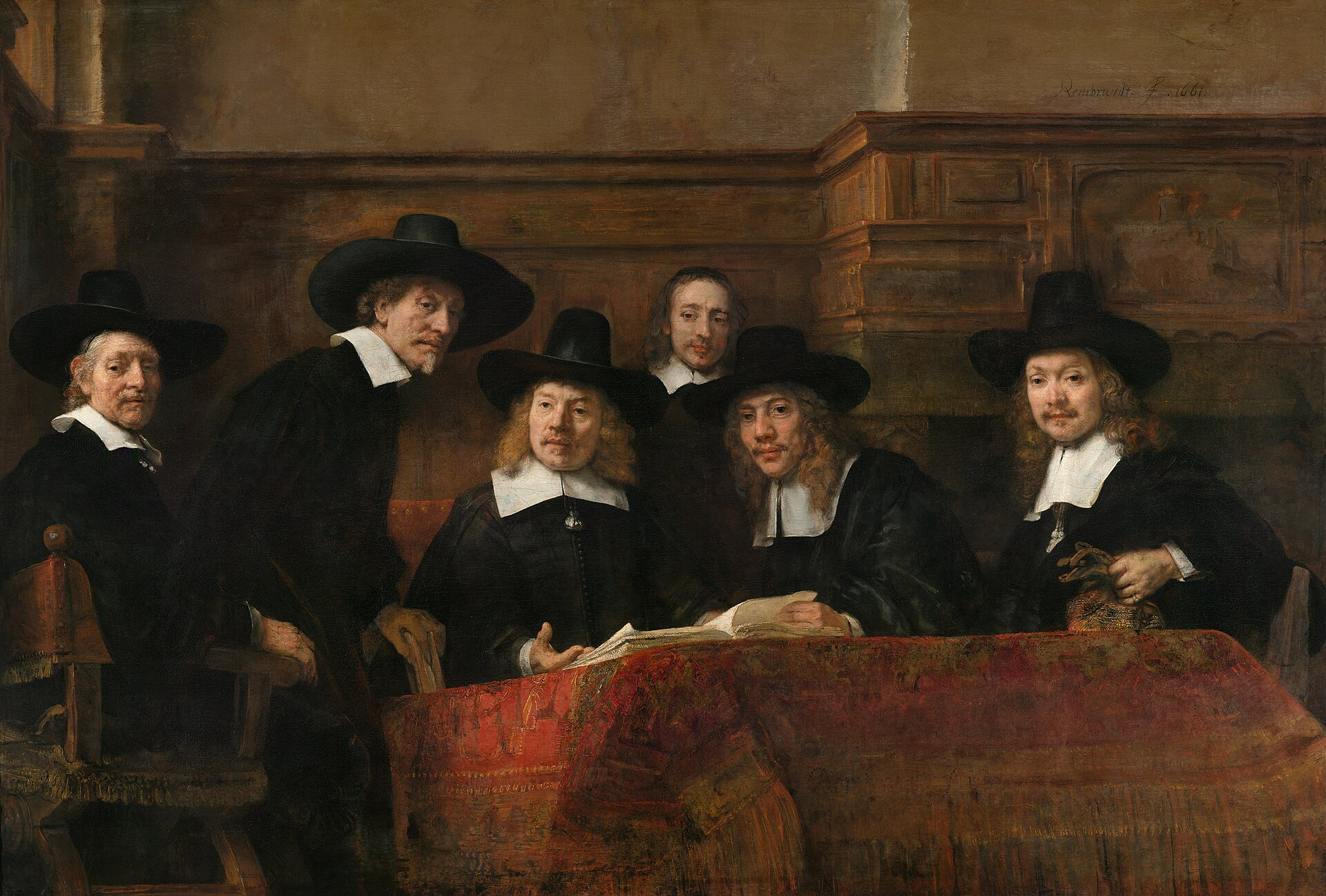
The Syndics of the Drapers' Guild
Rembrandt van Rijn, 1662
Five cloth inspectors and their servant caught mid-meeting, the earliest great painting of administrative work, the committee at its table.
Rijksmuseum, Amsterdam, via Wikimedia Commons
17th & 18th c. · Europe
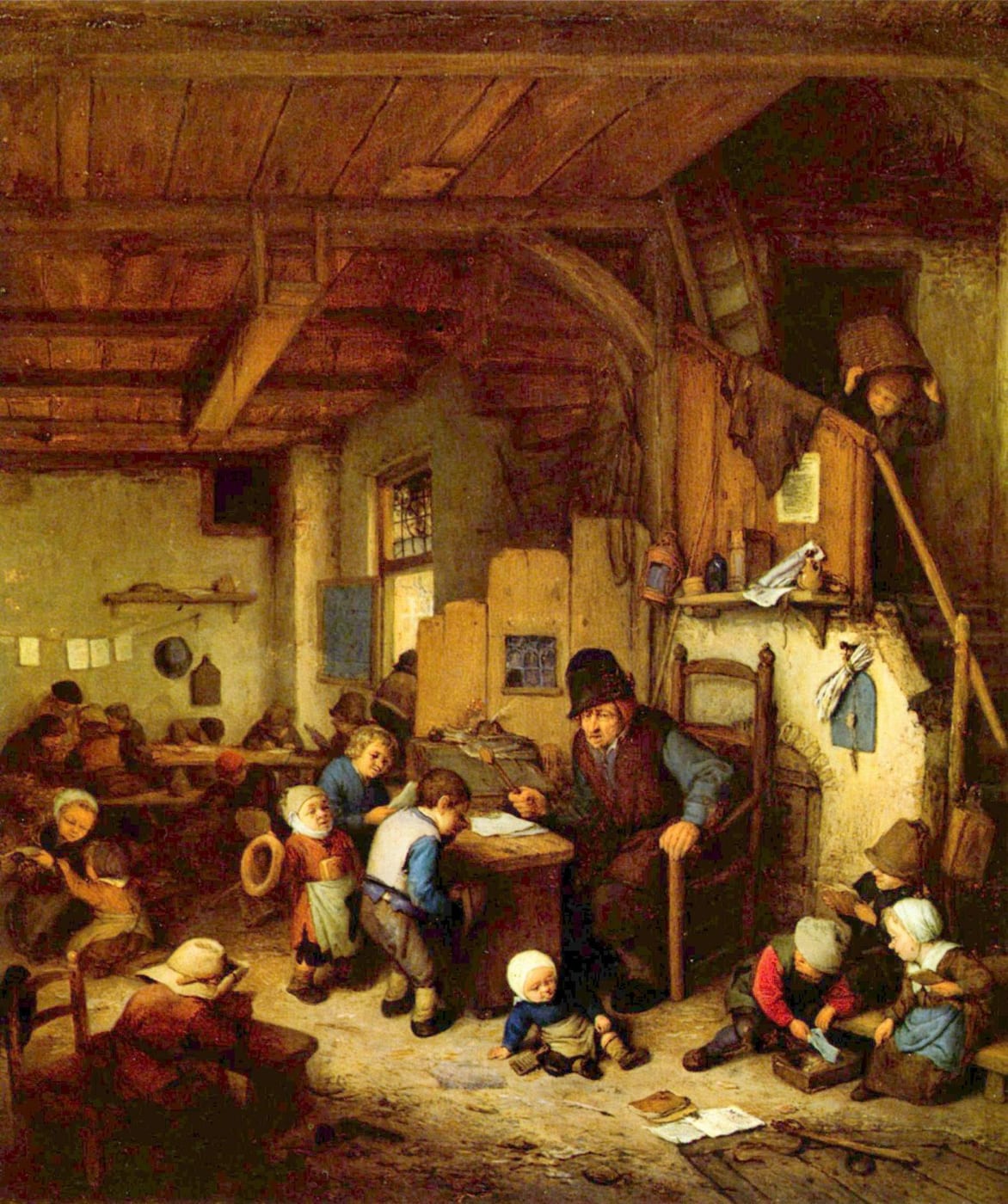
The Schoolmaster
Adriaen van Ostade, 1662
A schoolmaster sits at his desk among children in a village classroom interior.
Adriaen van Ostade, The Schoolmaster, 1662. Musee du Louvre, Paris. Public domain via Wikimedia Commons.
17th & 18th c. · Europe
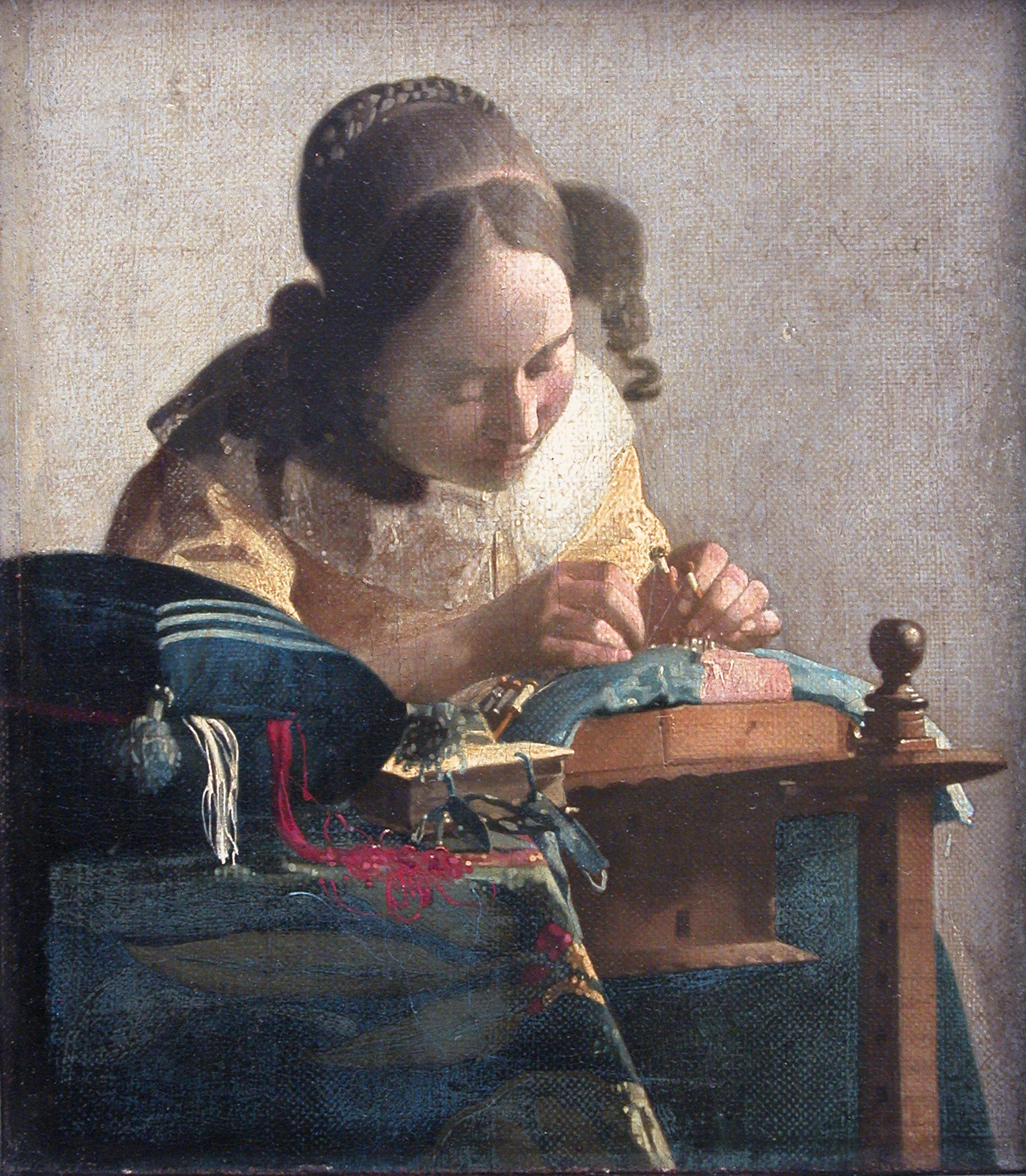
The Lacemaker
Johannes Vermeer, c. 1669-70
A young woman bent over her bobbins, the whole world of the picture narrowed to the point of the thread.
Musee du Louvre, Paris, via Wikimedia Commons
17th & 18th c. · Europe
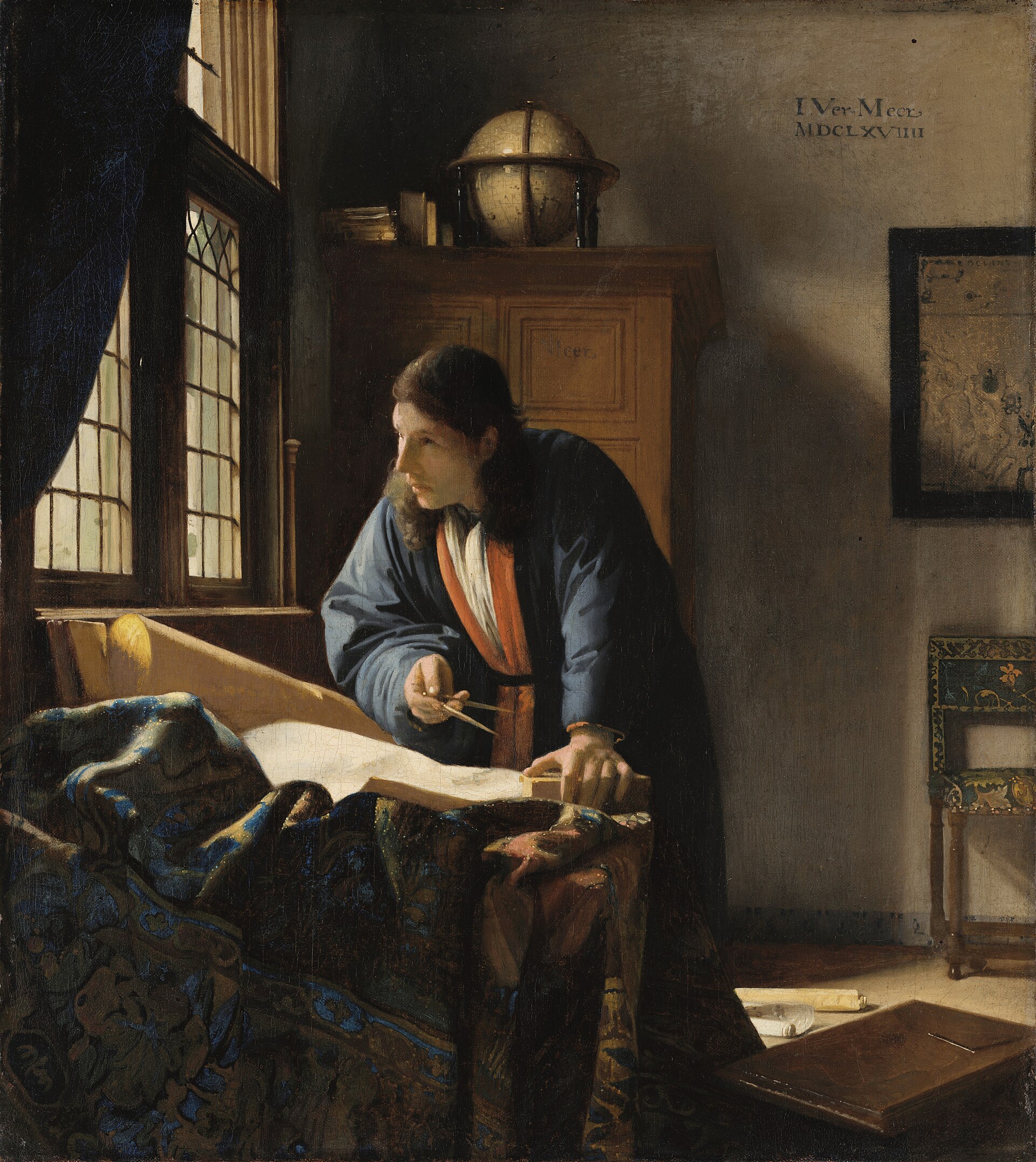
The Geographer
Johannes Vermeer, c. 1669
A scholar caught mid-thought among his charts, one of the first paintings to treat mental work as a subject.
Stadel Museum, Frankfurt, via Wikimedia Commons
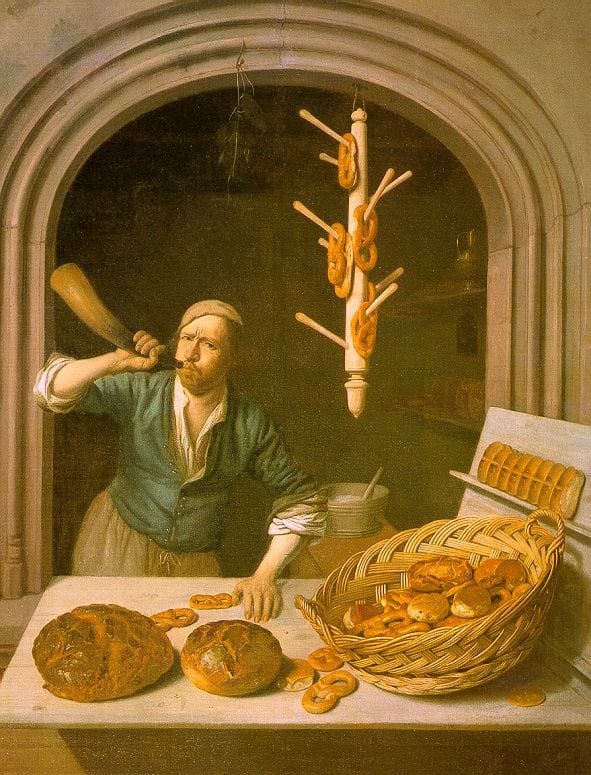
17th & 18th c. · Europe
The Baker
Job Berckheyde, 1681
A baker blows a horn at his shop window to announce fresh bread displayed before him.
Job Berckheyde, The Baker, 1681. Worcester Art Museum, Massachusetts. Public domain via Wikimedia Commons.
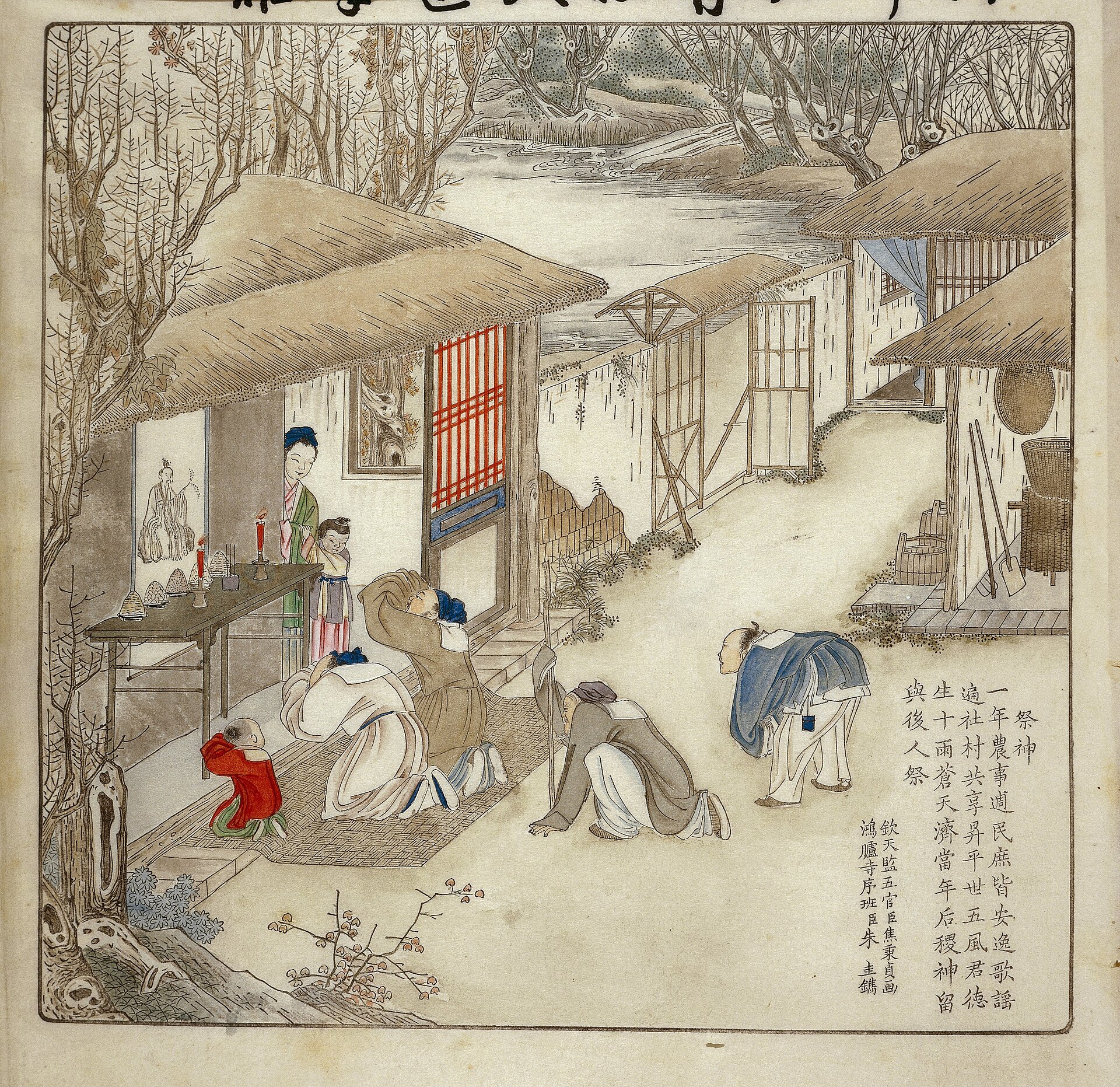
17th & 18th c. · China
Imperial Pictures of Tilling and Weaving (Yuzhi Gengzhi tu)
Kangxi court workshop, 1696
An emperor reissued the old farming-and-weaving cycle with his own poems, ordering his officials to remember where wealth came from.
British Museum, via Wikimedia Commons
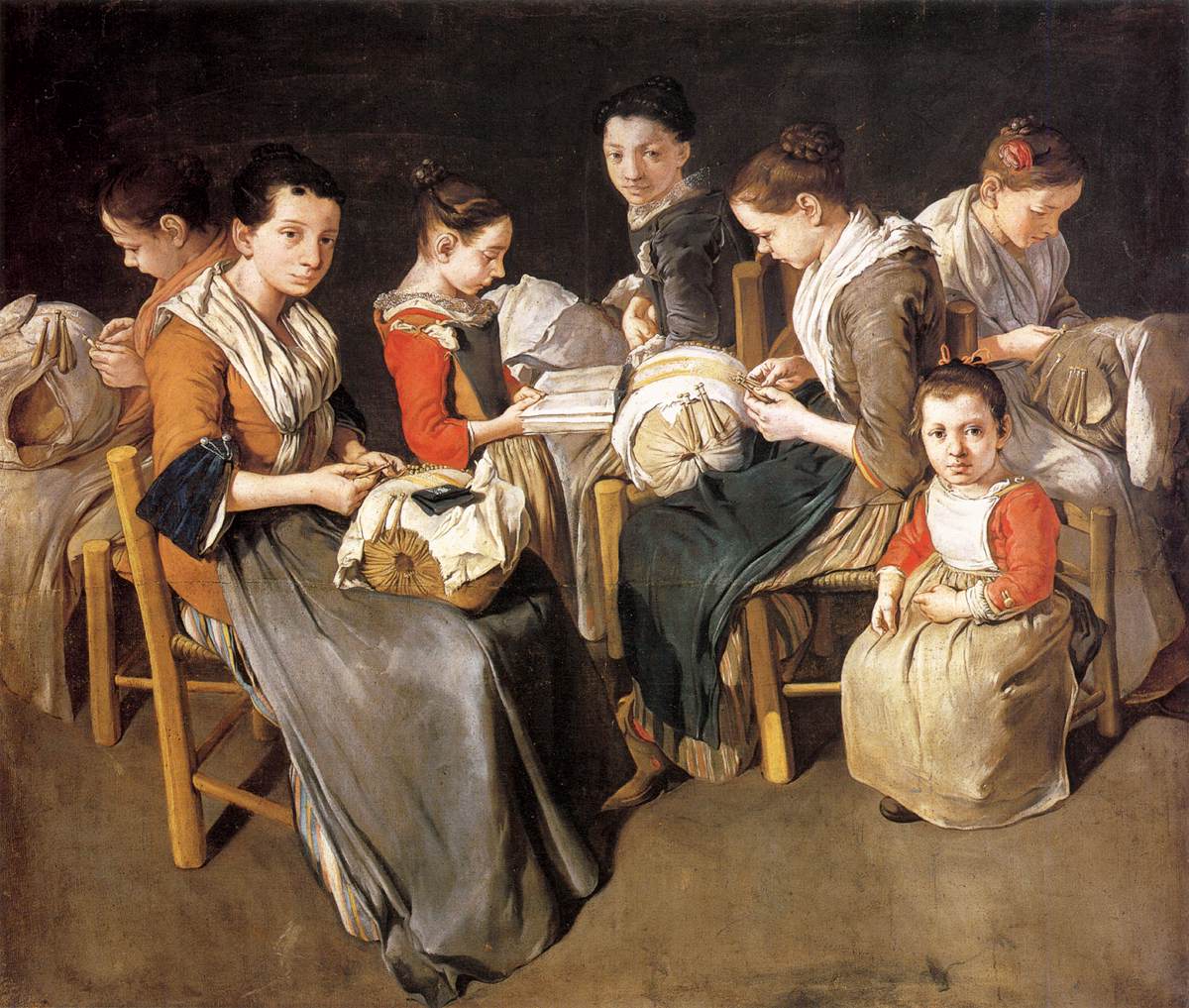
17th & 18th c. · Europe
Women Working on Pillow Lace
Giacomo Ceruti (Pitocchetto), c. 1720s
Poor women making lace by hand, painted life-size and unsentimental, the working poor treated as worthy of a portrait.
Pinacoteca Tosio Martinengo, Brescia, via Wikimedia Commons
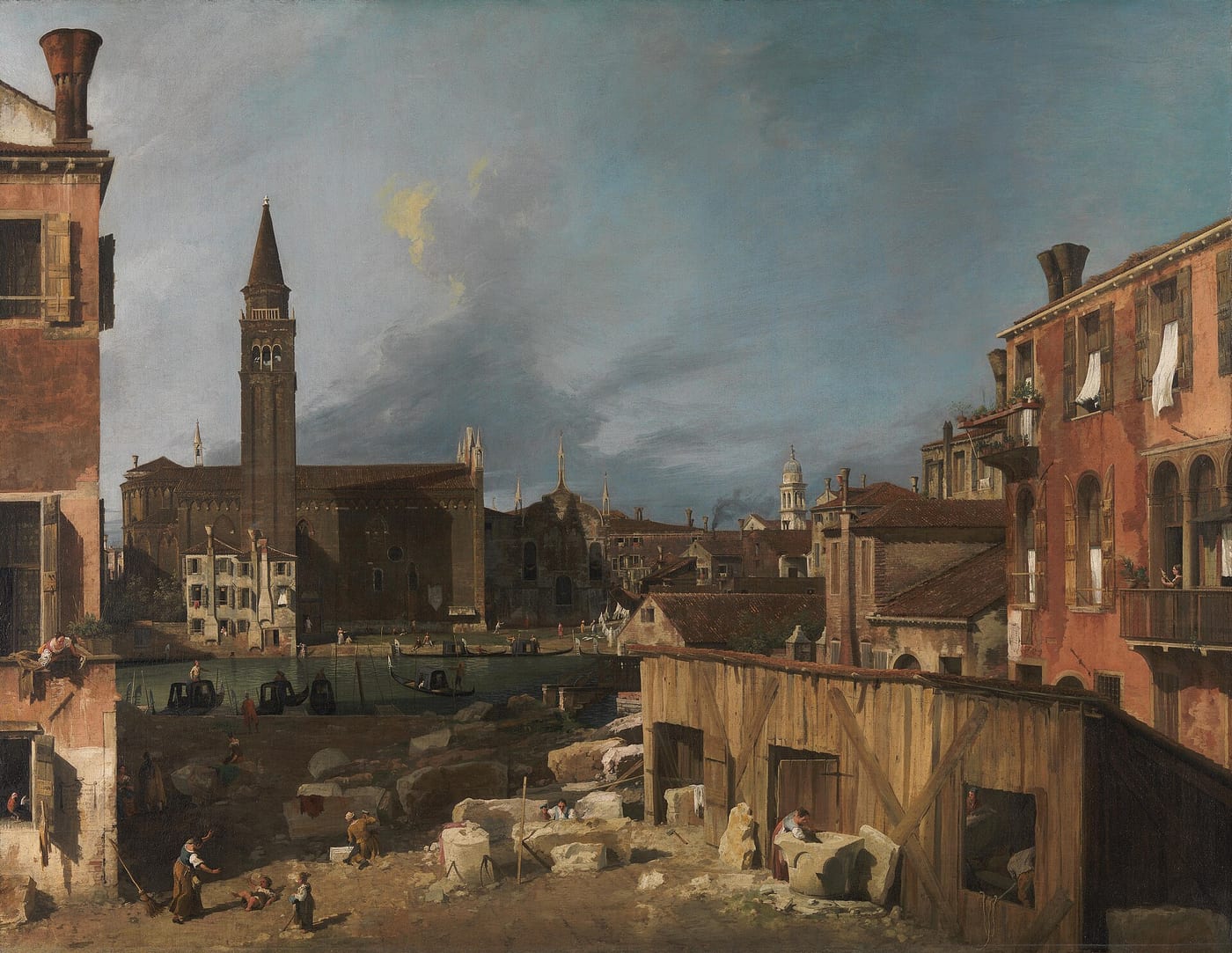
17th & 18th c. · Europe
The Stonemason's Yard
Canaletto, c. 1726-30
Stonemasons cut and dress blocks of stone in a temporary yard in the Campo San Vidal, Venice.
Canaletto, The Stonemason's Yard, c. 1726-30. National Gallery, London. Public domain via Wikimedia Commons.
17th & 18th c. · Europe
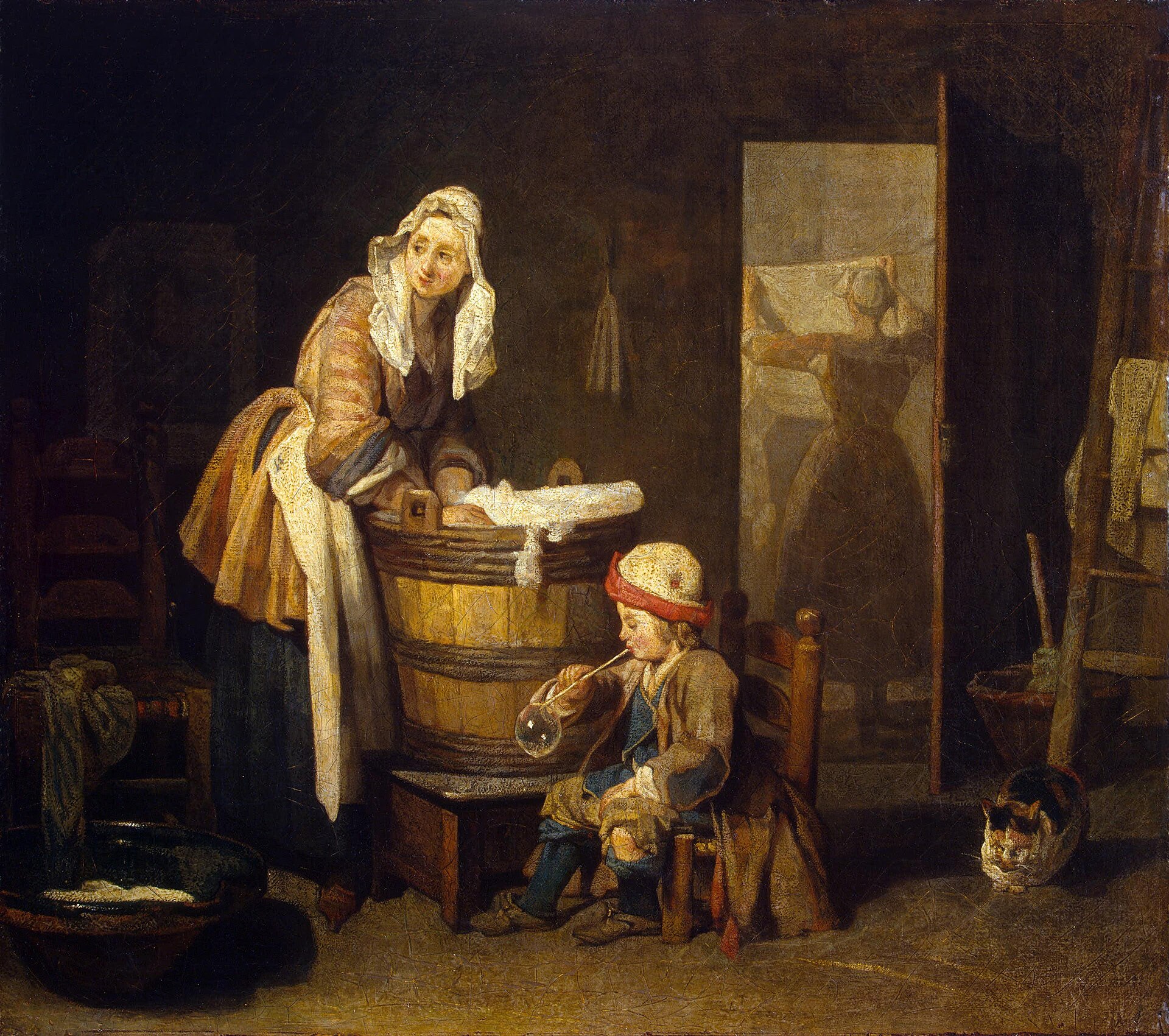
The Laundress
Jean-Baptiste-Simeon Chardin, c. 1733
A washerwoman at her tub while a child blows bubbles, the invisible daily labor of the household given a quiet painting of its own.
Nationalmuseum, Stockholm, via Wikimedia Commons
17th & 18th c. · Europe
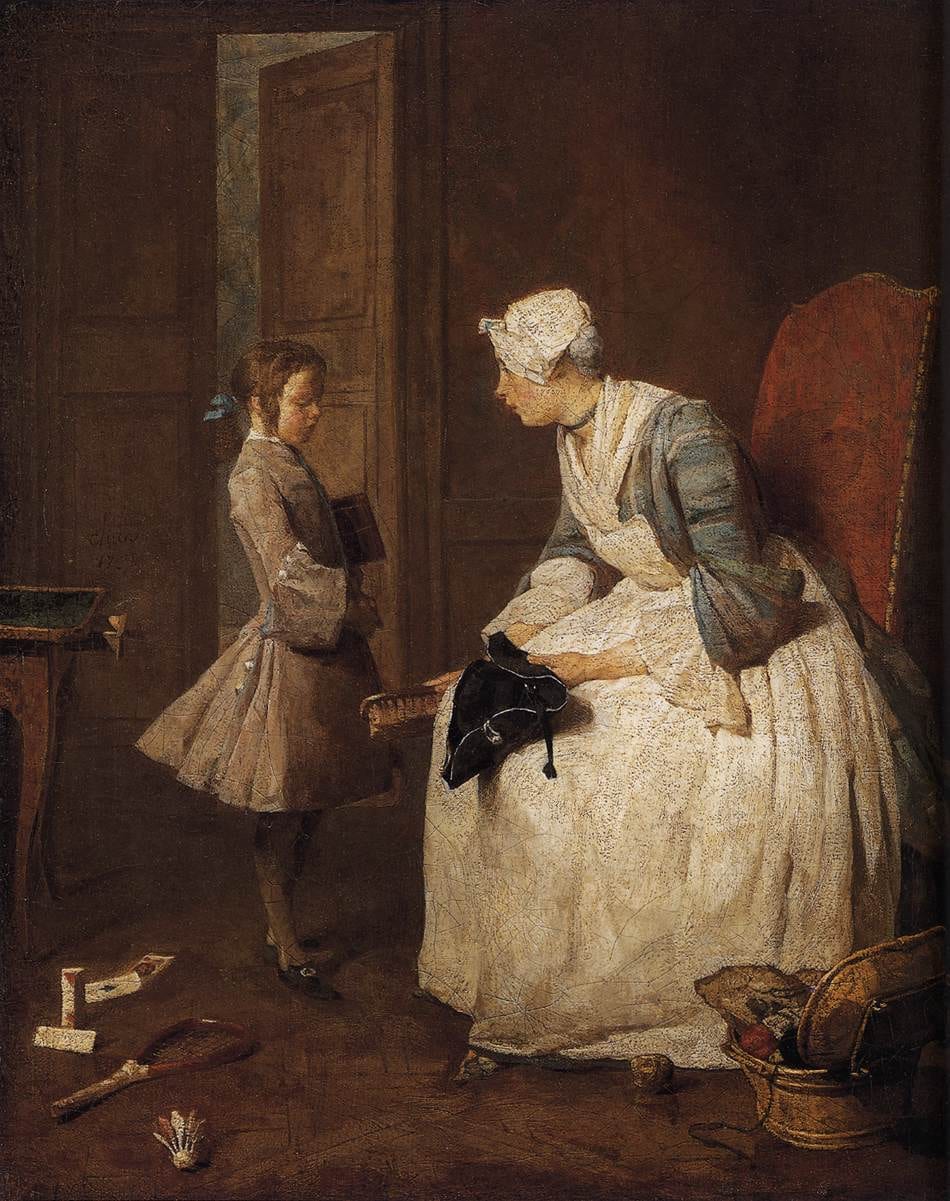
The Governess
Jean-Baptiste-Simeon Chardin, 1739
A governess brushes a boy's tricorne hat while speaking to him before school.
Jean-Baptiste-Simeon Chardin, The Governess, 1739. National Gallery of Canada, Ottawa. Public domain via Wikimedia Commons.
17th & 18th c. · Korea
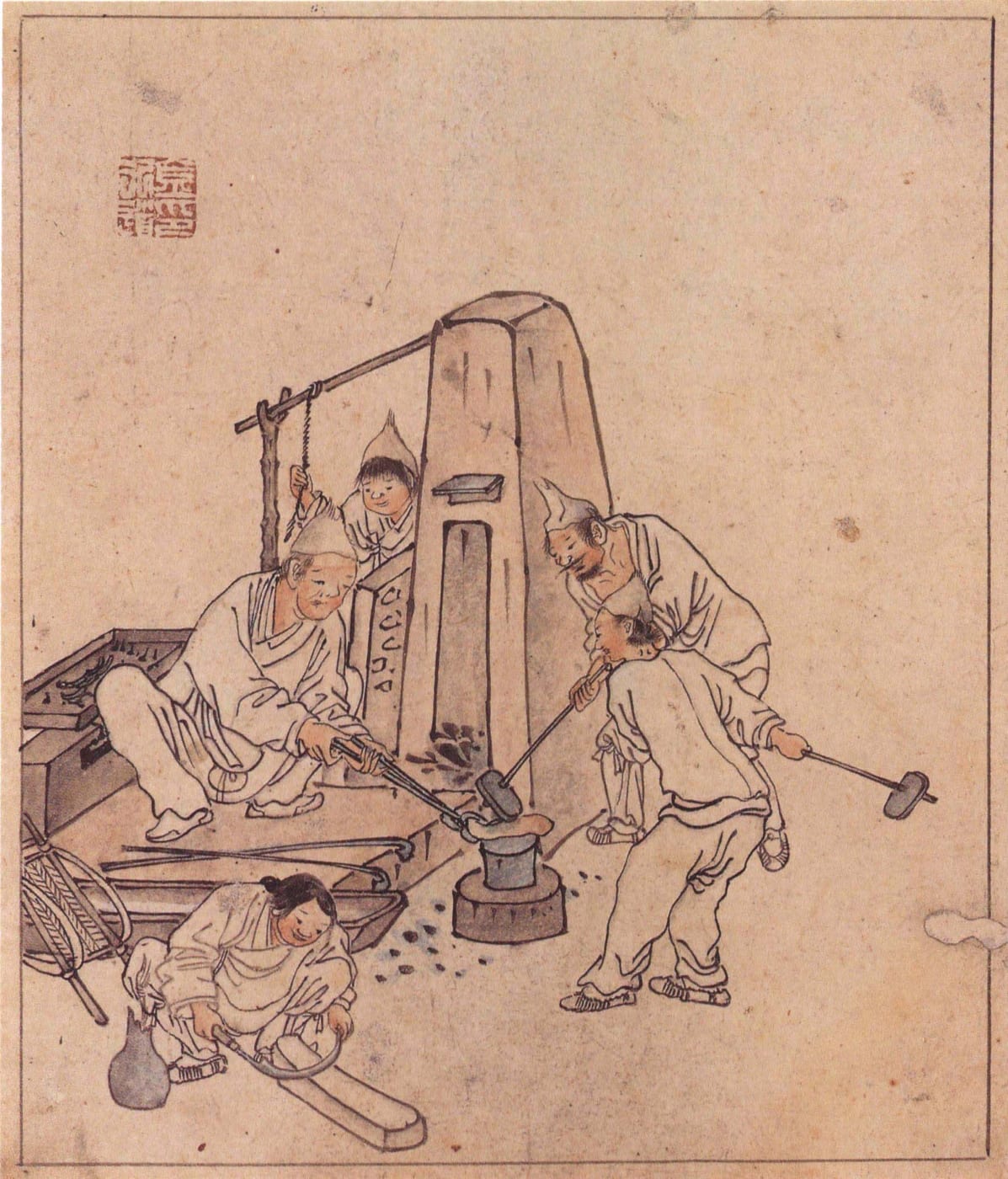
A Blacksmith's Workshop
Kim Hong-do, late 18th c.
The genre album leaf shows blacksmiths working iron at a forge while a man sharpens a blade.
Kim Hong-do, A Blacksmith's Workshop, late 18th c. National Museum of Korea. Public domain via Wikimedia Commons.
17th & 18th c. · Korea
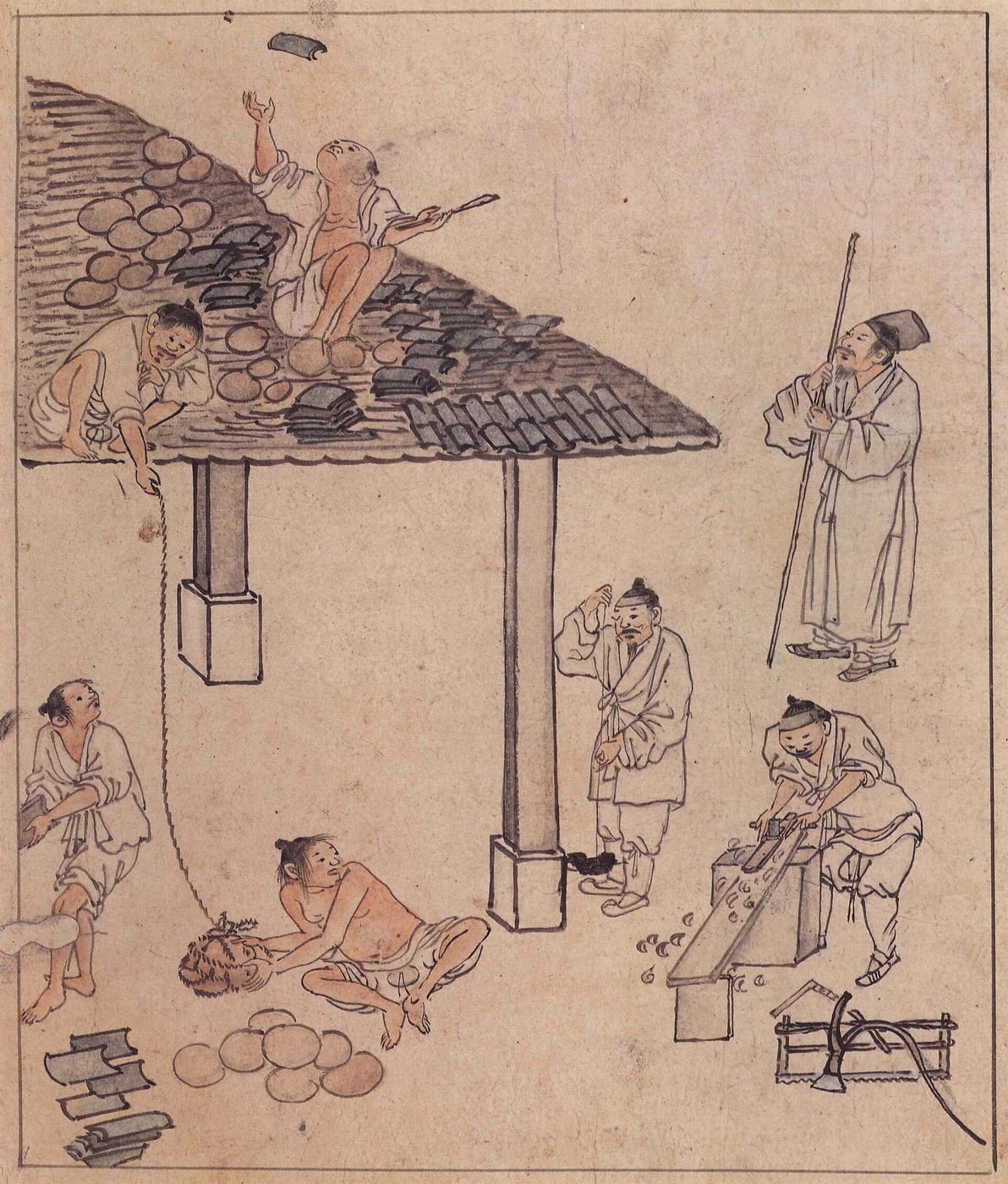
Roof Tiling
Kim Hong-do, late 18th c.
The genre album leaf shows laborers laying tiles and hoisting materials while a supervisor looks on.
Kim Hong-do, Roof Tiling, late 18th c. National Museum of Korea. Public domain via Wikimedia Commons.
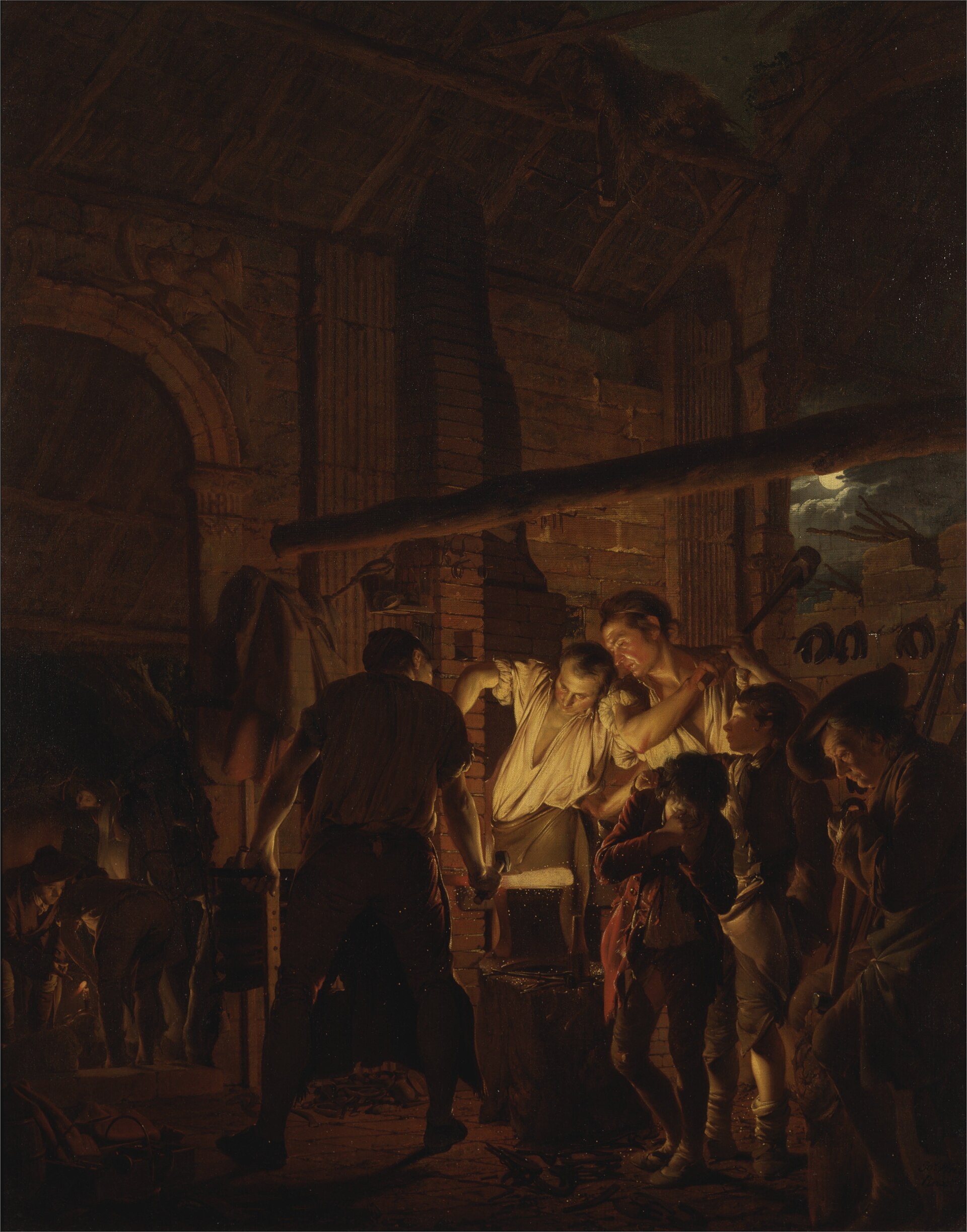
17th & 18th c. · Europe
The Blacksmith's Shop
Joseph Wright of Derby, 1771
Night, a bar of white-hot metal, and the faces of the men who work it, craft lit as drama.
Joseph Wright of Derby, A Blacksmith's Shop (1771), via Wikimedia Commons
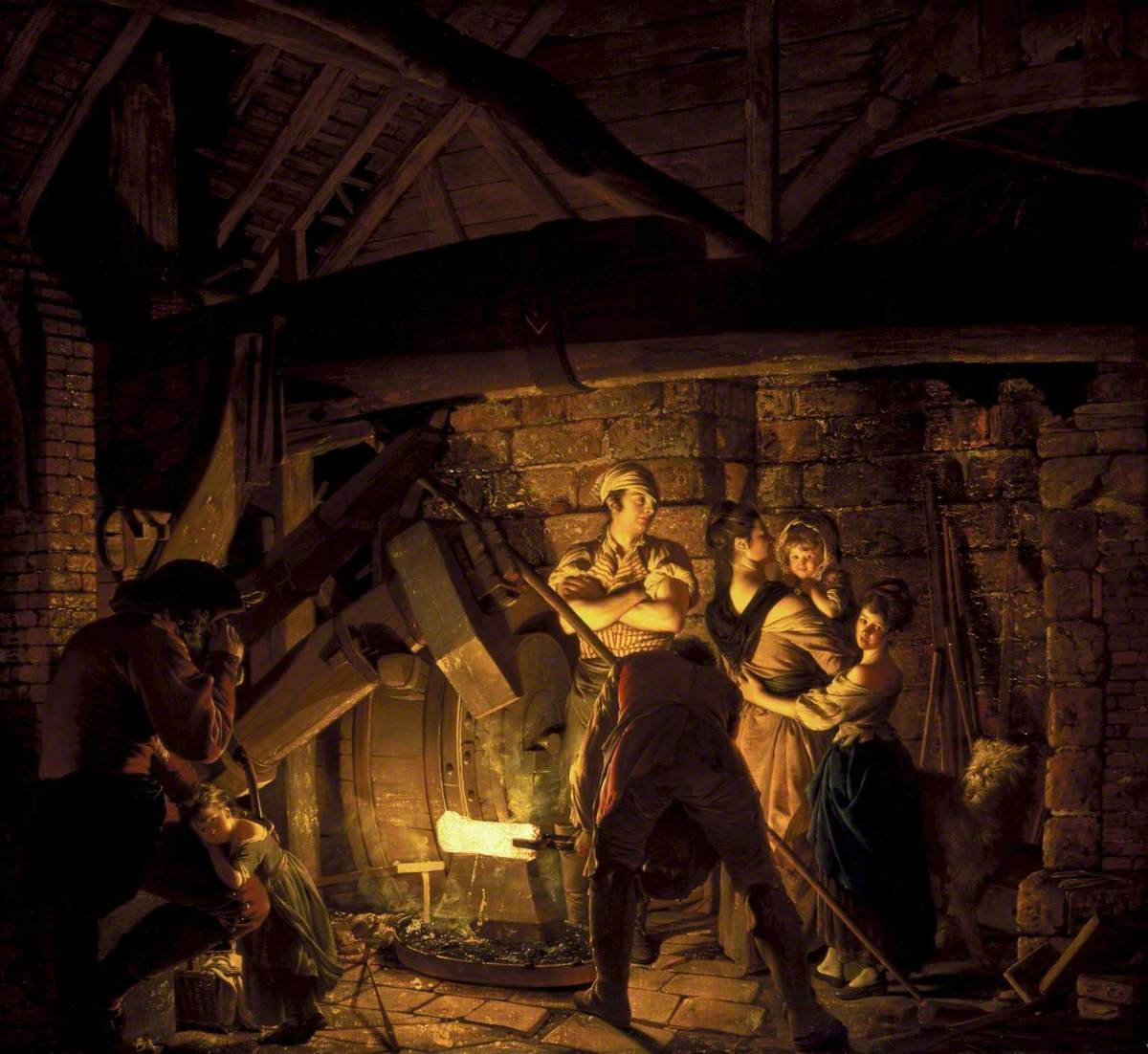
17th & 18th c. · Europe
An Iron Forge
Joseph Wright of Derby, 1772
A forge lit like a nativity, the glowing iron at the center, industry painted at the moment it began to change the world.
Tate, via Wikimedia Commons
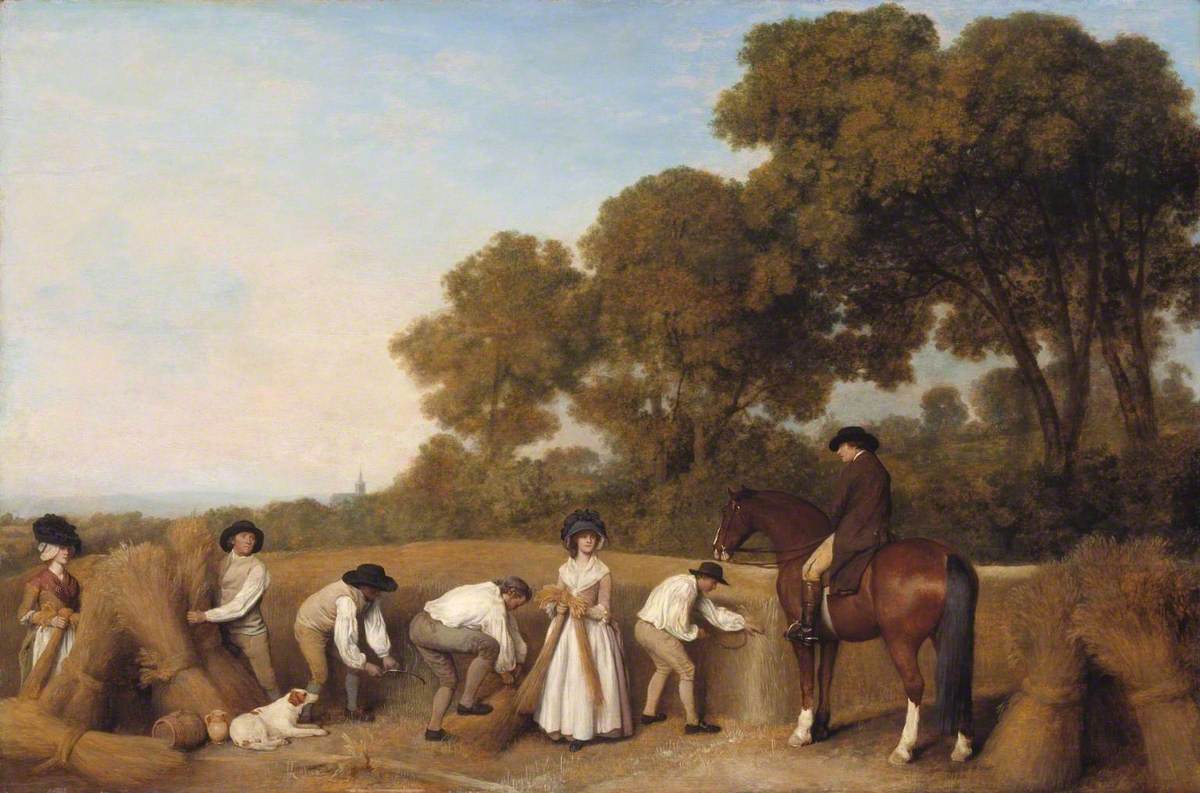
17th & 18th c. · Europe
The Reapers
George Stubbs, 1785
Harvest workers arranged with the same calm precision Stubbs gave his racehorses, rural labor as an English idyll.
Tate, via Wikimedia Commons
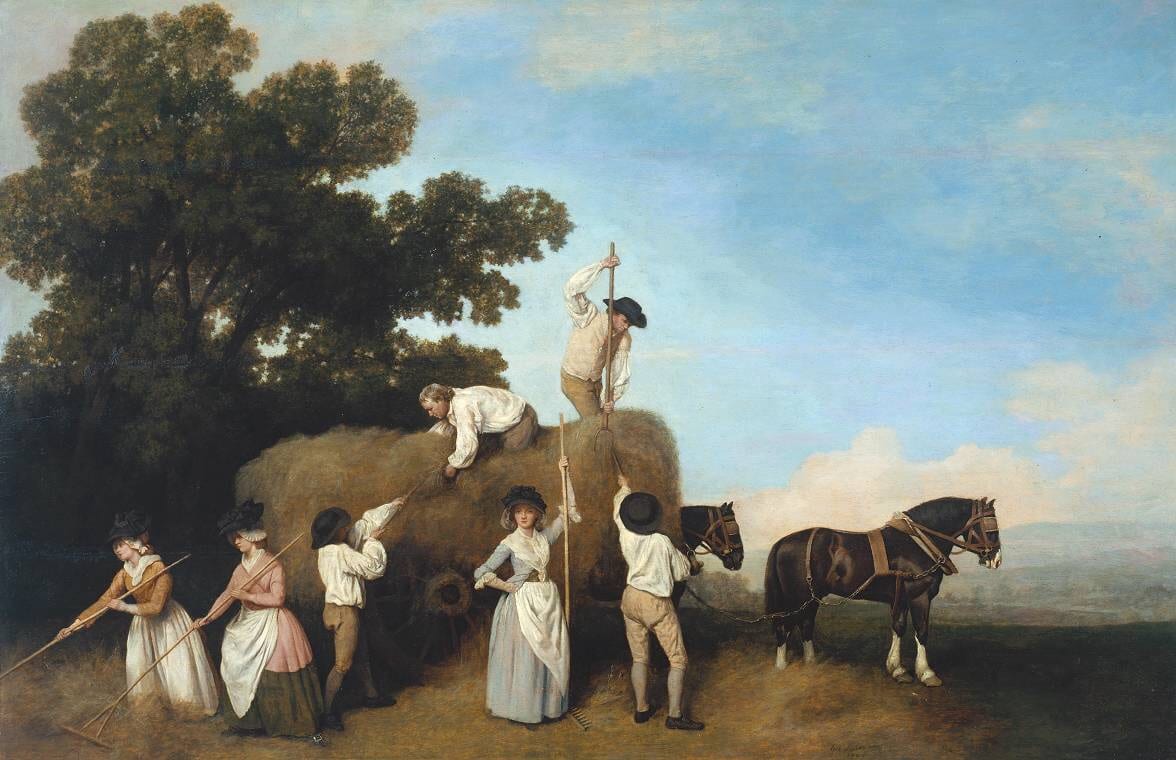
17th & 18th c. · Europe
Haymakers
George Stubbs, 1785
Farm laborers load hay onto a cart while a woman rests on a rake in a summer field.
George Stubbs, Haymakers, 1785. Tate, London. Public domain via Wikimedia Commons.
17th & 18th c. · Europe
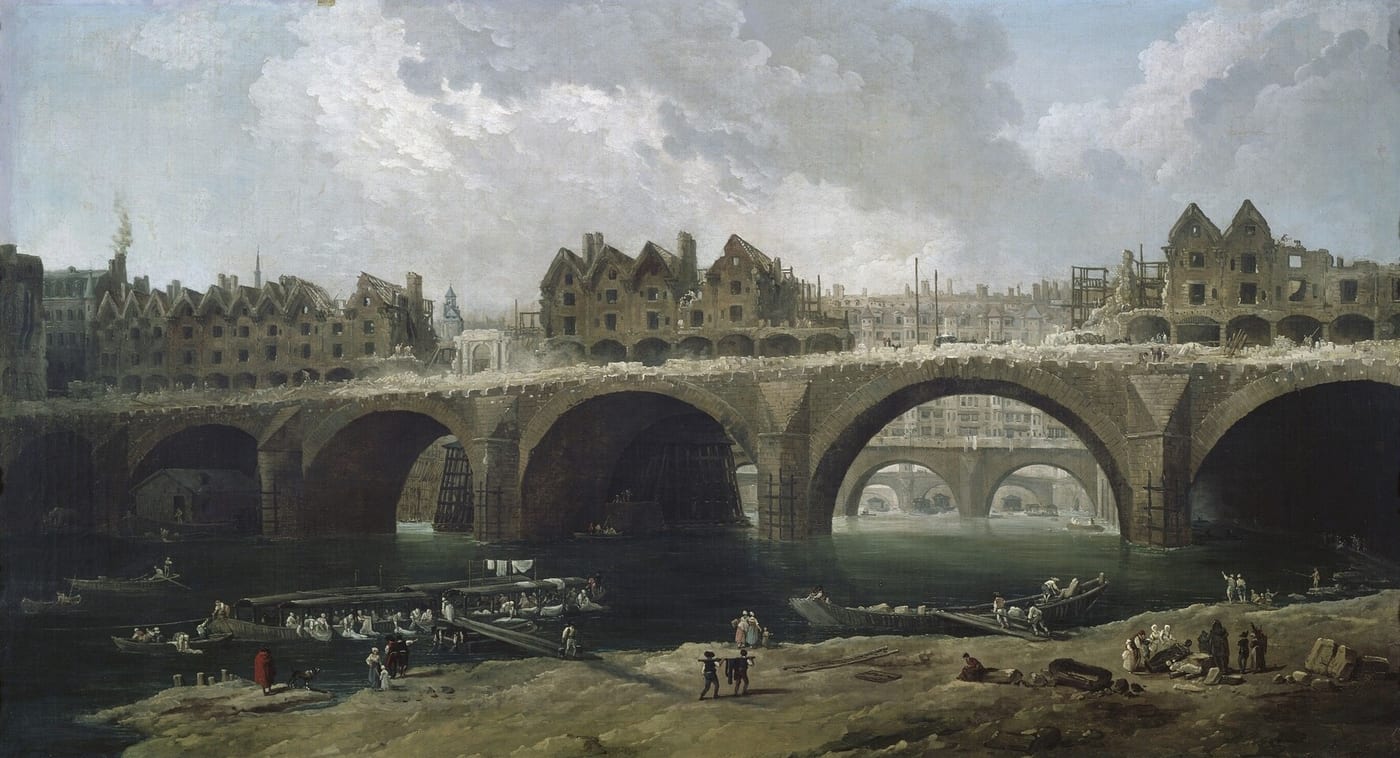
Demolition of the Houses on the Pont Notre-Dame
Hubert Robert, 1786
Workmen tear down the houses built along the Pont Notre-Dame in Paris.
Hubert Robert, Demolition of the Houses on the Pont Notre-Dame, 1786. Musee du Louvre, Paris. Public domain via Wikimedia Commons.
17th & 18th c. · China
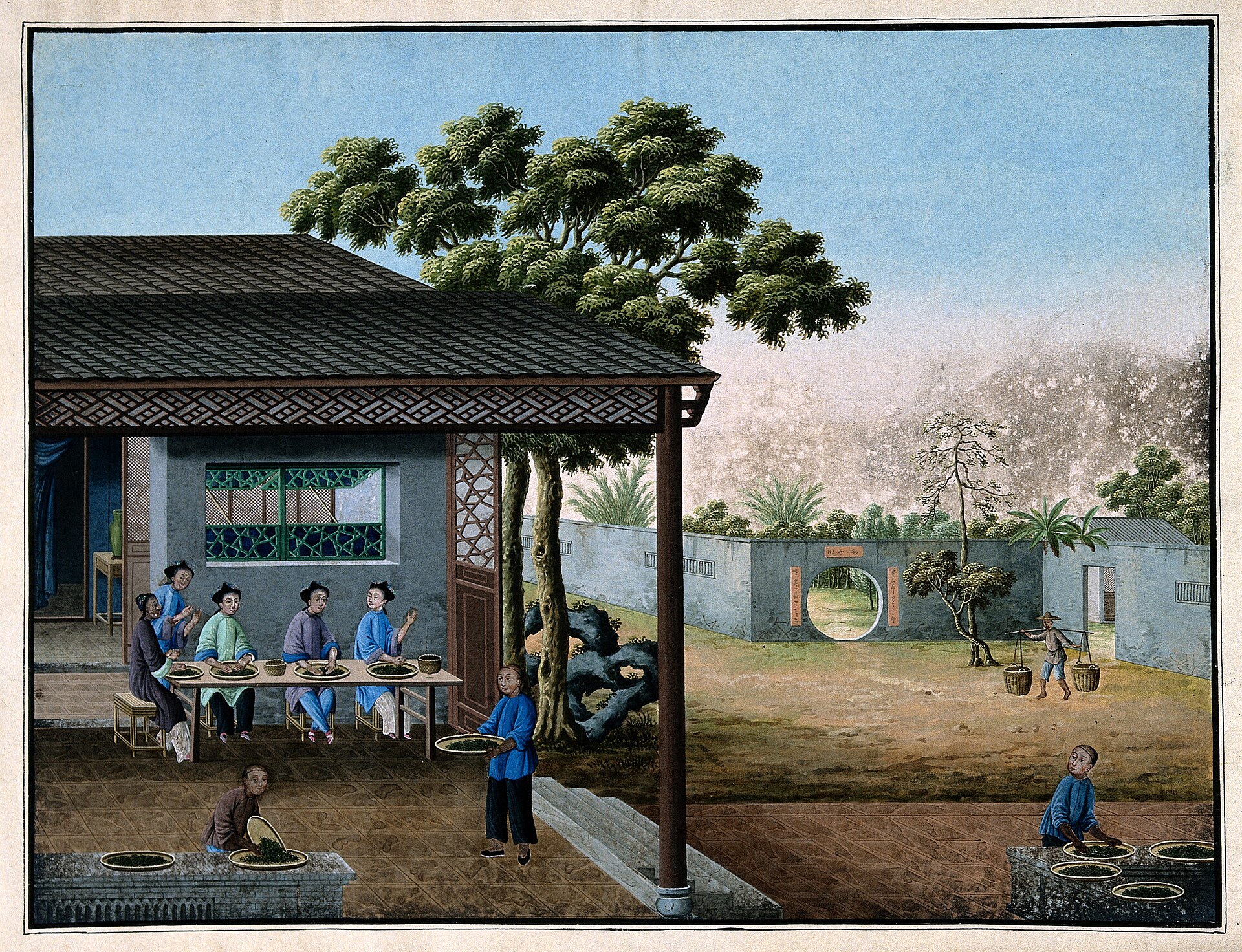
Tea, silk, and porcelain production series
Canton export workshops, c. 1790-1820
Export albums made for Western buyers, showing tea and silk and porcelain moving stage by stage through thousands of hands.
Wellcome Collection, via Wikimedia Commons (CC BY 4.0)
17th & 18th c. · Japan
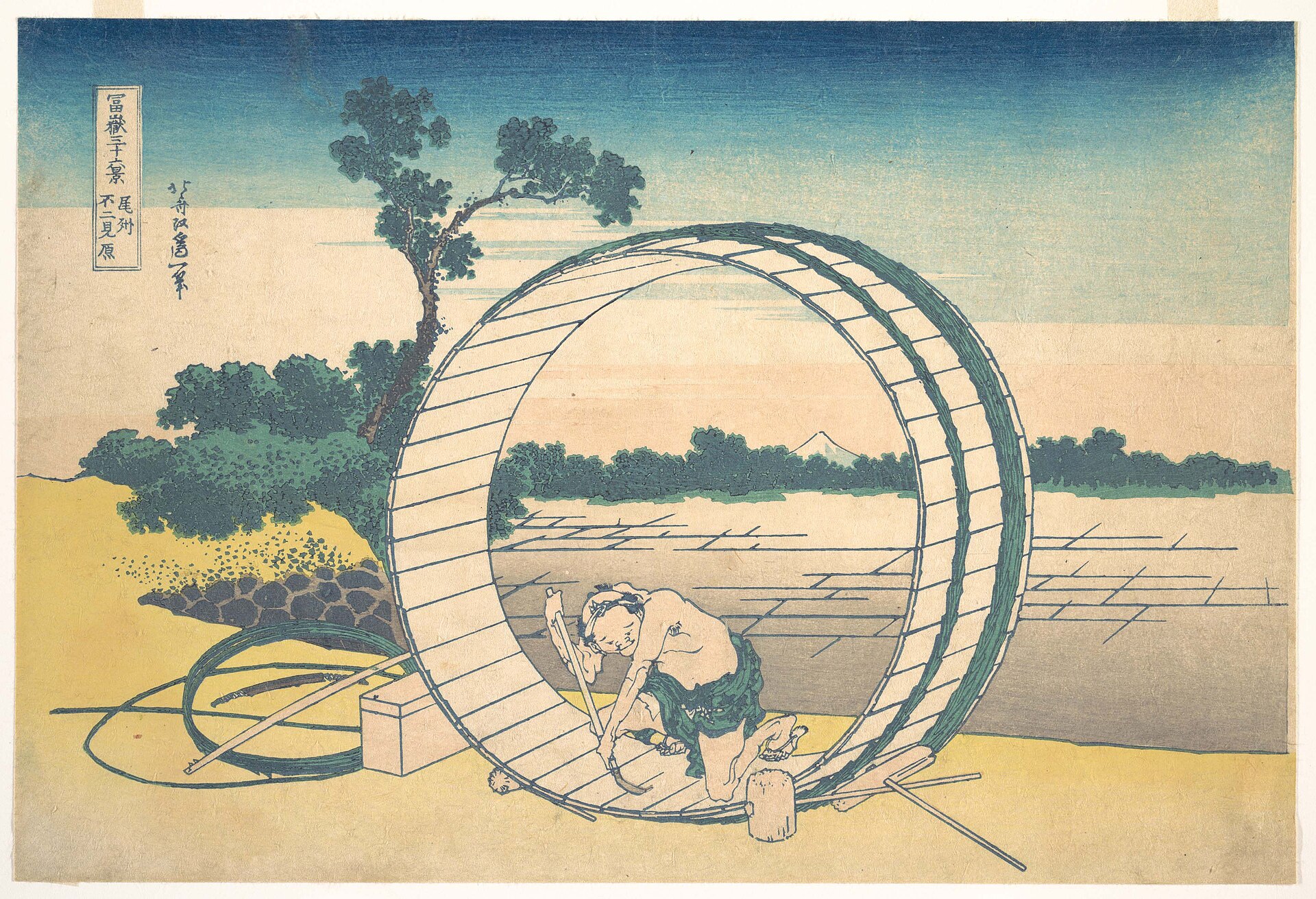
Fujimigahara in Owari Province (the cooper)
Katsushika Hokusai, c. 1830-32
A cooper planing the inside of a giant barrel, Mount Fuji framed through the ring of his work.
The Metropolitan Museum of Art
V. Industrial Age (19th c.)
49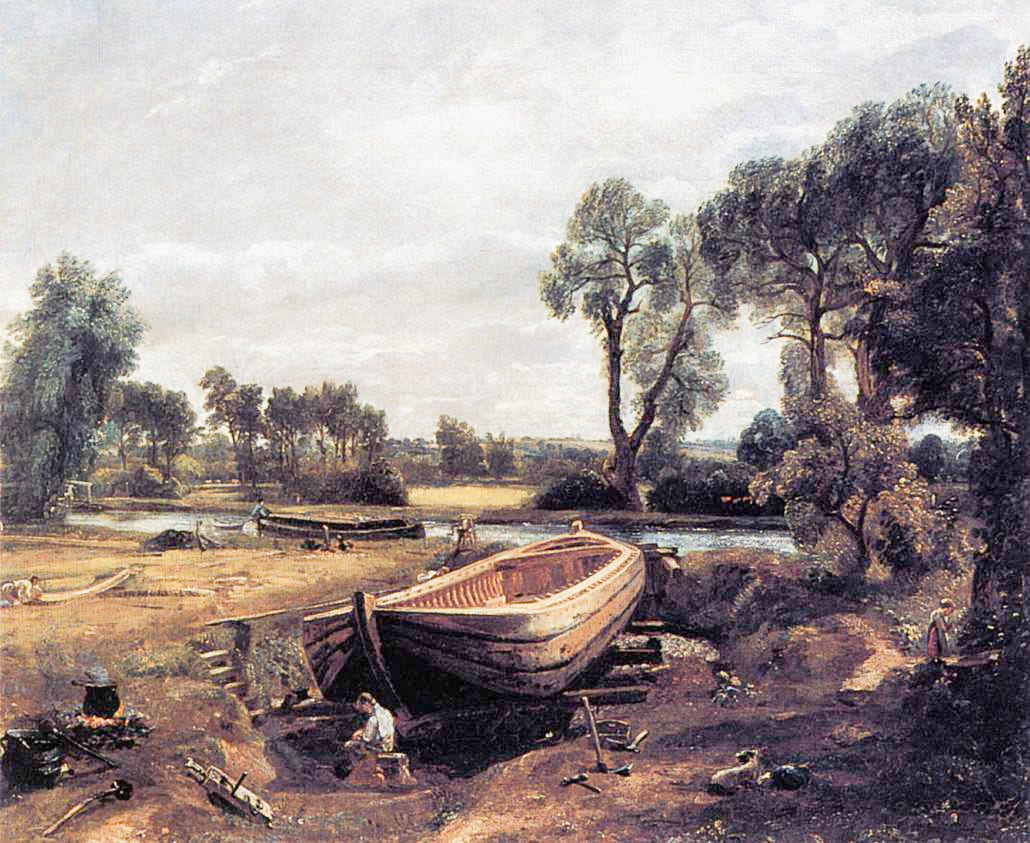
Industrial Age (19th c.) · Europe
Boat-Building near Flatford Mill
John Constable, 1815
Workers build a wooden barge in a dry dock beside the River Stour near Flatford Mill.
John Constable, Boat-Building near Flatford Mill, 1815. Victoria and Albert Museum, London. Public domain via Wikimedia Commons.
Industrial Age (19th c.) · Europe
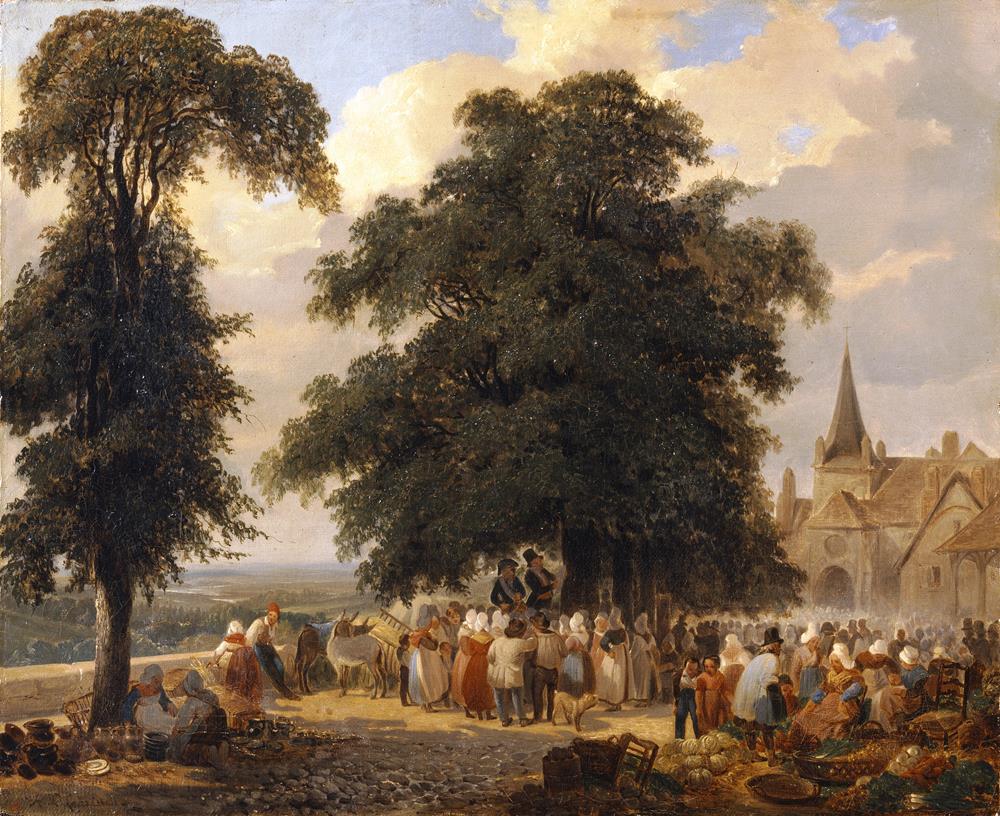
The Town Crier
Auguste-Xavier Leprince, c. 1823
A profession the modern world no longer remembers needing, the man paid to be the news before newspapers reached everyone.
In The Last Human Computer
Auguste-Xavier Leprince, The Town Crier, via Wikimedia Commons
Industrial Age (19th c.) · Europe
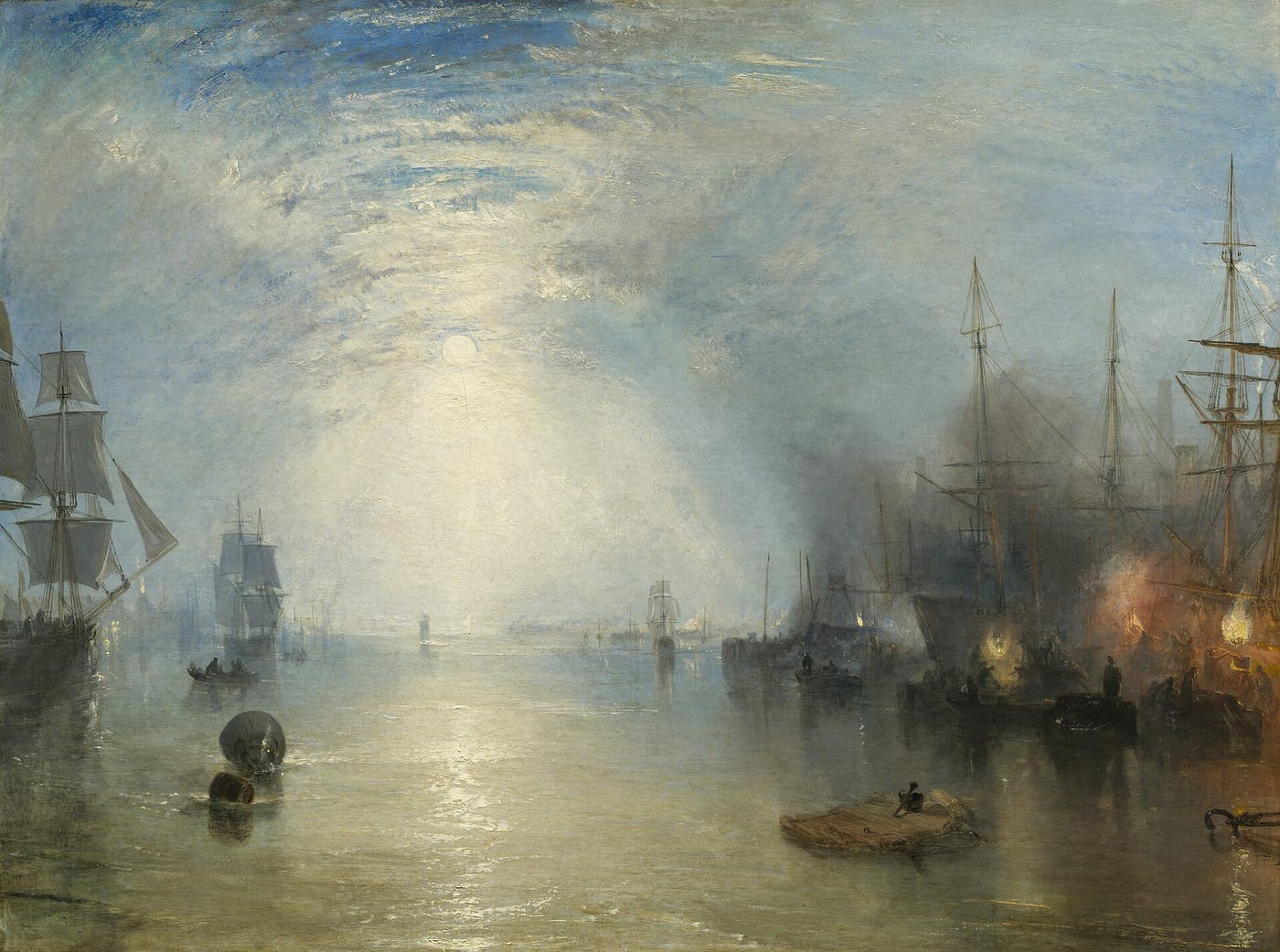
Keelmen Heaving in Coals by Moonlight
J. M. W. Turner, 1835
Keelmen shovel coal from barges into colliers by torchlight on the Tyne under a full moon.
J. M. W. Turner, Keelmen Heaving in Coals by Moonlight, 1835. National Gallery of Art, Washington. Public domain via Wikimedia Commons.

Industrial Age (19th c.) · Americas
Fur Traders Descending the Missouri
George Caleb Bingham, 1845
A fur trader and his son drift down the Missouri River in a dugout canoe with a tethered animal at the bow.
George Caleb Bingham, Fur Traders Descending the Missouri, 1845. Metropolitan Museum of Art, New York. Public domain via Wikimedia Commons.
Industrial Age (19th c.) · Europe
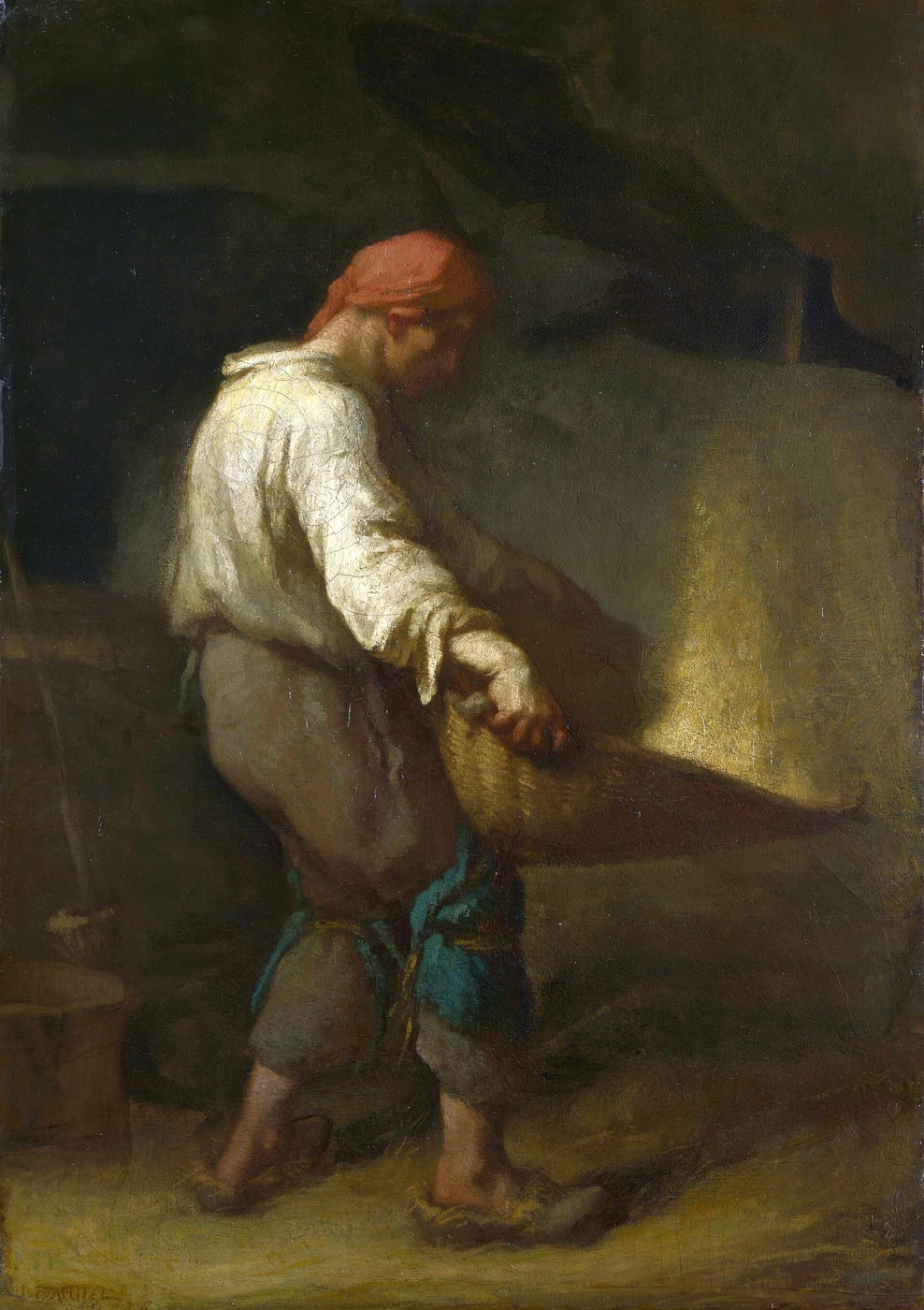
The Winnower
Jean-Francois Millet, 1848
A peasant tosses grain from a basket to separate it from the chaff.
Jean-Francois Millet, The Winnower, 1848. National Gallery, London. Public domain via Wikimedia Commons.
Industrial Age (19th c.) · Europe
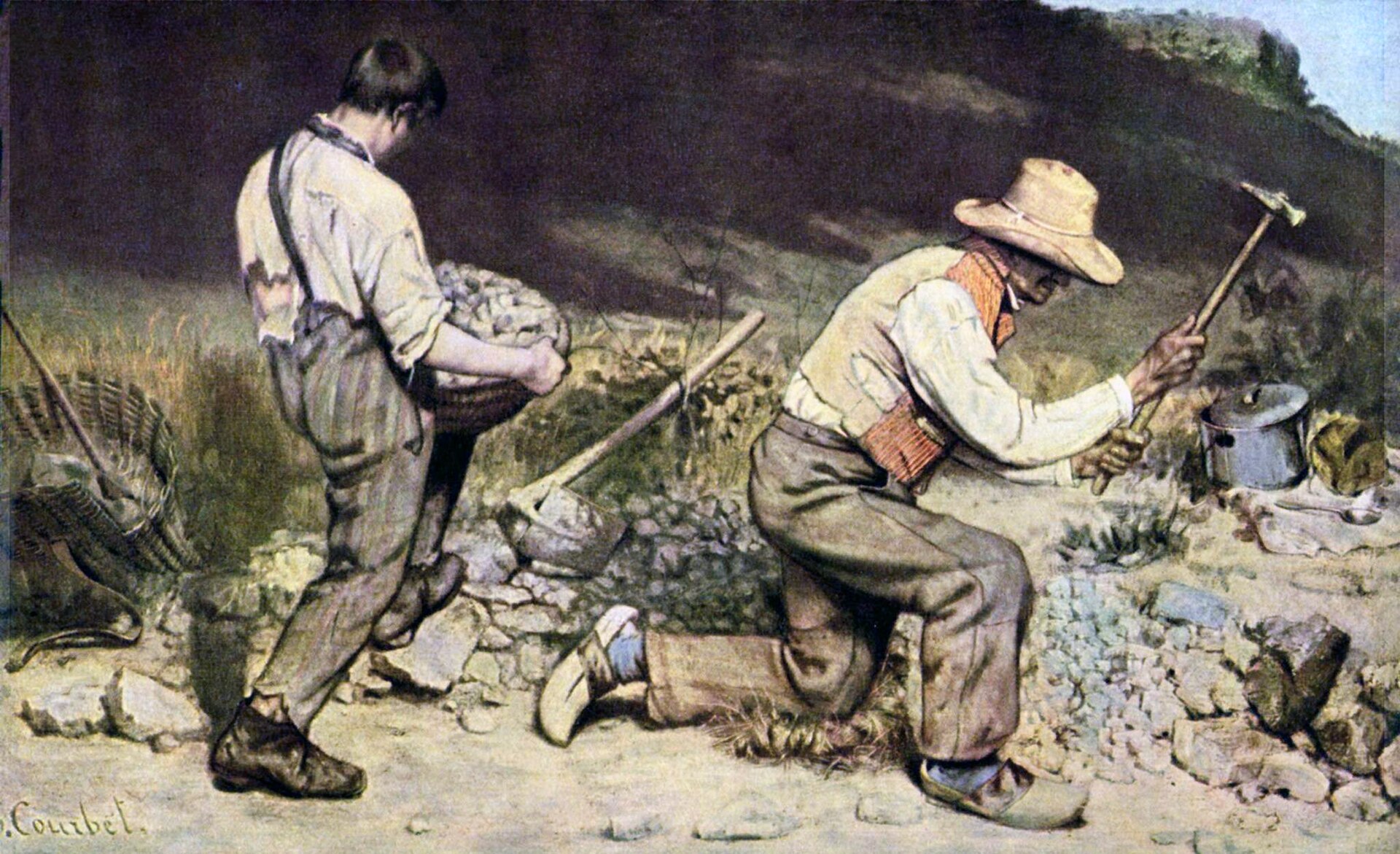
The Stonebreakers
Gustave Courbet, 1849
An old man and a boy breaking rock by the road, no beauty and no message, only the labor, the painting that founded realism.
Gustave Courbet, The Stonebreakers (formerly Gemäldegalerie, Dresden), via Wikimedia Commons
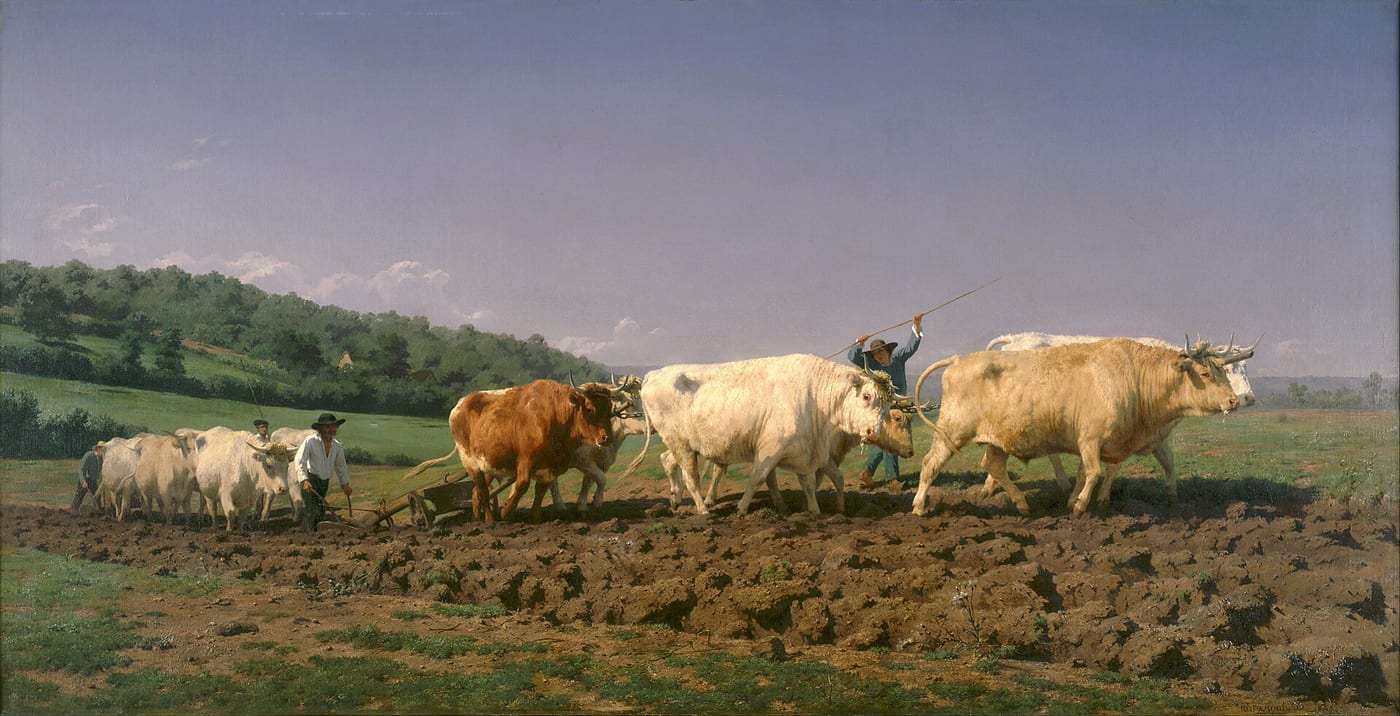
Industrial Age (19th c.) · Europe
Ploughing in the Nivernais
Rosa Bonheur, 1849
Teams of oxen drag ploughs across a field in central France.
Rosa Bonheur, Ploughing in the Nivernais, 1849. Musee d'Orsay, Paris. Public domain via Wikimedia Commons.
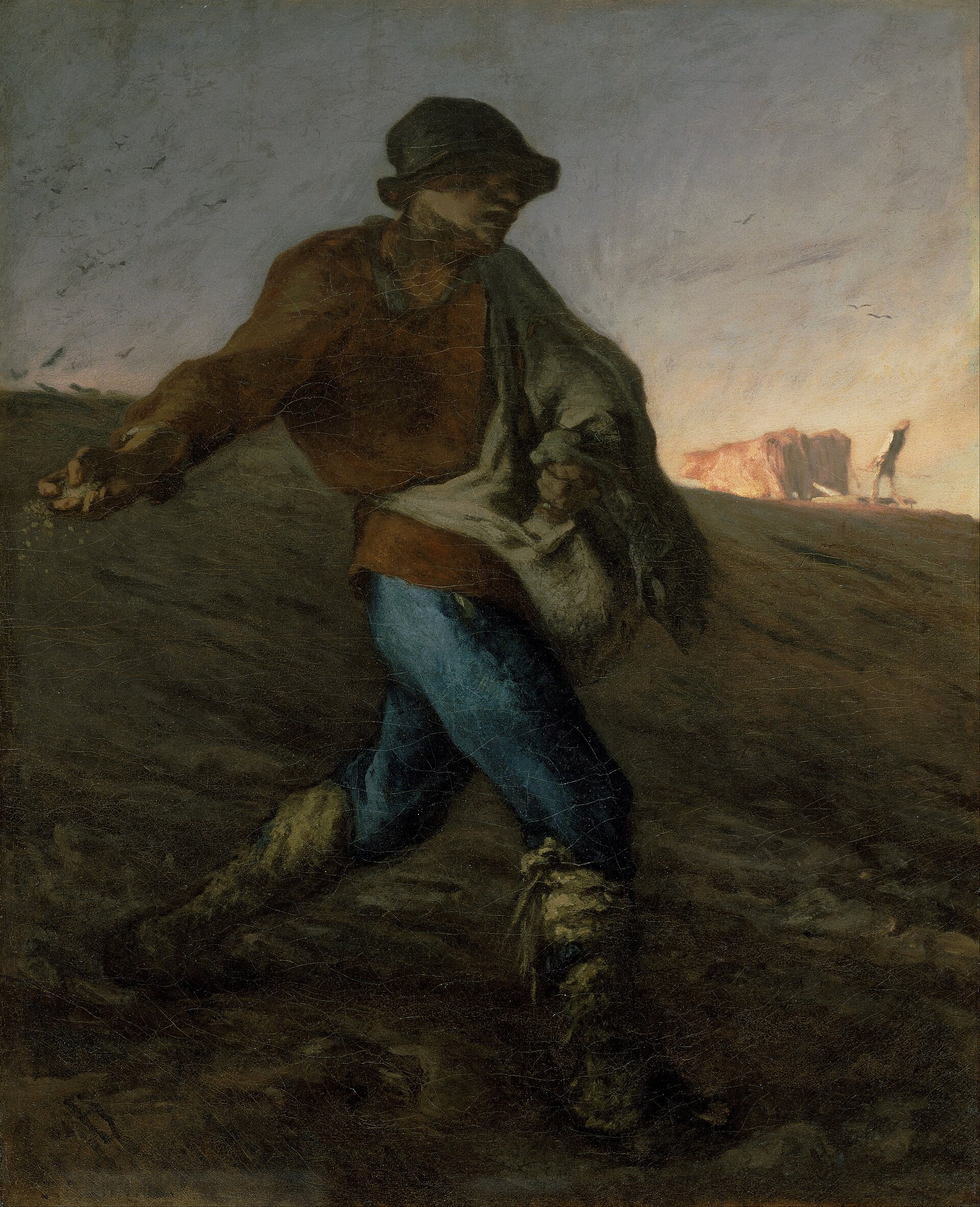
Industrial Age (19th c.) · Europe
The Sower
Jean-Francois Millet, 1850
A single worker fills the frame a century earlier reserved for a saint or a king, and the labor is the subject, not the setting.
In The Curse and the Calling
Museum of Fine Arts, Boston, via Wikimedia Commons
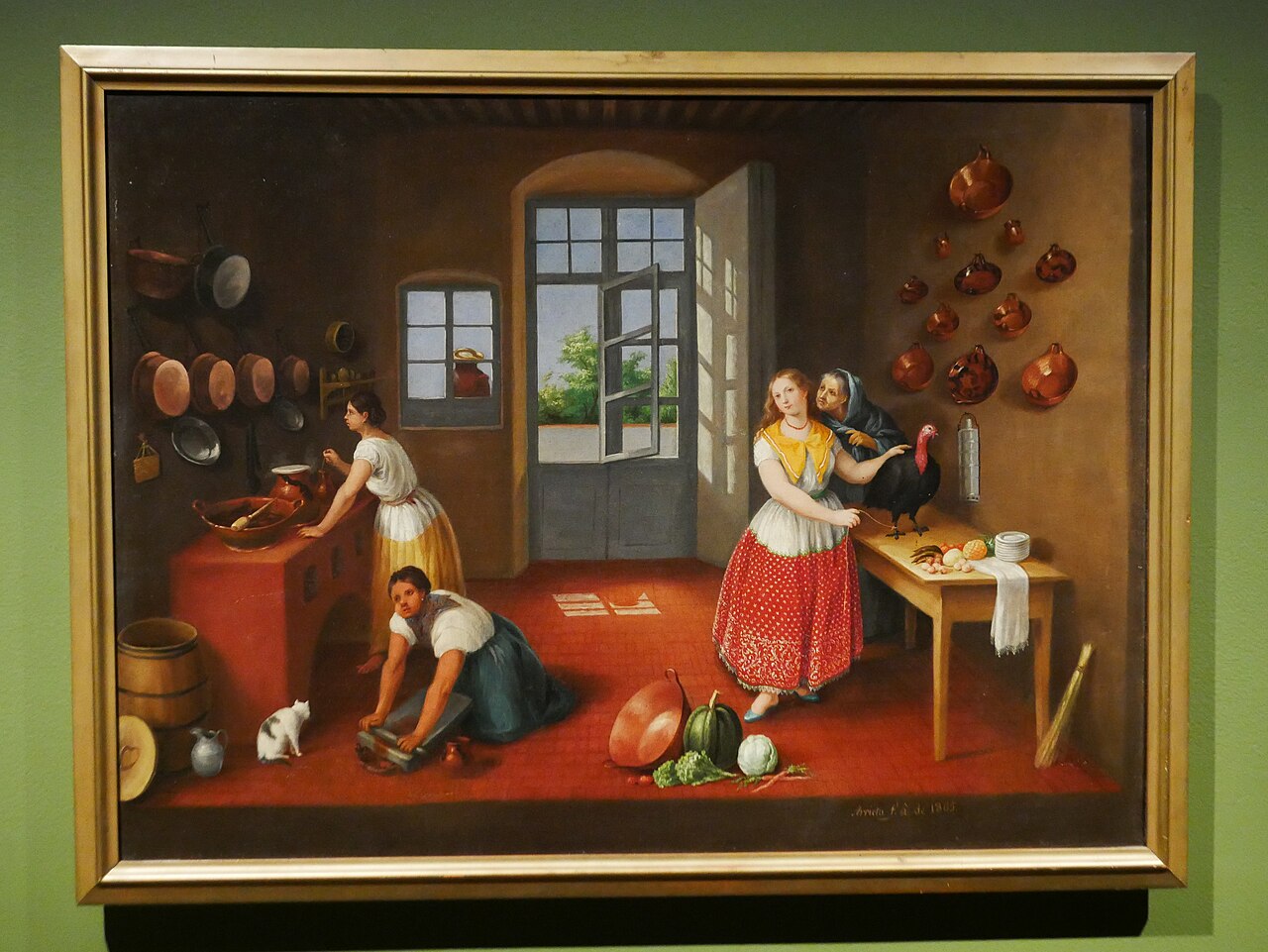
Industrial Age (19th c.) · Americas
Market and kitchen scenes
Jose Agustin Arrieta, c. 1850s
Puebla's market vendors and cooks, the food trades of a Mexican city painted with affection and detail.
José Agustín Arrieta, Cocina poblana; Museo Amparo, Puebla. Photo: Luis Alvaz, via Wikimedia Commons (CC BY-SA 4.0)
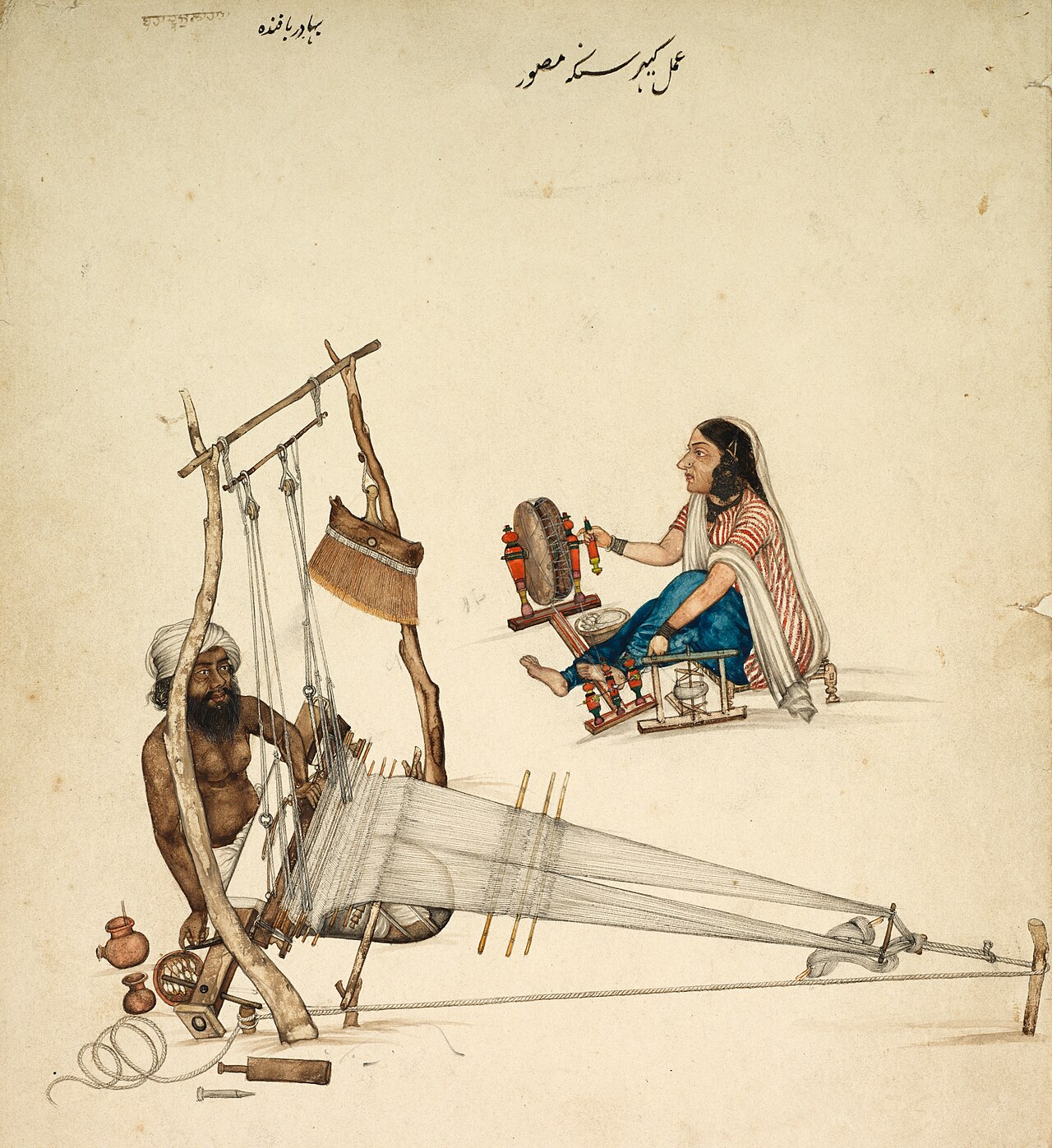
Industrial Age (19th c.) · India
Indian trades and castes (weavers, potters, dyers)
Company School artists, early-mid 19th c.
Sets of the trades of India commissioned by the British, each craftsman posed with the tools of the caste.
Kehar Singh, Weaver and Spinner (Company School), ca. 1860, via Wikimedia Commons
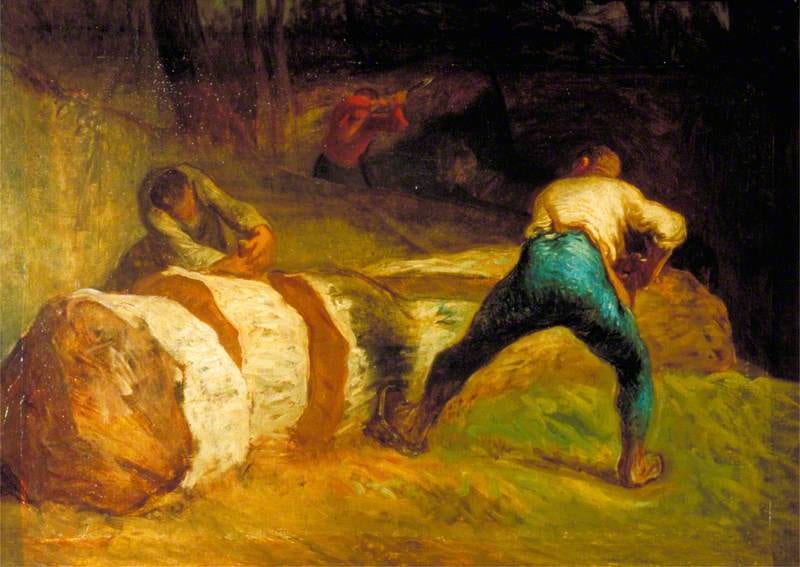
Industrial Age (19th c.) · Europe
The Wood Sawyers
Jean-Francois Millet, 1850-52
Two labourers work a large saw through a log.
Jean-Francois Millet, The Wood Sawyers, 1850-52. Victoria and Albert Museum, London. Public domain via Wikimedia Commons.
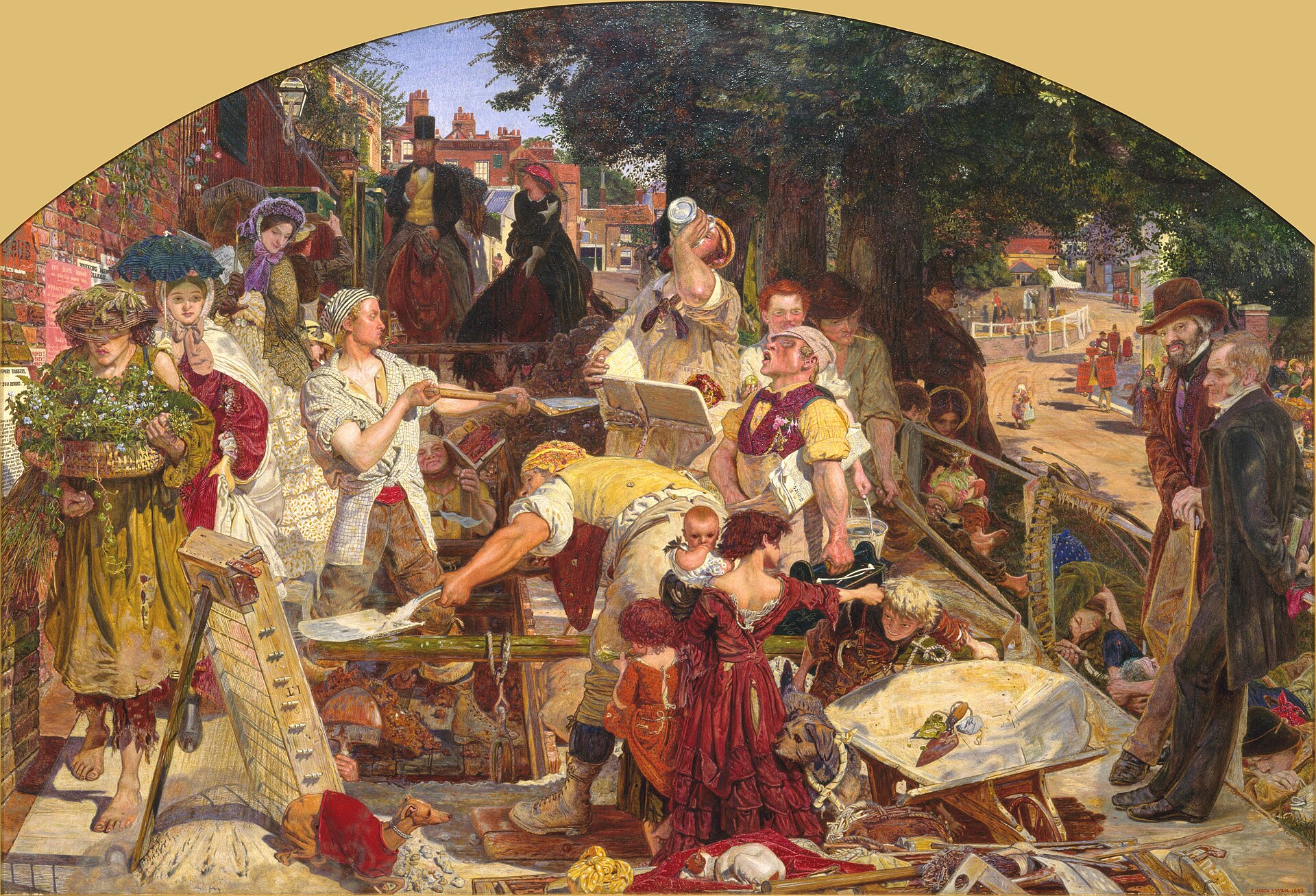
Industrial Age (19th c.) · Europe
Work
Ford Madox Brown, 1852-65
A Victorian street with navvies digging at the center, an entire theory of who works and who watches packed into one canvas.
Manchester Art Gallery, via Wikimedia Commons
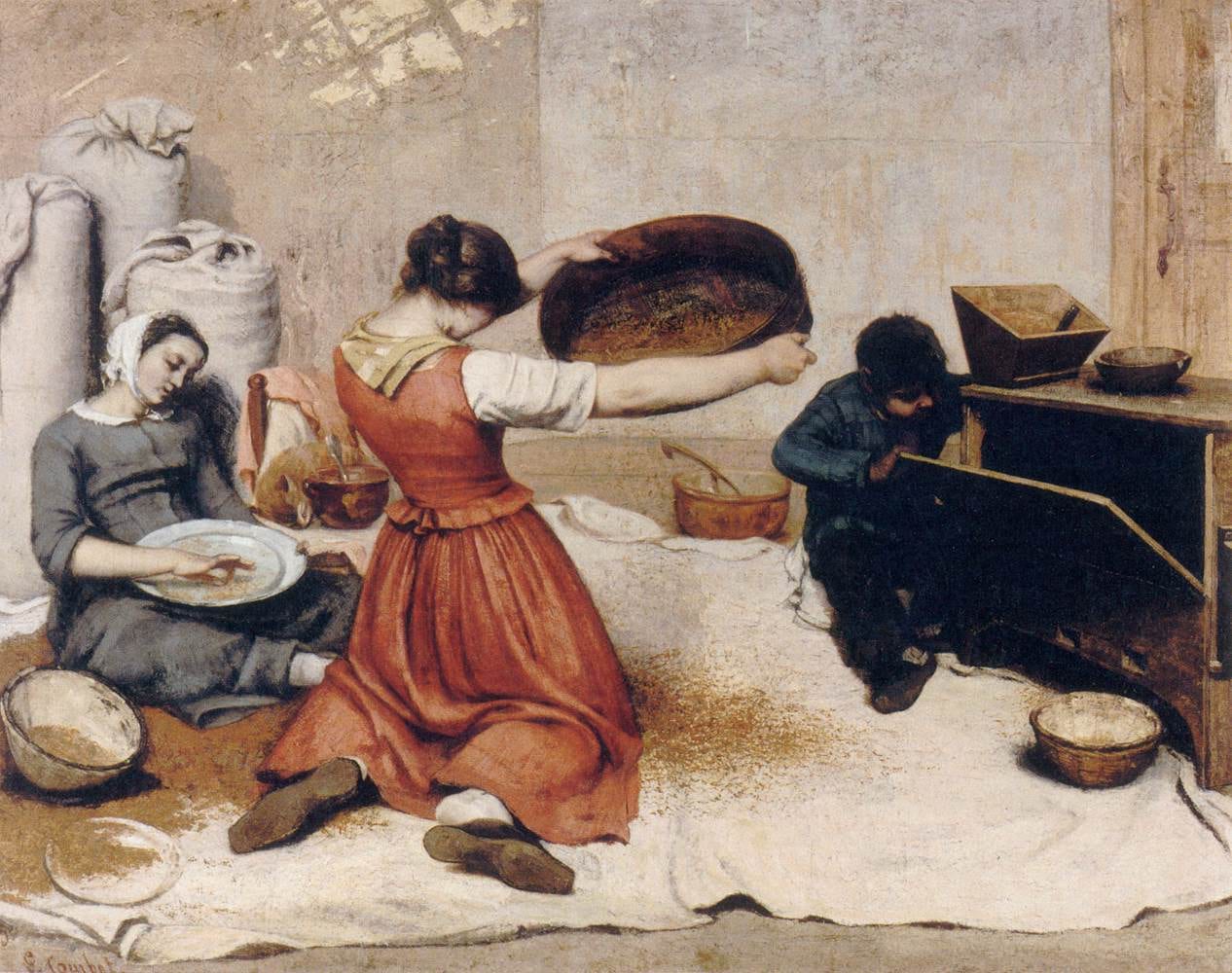
Industrial Age (19th c.) · Europe
The Wheat Sifters
Gustave Courbet, 1854
Women kneel to sift grain through sieves in a rural interior.
Gustave Courbet, The Wheat Sifters, 1854. Musee d'Arts de Nantes. Public domain via Wikimedia Commons.
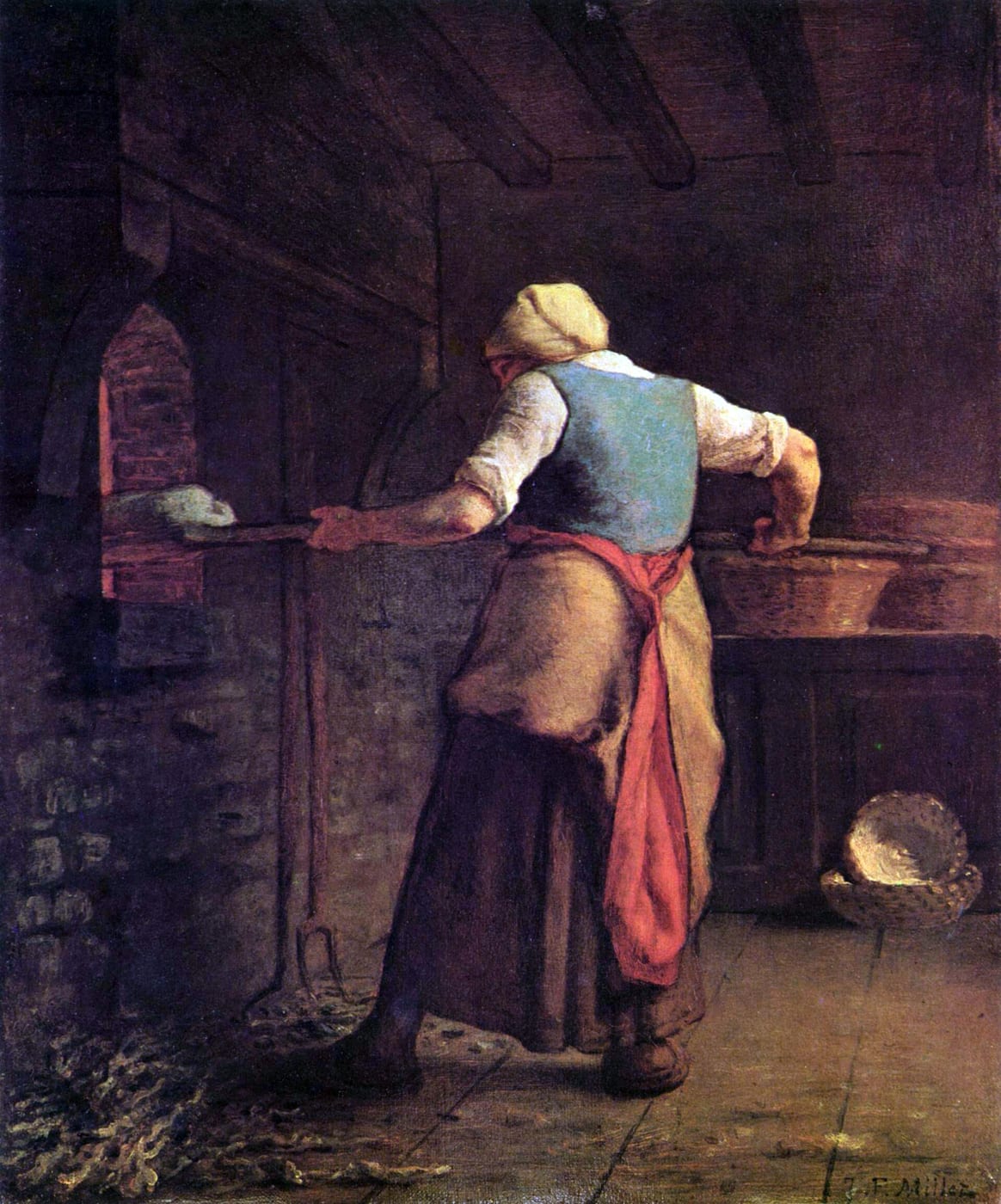
Industrial Age (19th c.) · Europe
Woman Baking Bread
Jean-Francois Millet, 1854
A peasant woman slides a loaf into a brick oven.
Jean-Francois Millet, Woman Baking Bread, 1854. Kroller-Muller Museum, Otterlo. Public domain via Wikimedia Commons.
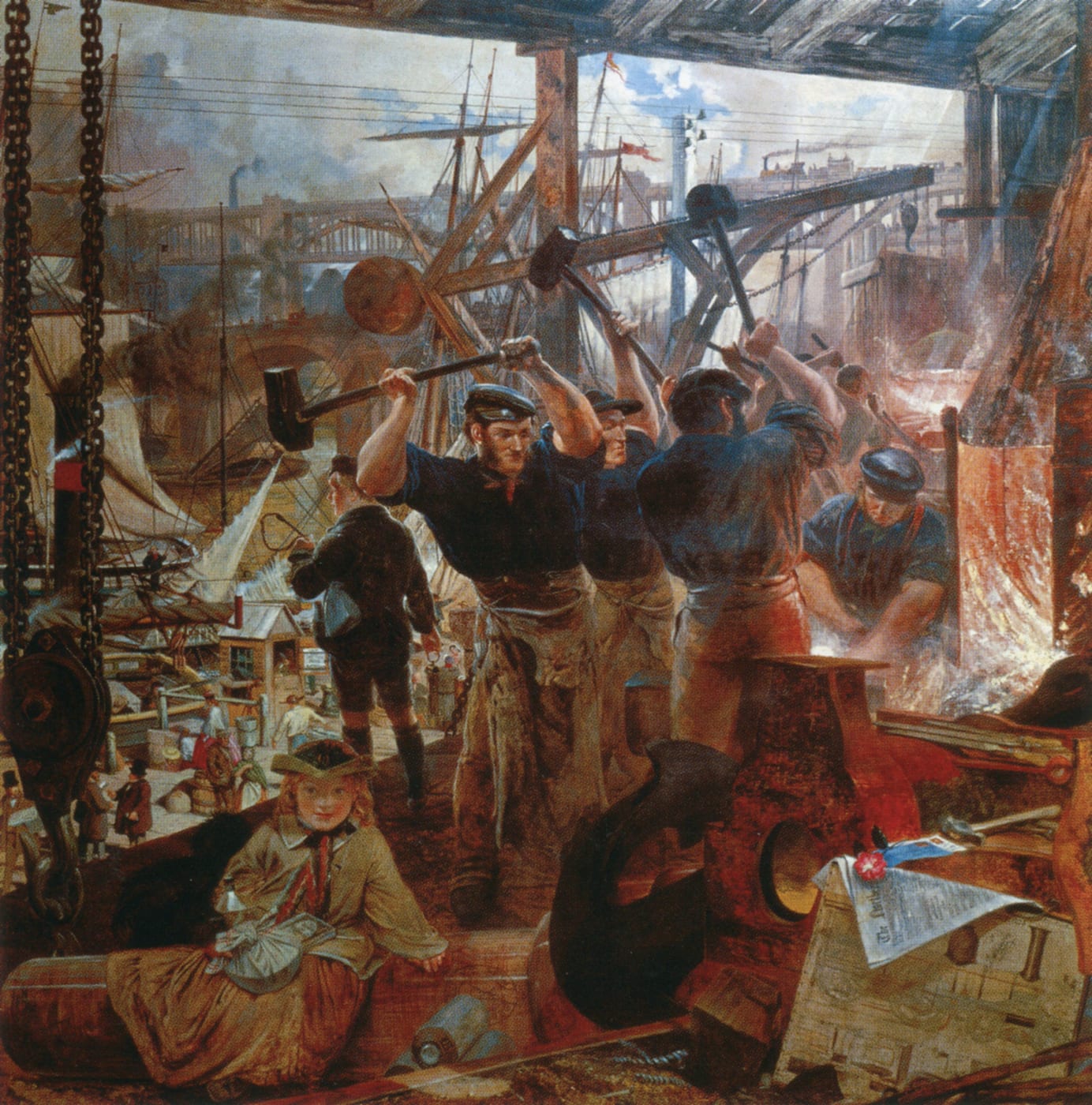
Industrial Age (19th c.) · Europe
Iron and Coal
William Bell Scott, 1855-60
Hammermen strike white-hot iron in a Tyneside industrial scene.
William Bell Scott, Iron and Coal, 1855-60. National Trust, Wallington Hall, Northumberland. Public domain via Wikimedia Commons.
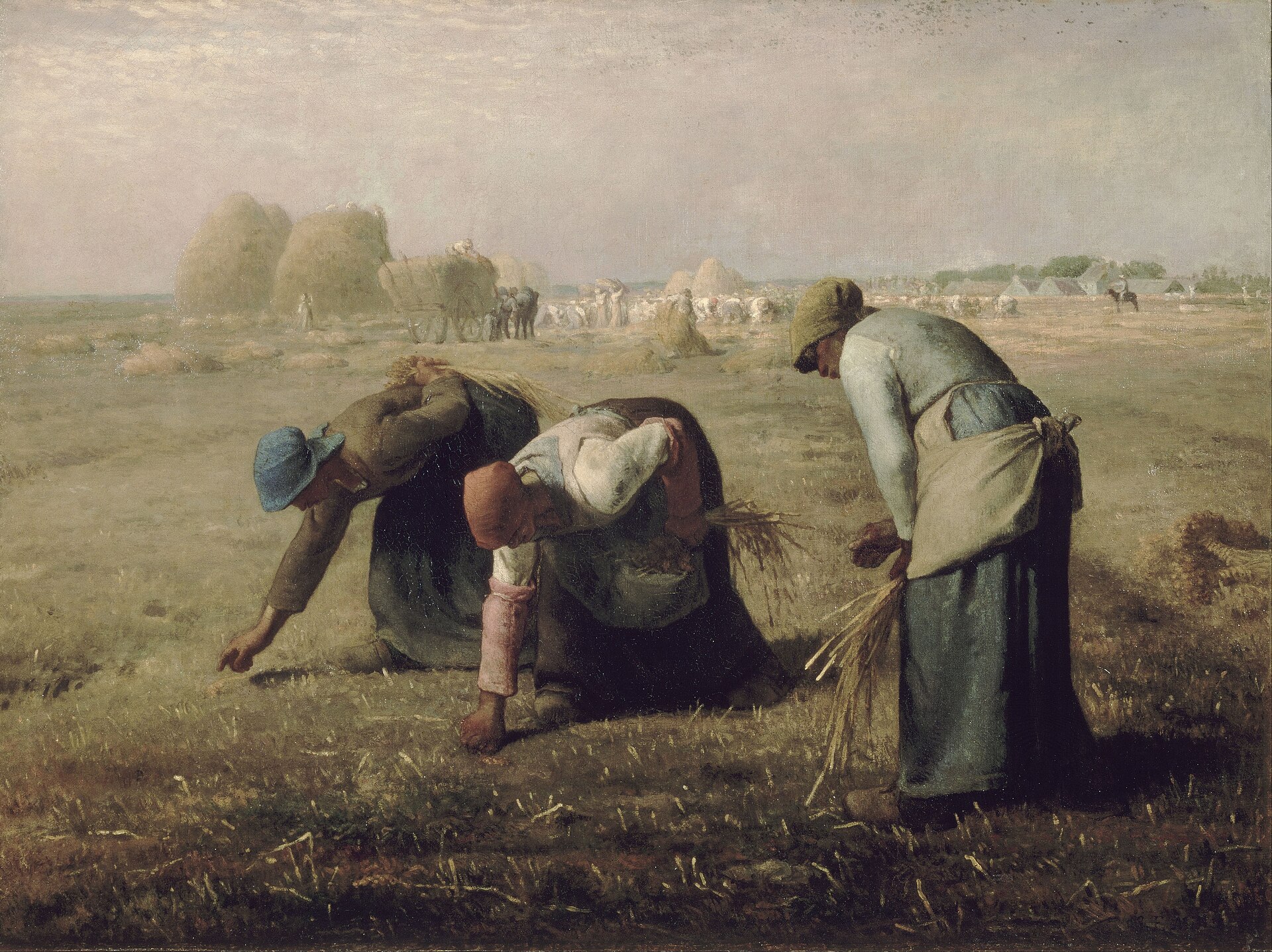
Industrial Age (19th c.) · Europe
The Gleaners
Jean-Francois Millet, 1857
Three women stooping for the leftover grain, the poorest labor in the field, painted at the scale of history.
Musée d'Orsay, via Wikimedia Commons
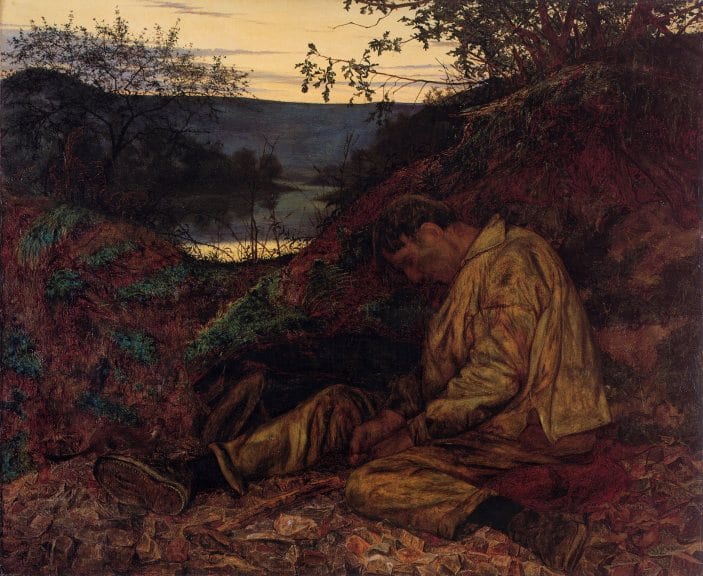
Industrial Age (19th c.) · Europe
The Stonebreaker
Henry Wallis, 1857
The painting shows a stonebreaker slumped dead beside the road at dusk after his labour.
Henry Wallis, The Stonebreaker, 1857. Birmingham Museums Trust. Public domain via Wikimedia Commons.
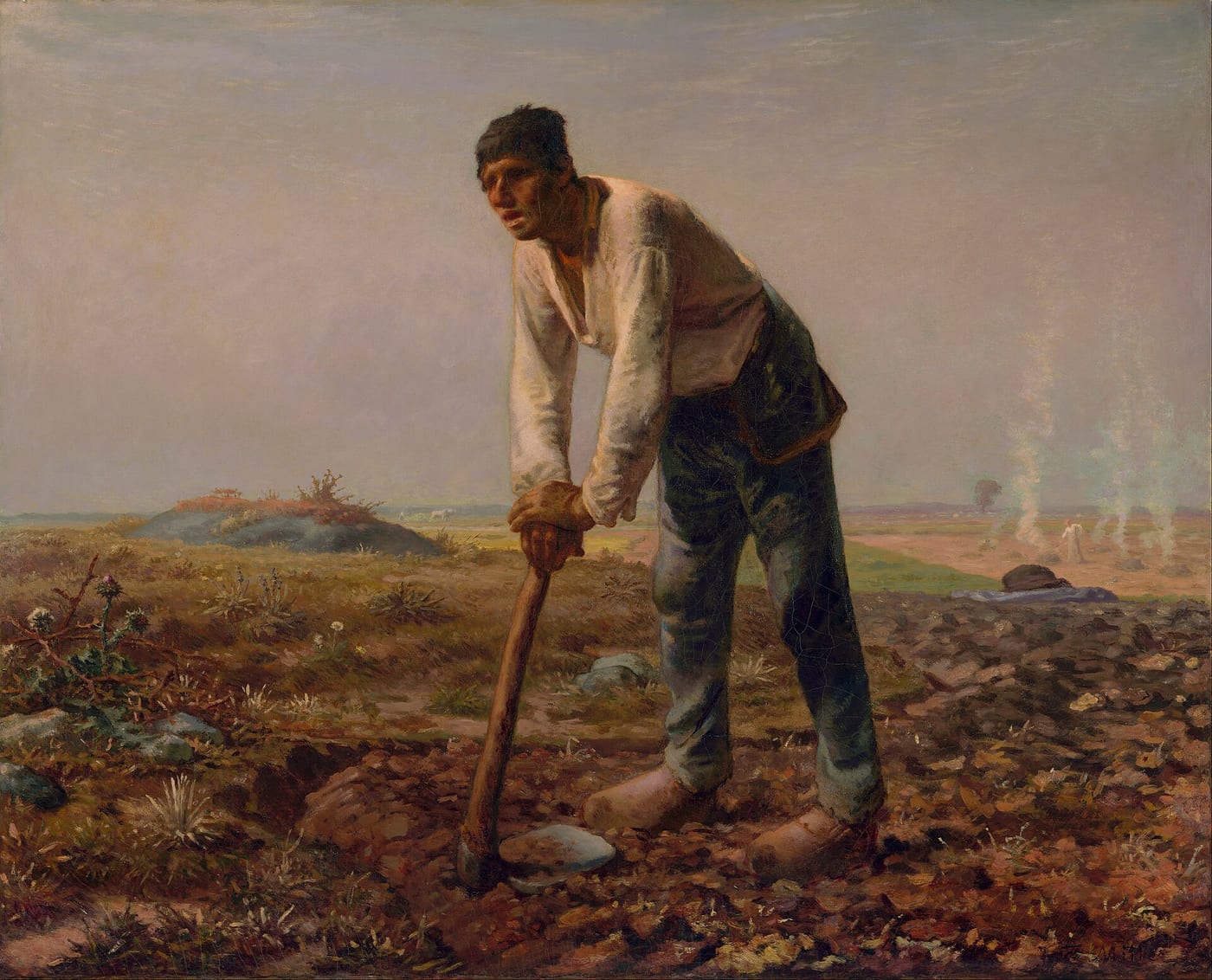
Industrial Age (19th c.) · Europe
The Man with the Hoe
Jean-Francois Millet, 1860-62
A worn labourer pauses, leaning on his hoe in a cleared field.
Jean-Francois Millet, The Man with the Hoe, 1860-62. J. Paul Getty Museum, Los Angeles. Public domain via Wikimedia Commons.
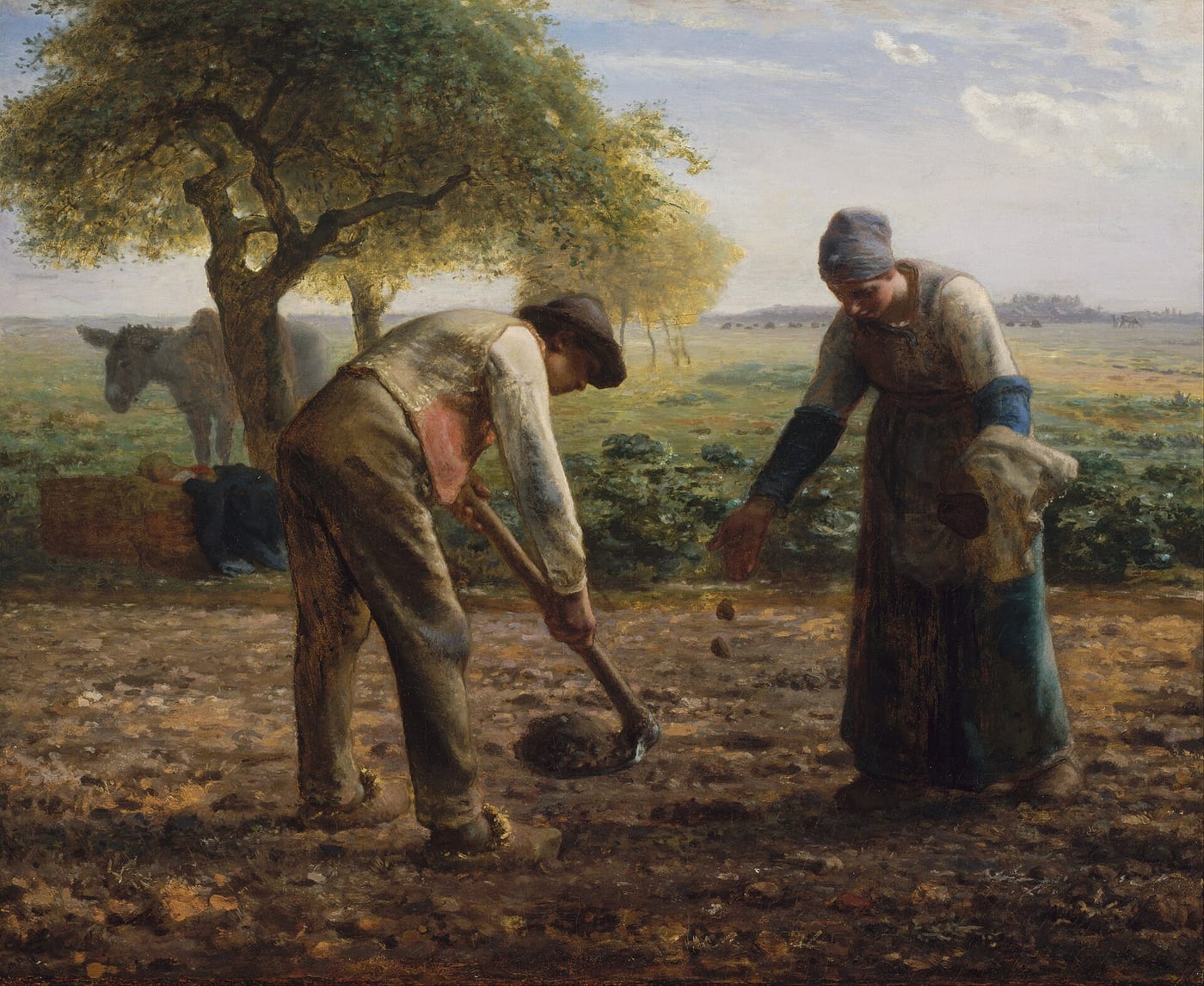
Industrial Age (19th c.) · Europe
The Potato Planters
Jean-Francois Millet, 1861-62
A man and woman work together planting potatoes in a field.
Jean-Francois Millet, The Potato Planters, 1861-62. Museum of Fine Arts, Boston. Public domain via Wikimedia Commons.
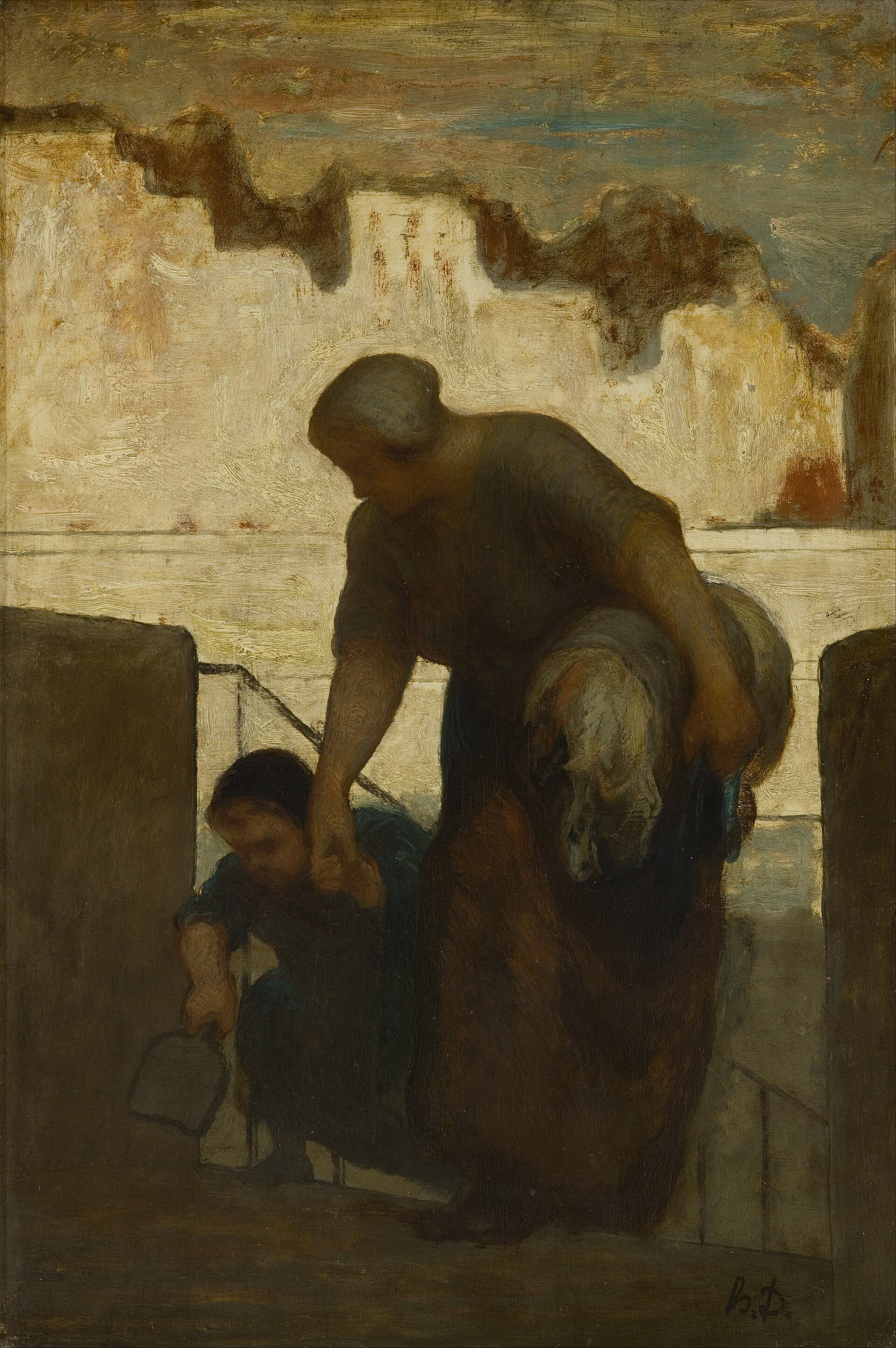
Industrial Age (19th c.) · Europe
The Laundress
Honore Daumier, c. 1863
A washerwoman hauling her load and her child up from the river, the weight of daily work shown in a single climb.
Musée d'Orsay, Paris (RF 2630), via Wikimedia Commons
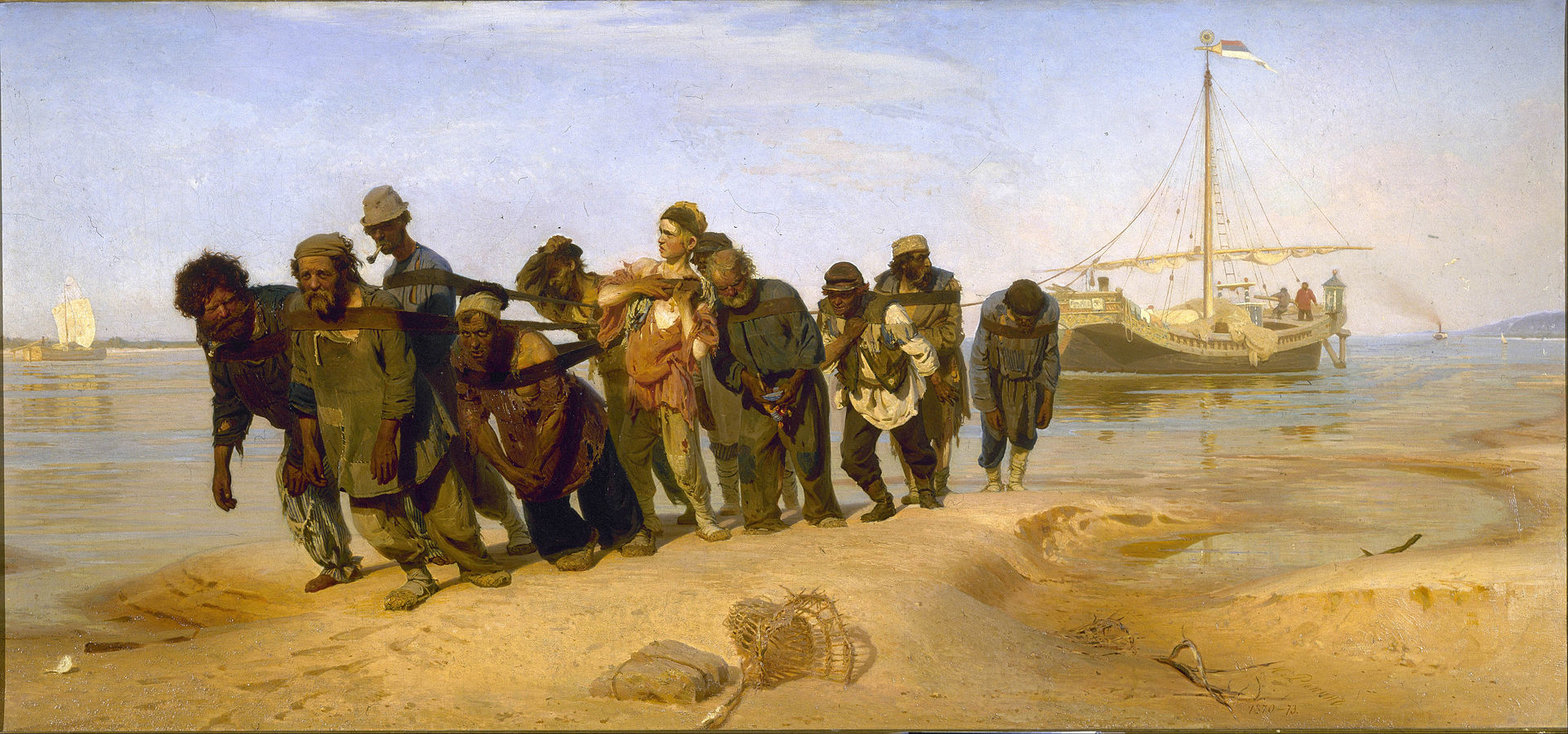
Industrial Age (19th c.) · Europe
Barge Haulers on the Volga
Ilya Repin, 1870-73
Eleven men harnessed like animals to drag a barge upriver, the painting that made Russian labor impossible to look away from.
State Russian Museum, St Petersburg, via Wikimedia Commons
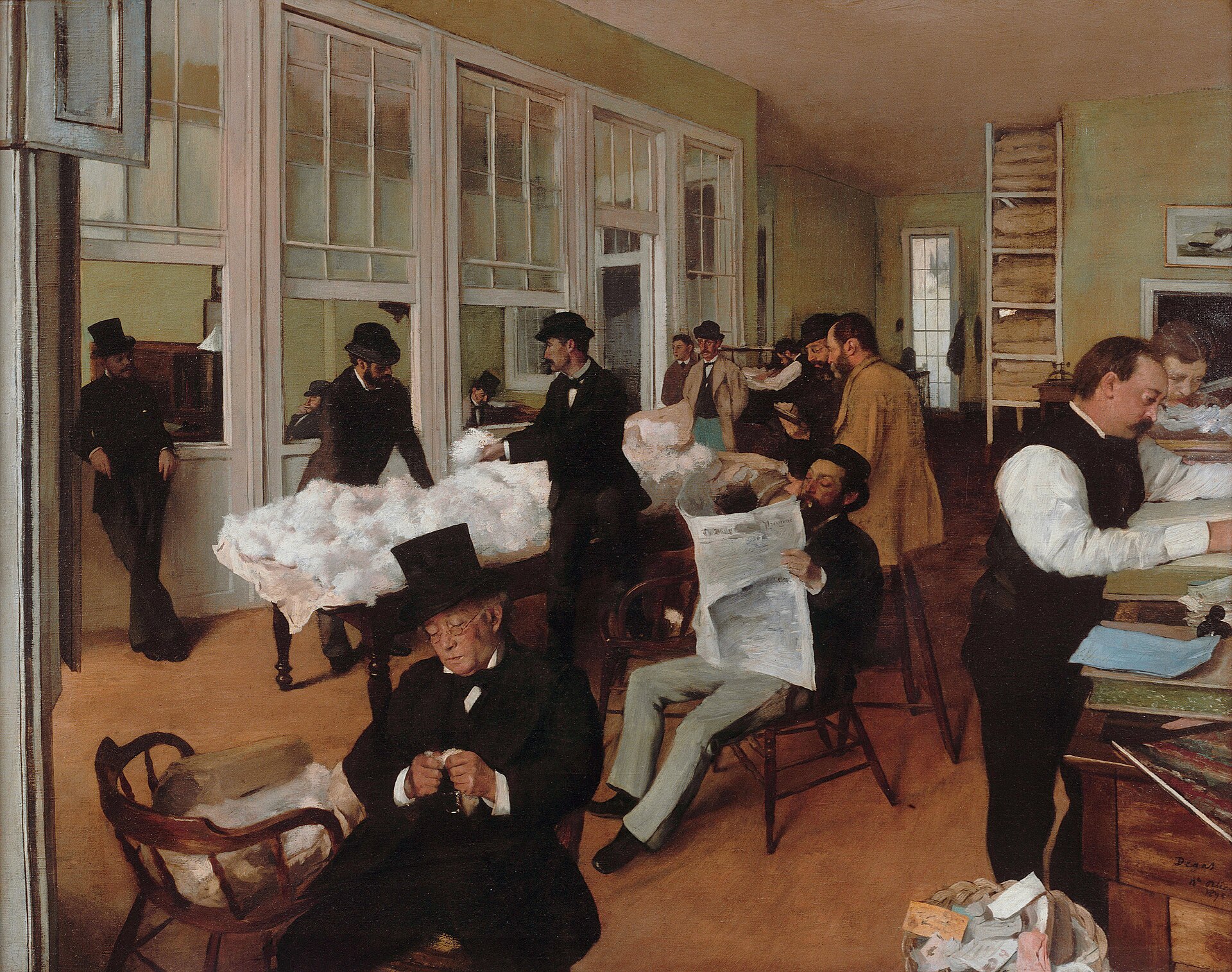
Industrial Age (19th c.) · Americas
A Cotton Office in New Orleans
Edgar Degas, 1873
Degas painted his uncle's cotton brokerage, men sorting samples and reading ledgers, one of the first paintings of an office at work.
In Strangers on Paper (kin)
Musée des Beaux-Arts de Pau, via Wikimedia Commons
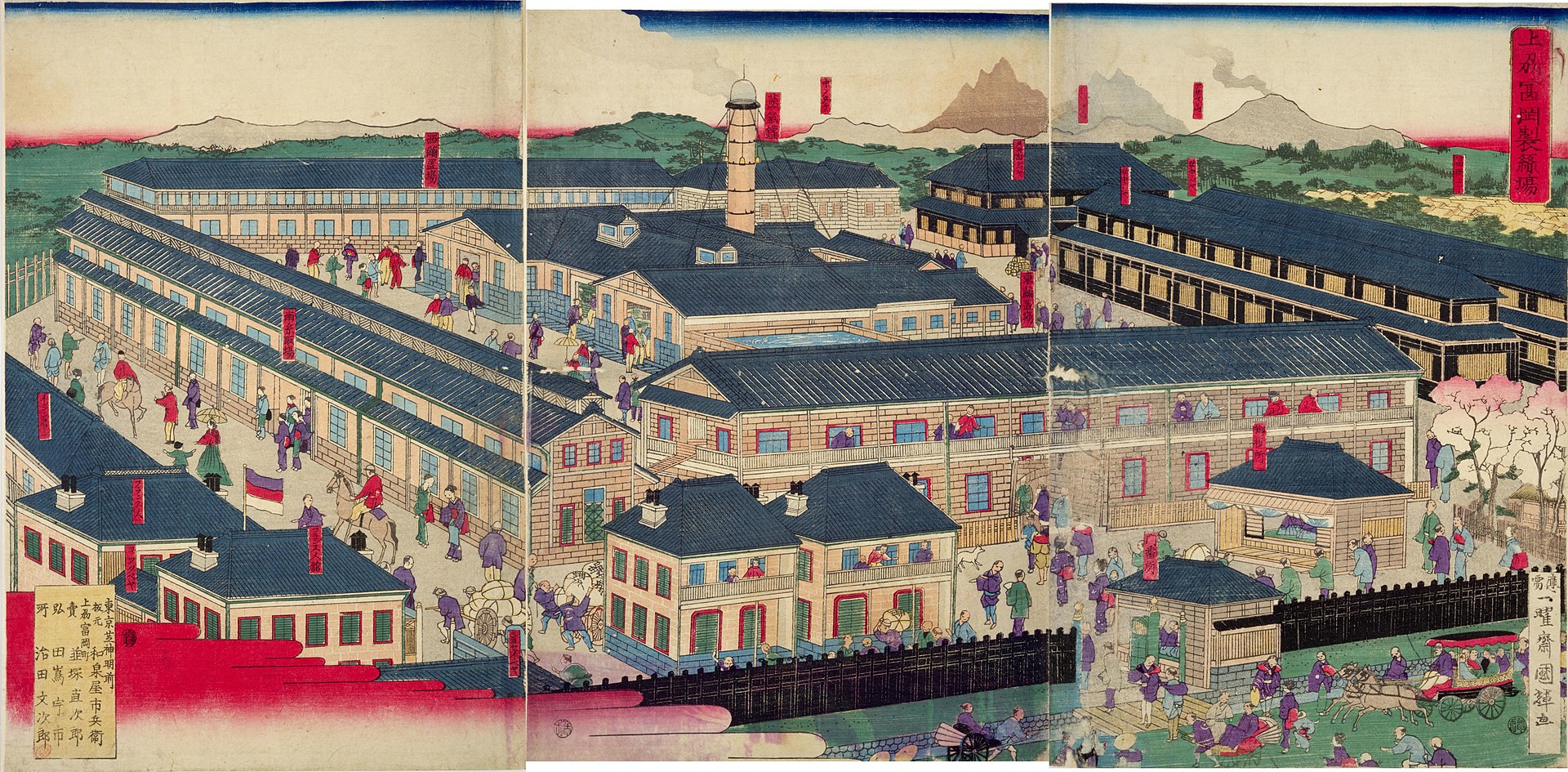
Industrial Age (19th c.) · Japan
Tomioka Silk Mill, women reeling silk
Meiji-era printmakers, c. 1873
Japan's first modern factory, the silk-reeling women printed as a symbol of a nation industrializing overnight.
Utagawa Kuniteru II, Jōshū Tomioka Silk Mill, Meiji 5 (1872); National Diet Library, via Wikimedia Commons
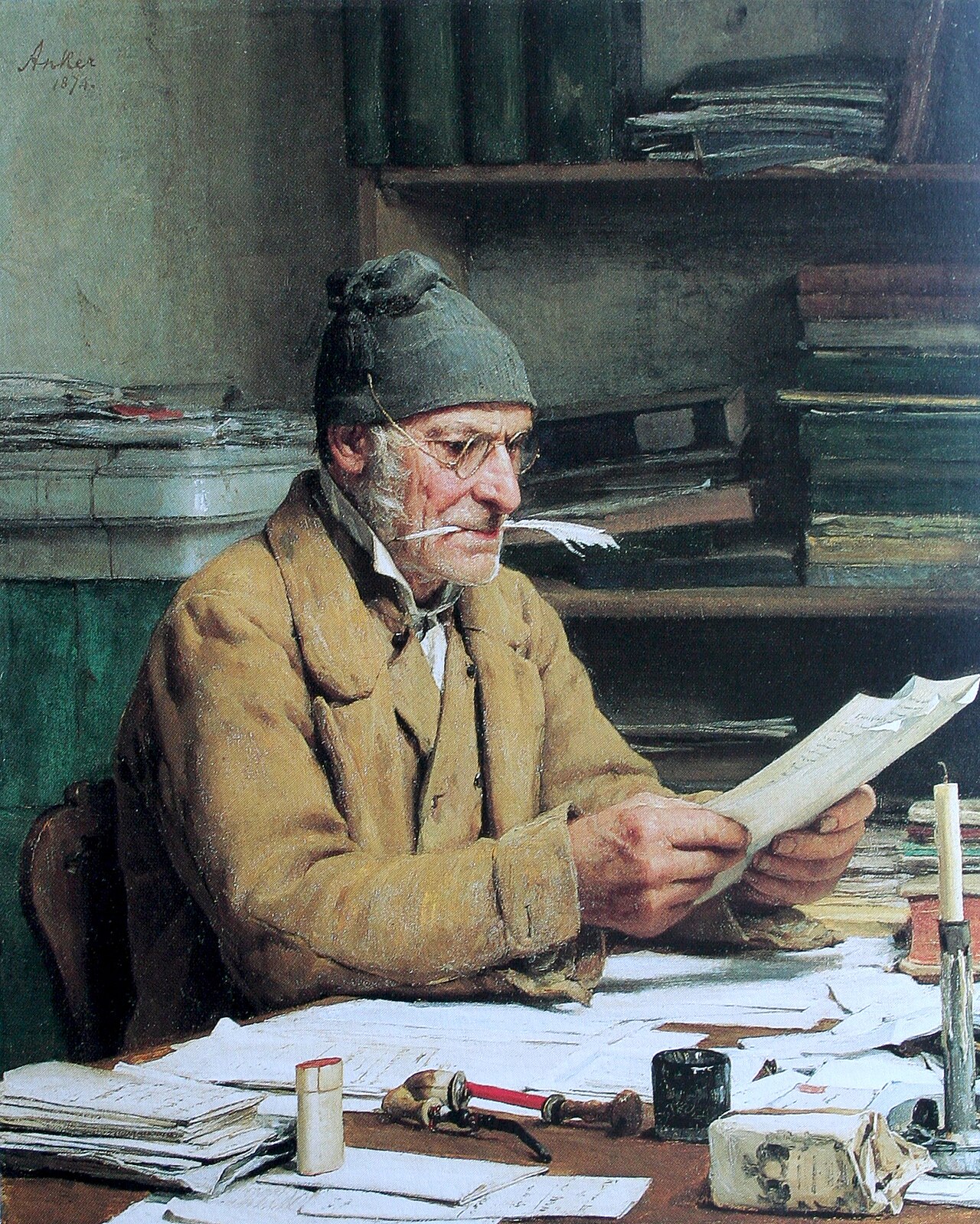
Industrial Age (19th c.) · Europe
The Village Clerk
Albert Anker, c. 1874
The paperwork of a whole village done by hand at one desk, the clerk who was the office before the office.
In Strangers on Paper
Albert Anker, Der Gemeindeschreiber, via Wikimedia Commons
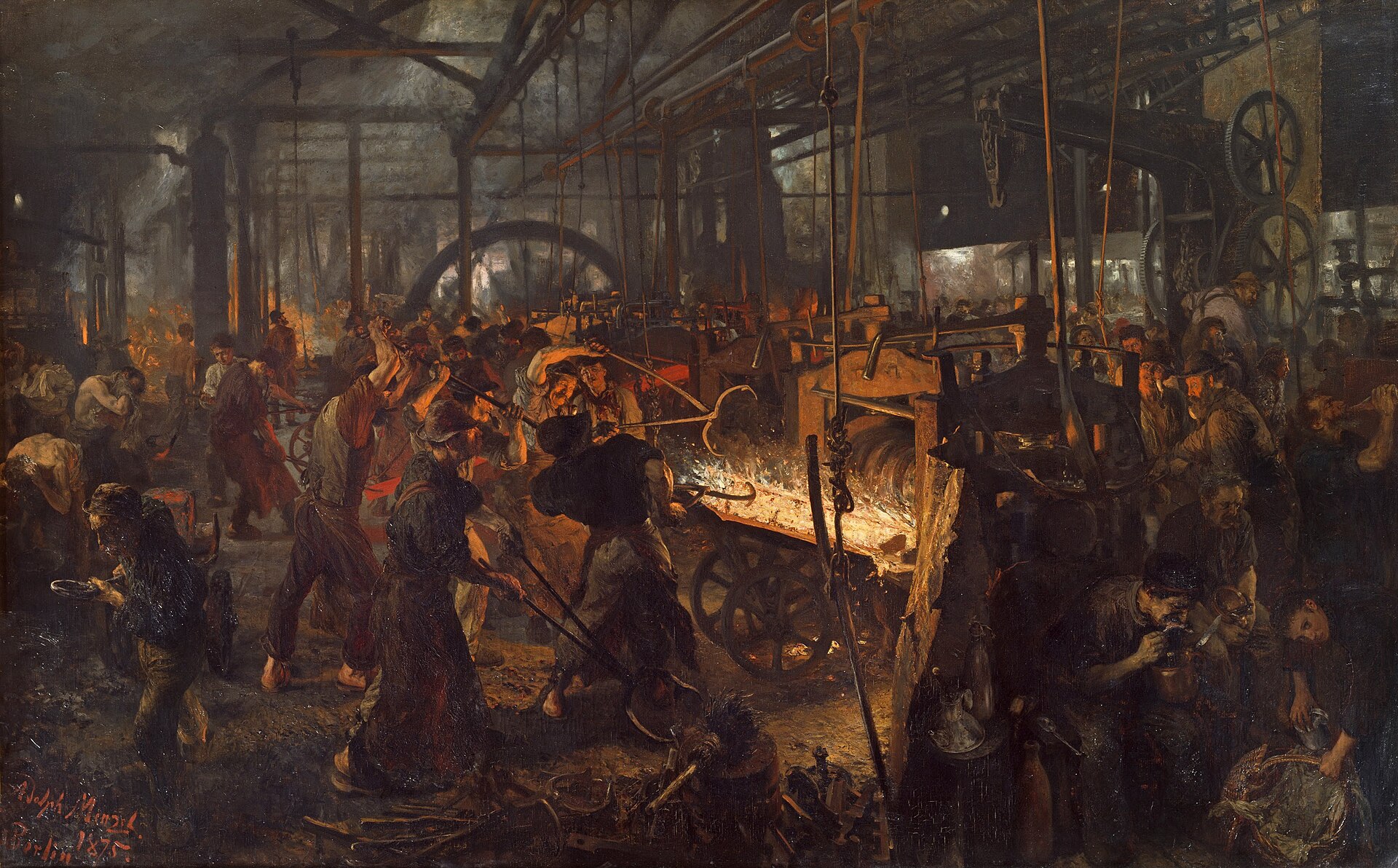
Industrial Age (19th c.) · Europe
The Iron Rolling Mill (Modern Cyclopes)
Adolph Menzel, 1875
The whole heat and chaos of a rolling mill, the first painting to take the modern factory as seriously as a battlefield.
Alte Nationalgalerie, Berlin, via Wikimedia Commons
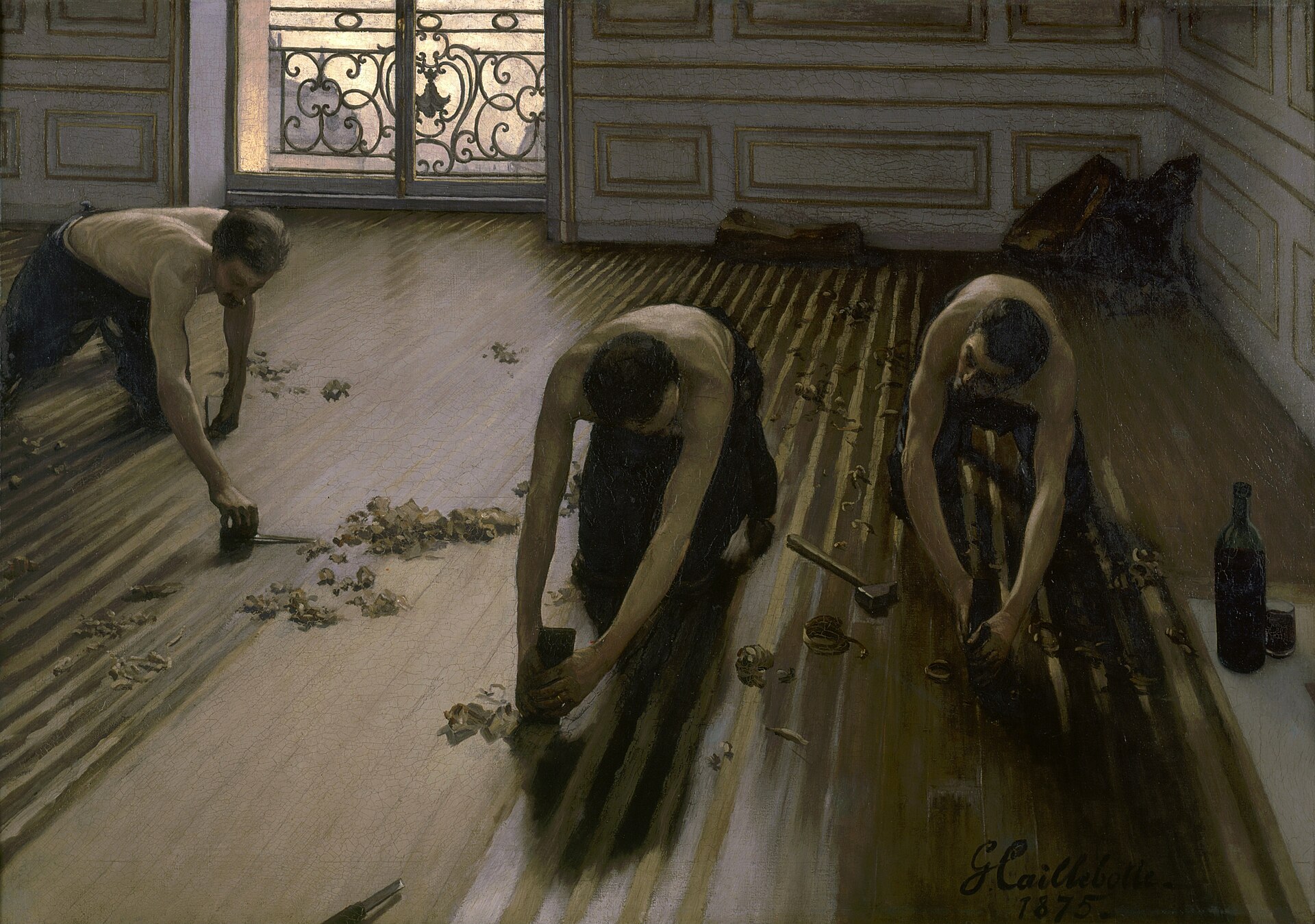
Industrial Age (19th c.) · Europe
The Floor Scrapers (Les raboteurs de parquet)
Gustave Caillebotte, 1875
Three men on their knees scraping a parquet floor, urban wage labor painted with a nude's precision, and rejected by the Salon for it.
Musée d'Orsay, Paris, via Wikimedia Commons
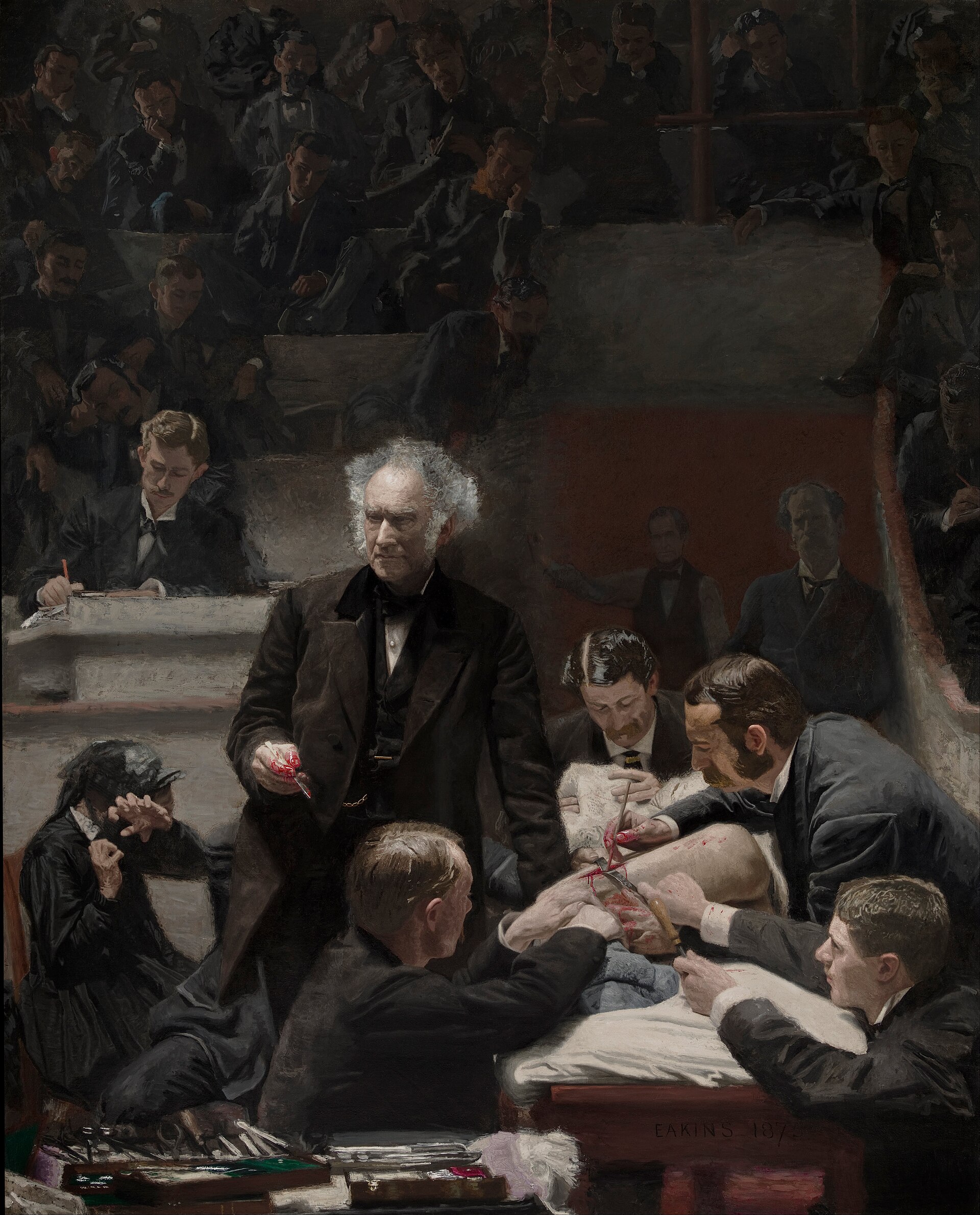
Industrial Age (19th c.) · Americas
The Gross Clinic
Thomas Eakins, 1875
A surgeon and his team mid-operation, a modern profession painted with the grandeur of an old master.
Philadelphia Museum of Art, via Wikimedia Commons
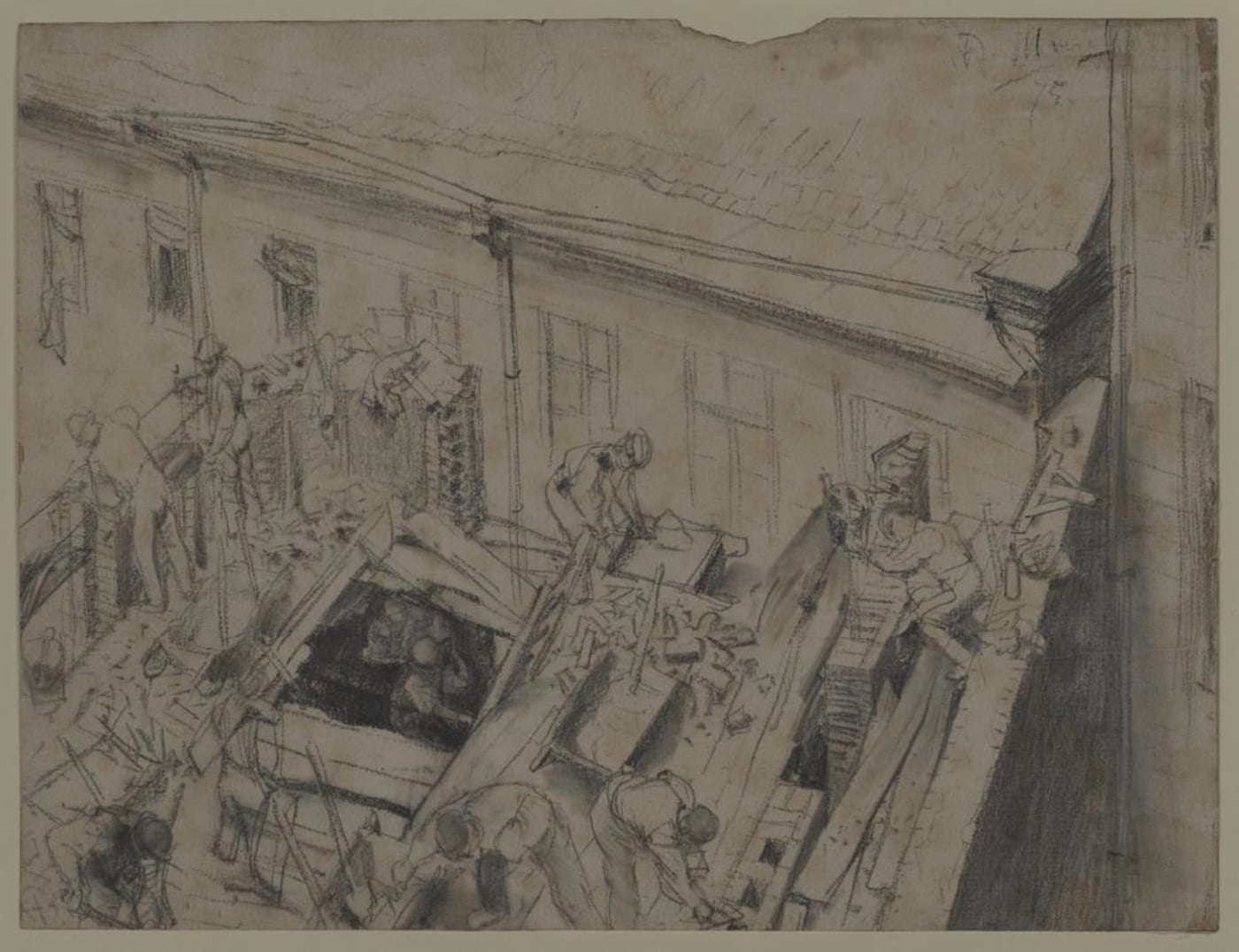
Industrial Age (19th c.) · Europe
Bricklayers on a Building Site
Adolph Menzel, 1875
Bricklayers labour amid materials on a Berlin building site.
Adolph Menzel, Bricklayers on a Building Site, 1875. Private collection. Public domain via Wikimedia Commons.
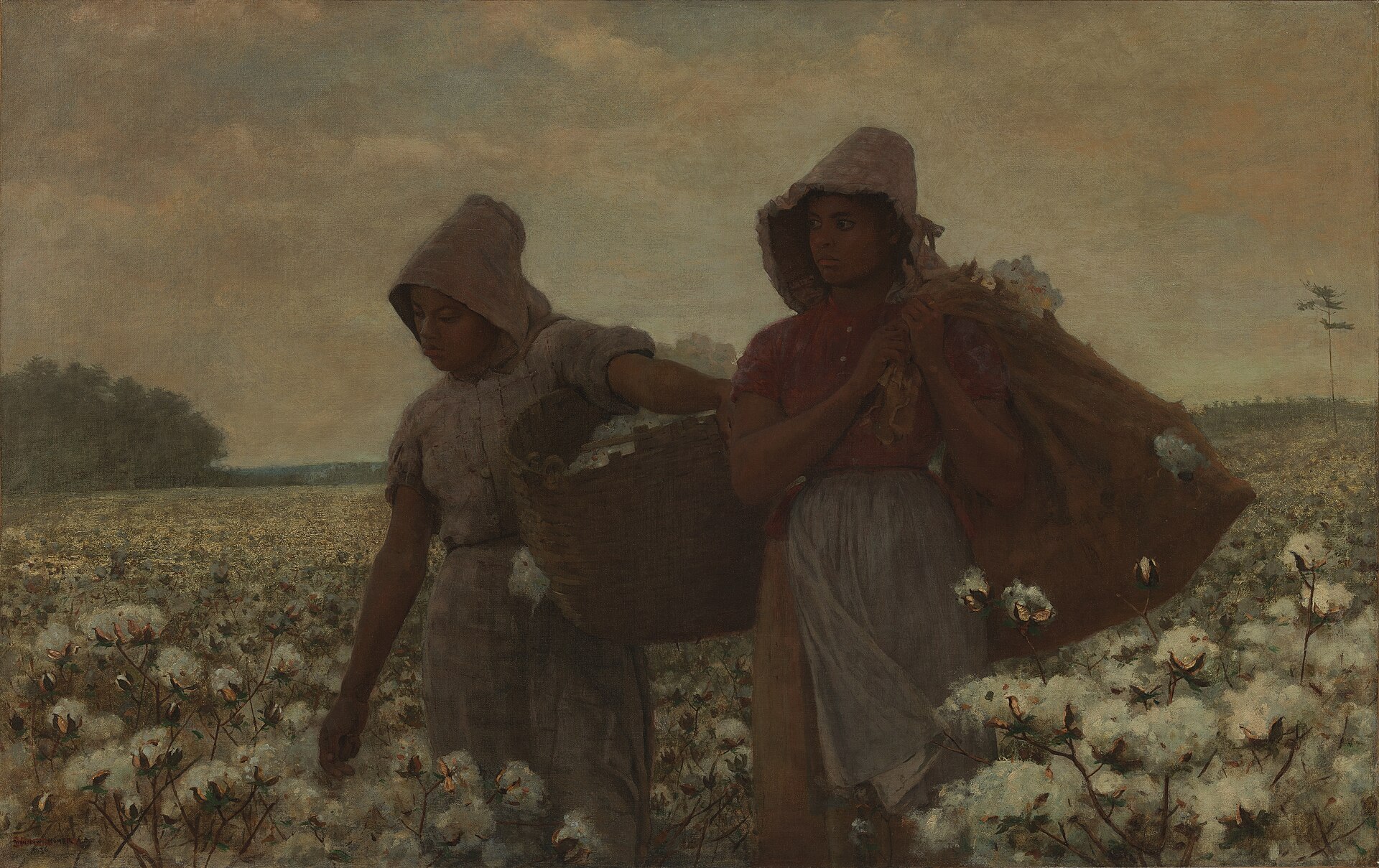
Industrial Age (19th c.) · Americas
The Cotton Pickers
Winslow Homer, 1876
Two Black women in a cotton field just after emancipation, the labor unchanged, the meaning of it entirely new.
Los Angeles County Museum of Art (LACMA), via Wikimedia Commons
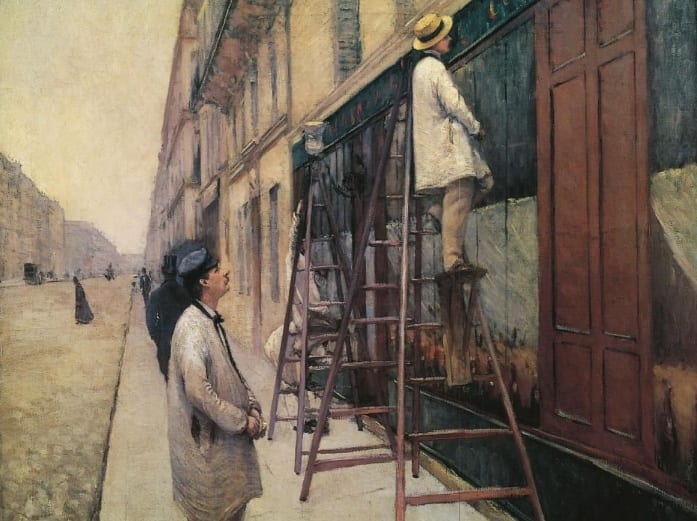
Industrial Age (19th c.) · Europe
House Painters
Gustave Caillebotte, 1877
House painters work on a Paris shopfront along the street.
Gustave Caillebotte, House Painters, 1877. Private collection. Public domain via Wikimedia Commons.
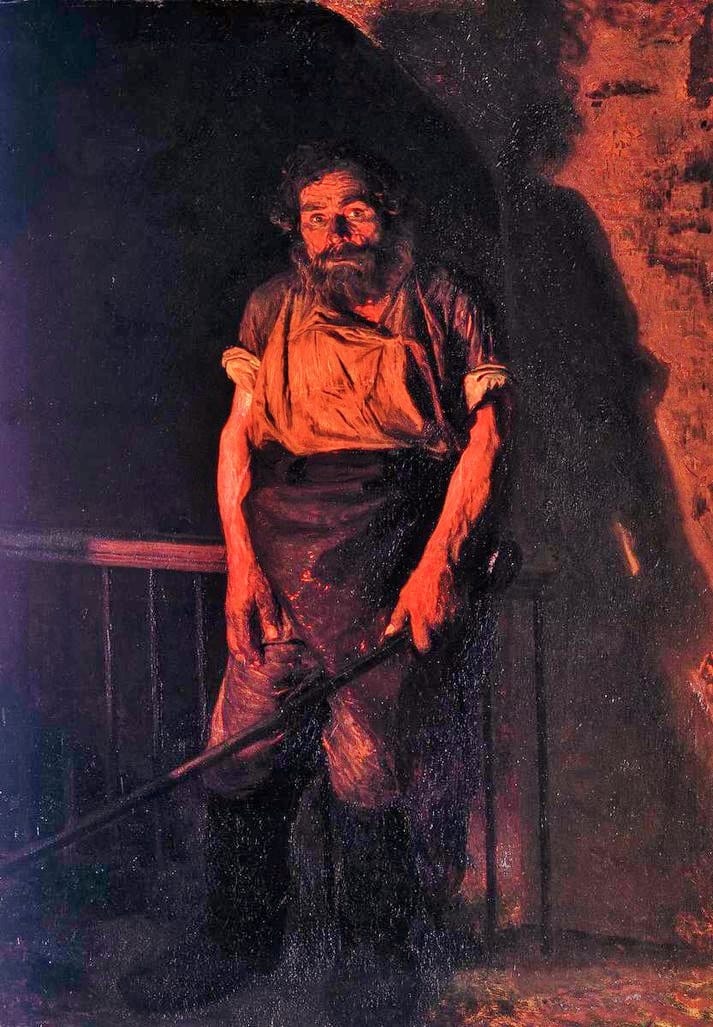
Industrial Age (19th c.) · Europe
The Stoker
Nikolai Yaroshenko, 1878
The painting depicts a factory stoker standing before a furnace.
Nikolai Yaroshenko, The Stoker, 1878. Tretyakov Gallery, Moscow. Public domain via Wikimedia Commons.
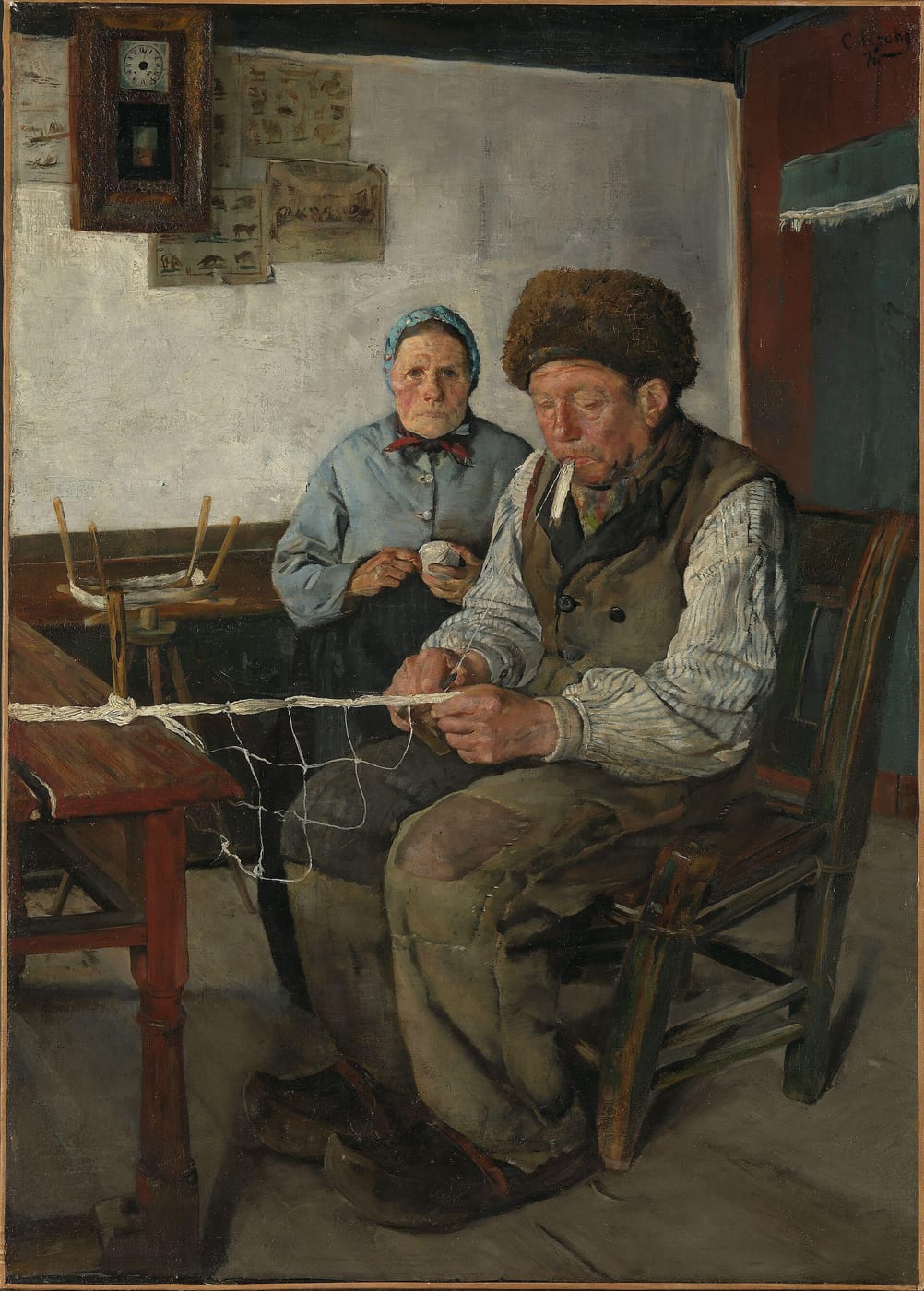
Industrial Age (19th c.) · Europe
The Net Mender
Christian Krohg, 1880
The painting depicts the fisherman Niels Gaihede mending a net at Skagen.
Christian Krohg, The Net Mender, 1880. National Museum of Art, Architecture and Design, Oslo. Public domain via Wikimedia Commons.
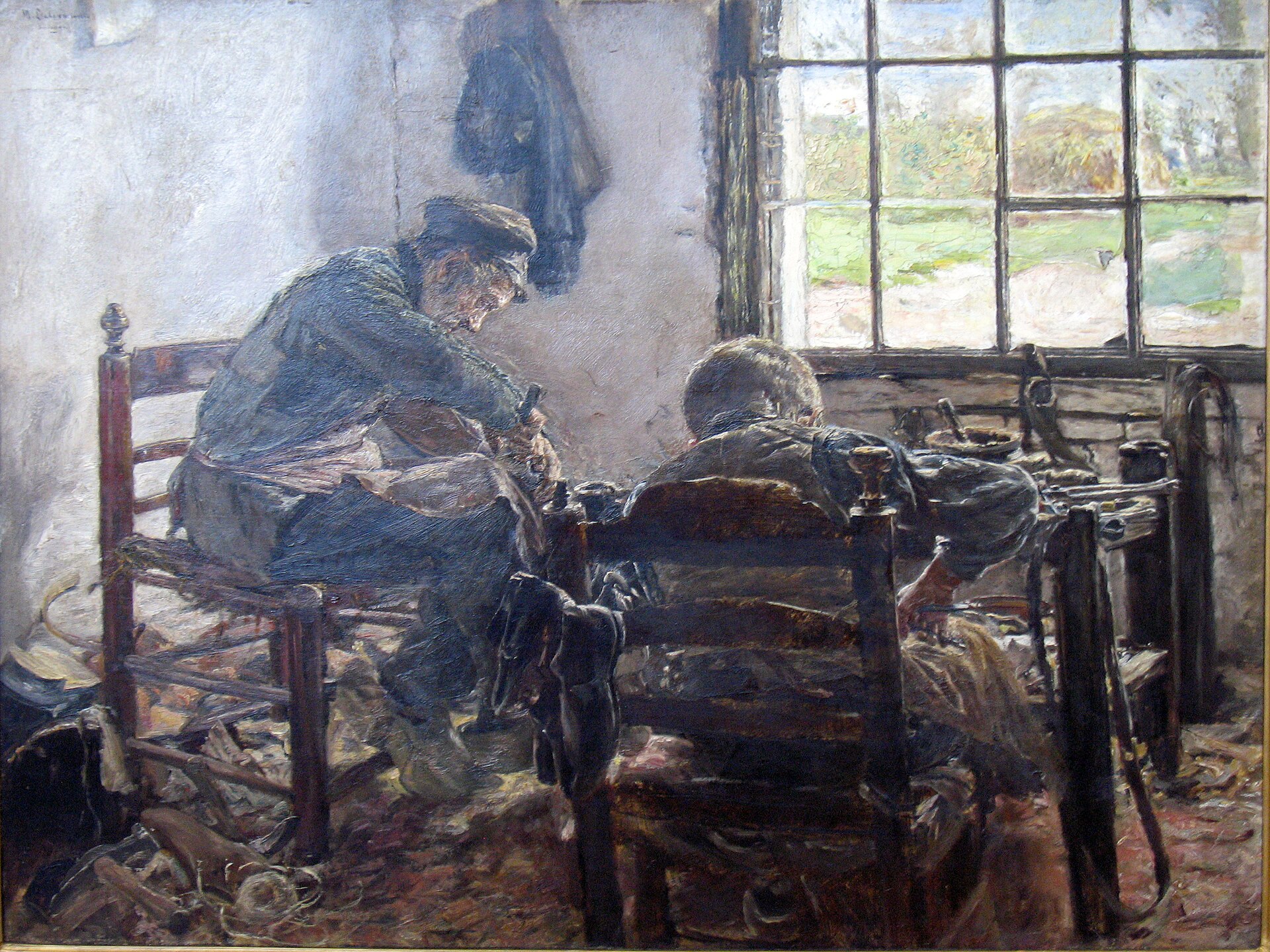
Industrial Age (19th c.) · Europe
The Cobbler's Workshop
Max Liebermann, 1881
Craft work painted at the moment the factory began to end it.
In The Curse and the Calling
Alte Nationalgalerie, Berlin, via Wikimedia Commons
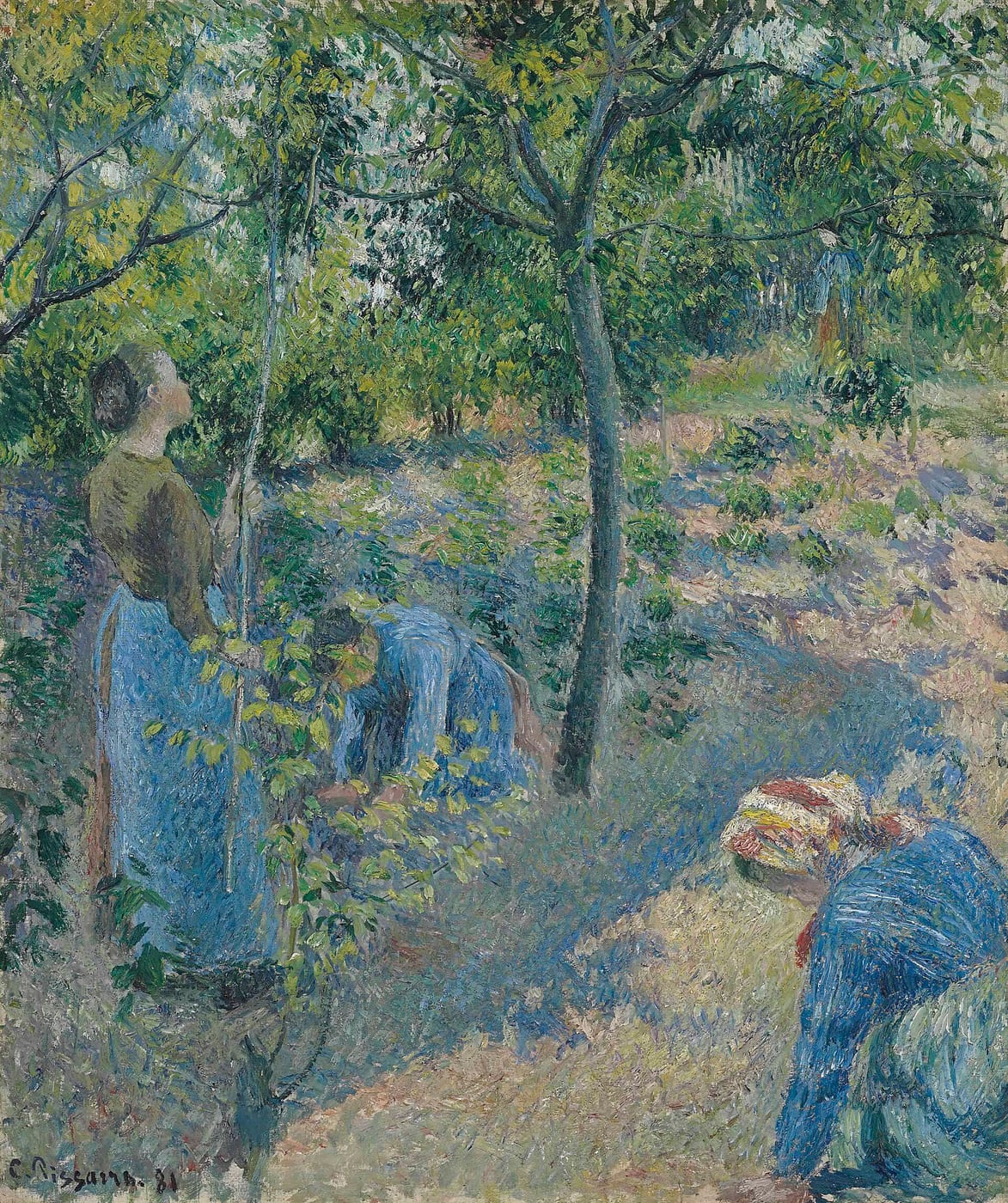
Industrial Age (19th c.) · Europe
The Apple Pickers
Camille Pissarro, 1881
Peasants gather apples in an orchard, one shaking the tree.
Camille Pissarro, The Apple Pickers, 1881. Ohara Museum of Art, Kurashiki. Public domain via Wikimedia Commons.
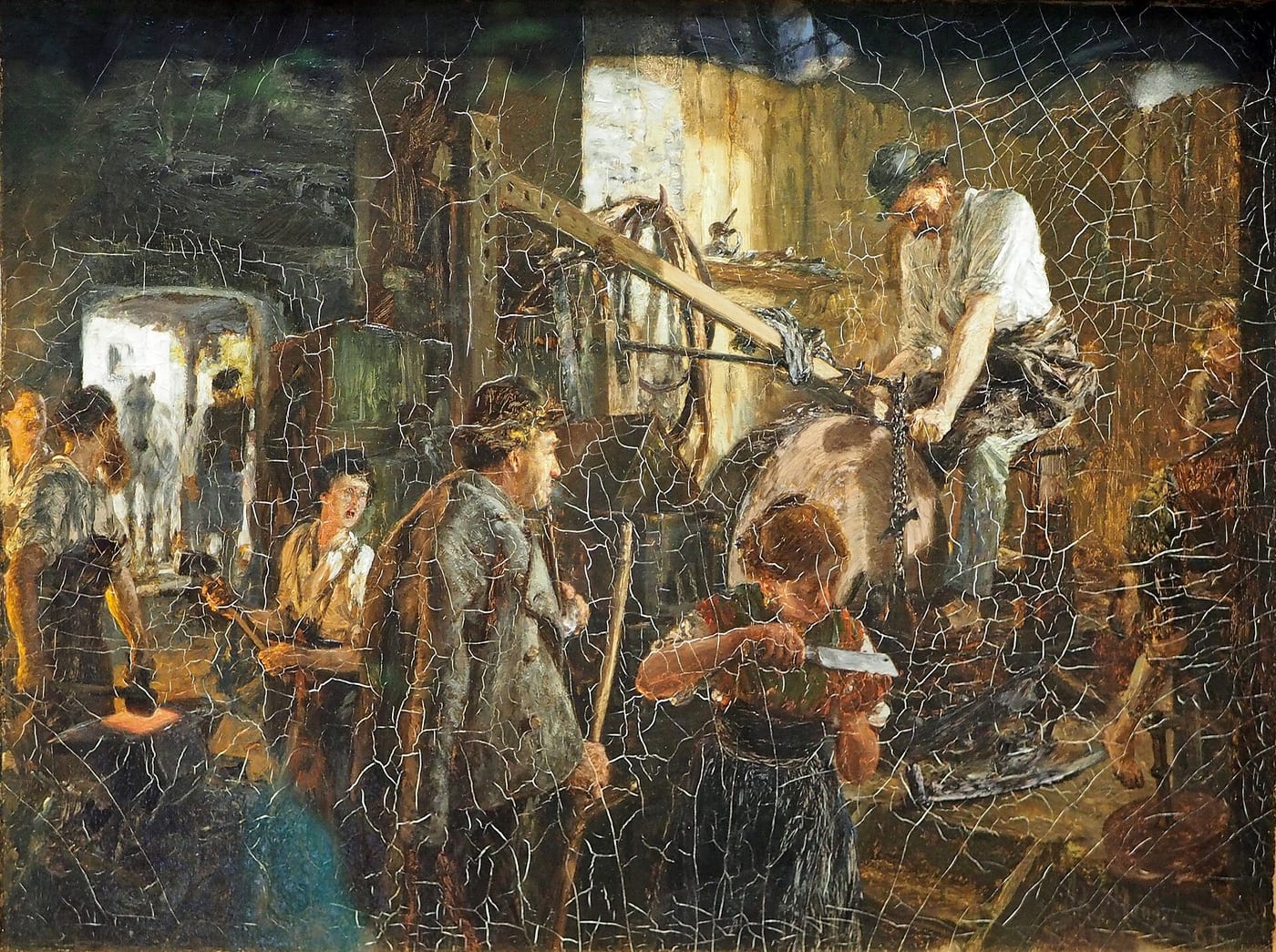
Industrial Age (19th c.) · Europe
Knife-Grinder's Workshop in the Hofgastein Smithy
Adolph Menzel, 1881
The scene shows knife-grinders and smiths at work in a Bad Hofgastein smithy.
Adolph Menzel, Knife-Grinder's Workshop in the Hofgastein Smithy, 1881. Hamburger Kunsthalle. Public domain via Wikimedia Commons.
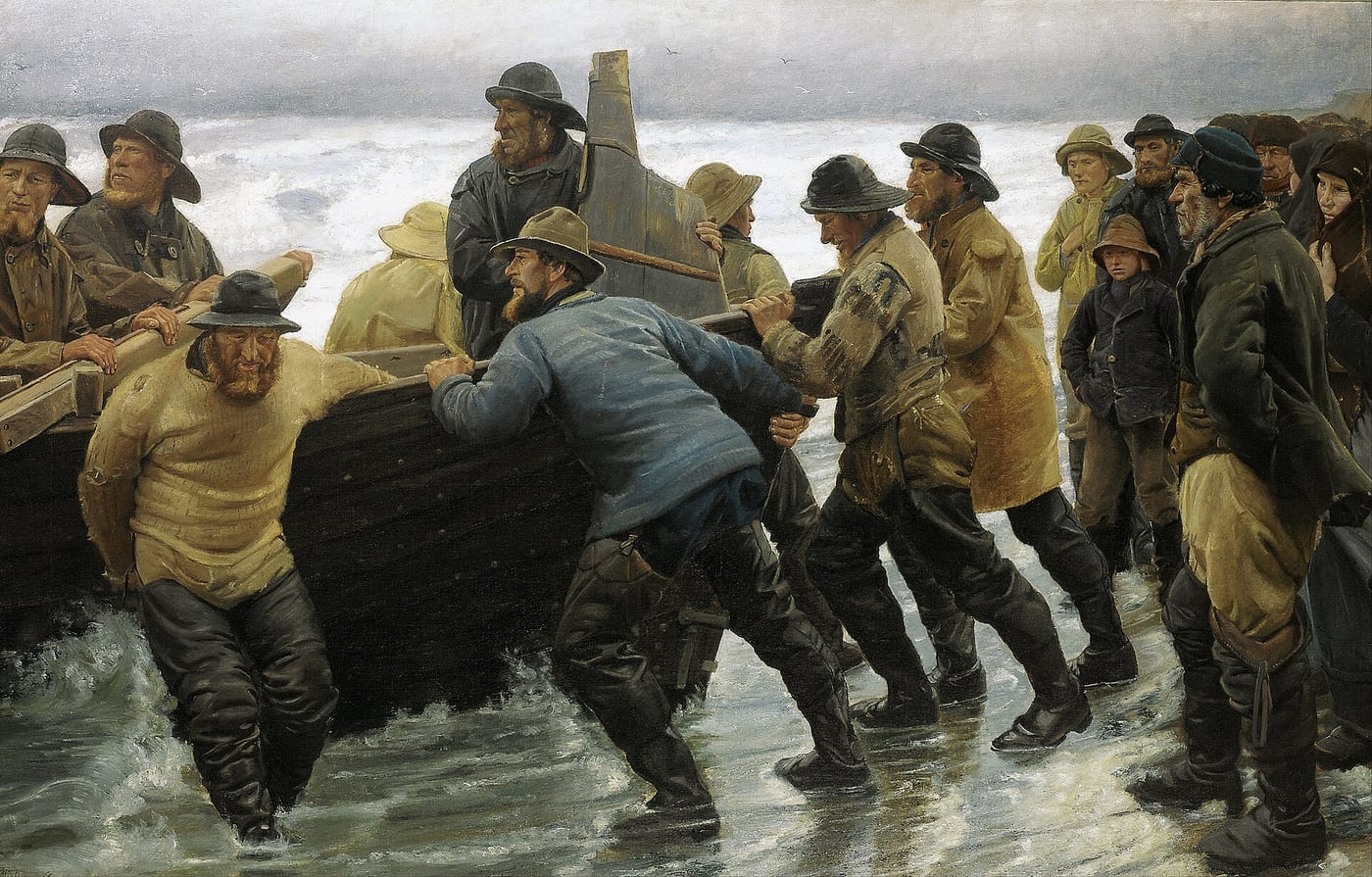
Industrial Age (19th c.) · Europe
Fishermen Launching a Rowboat
Michael Ancher, 1881
The painting shows Skagen fishermen pushing a rowing boat into the water.
Michael Ancher, Fishermen Launching a Rowboat, 1881. Skagens Museum. Public domain via Wikimedia Commons.
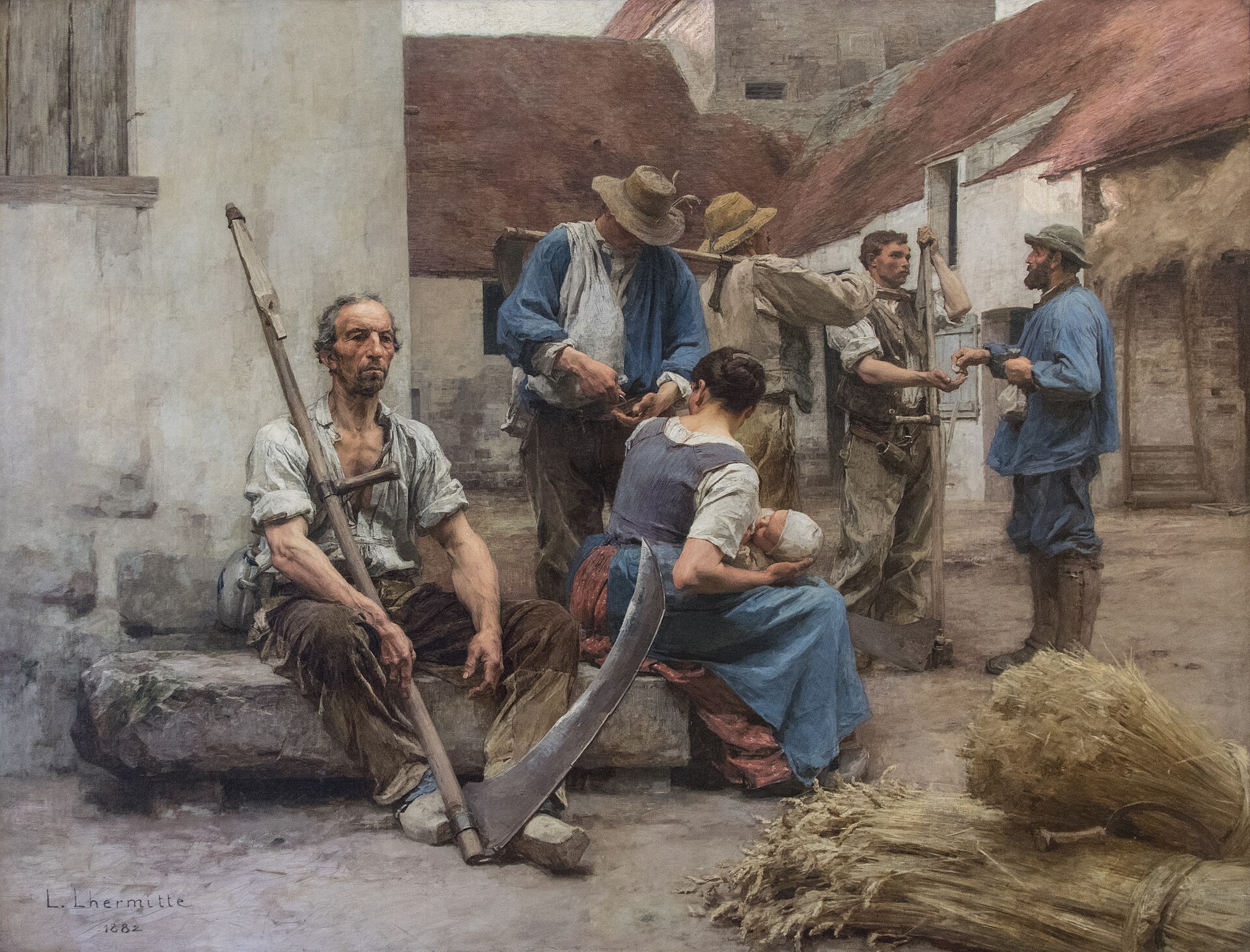
Industrial Age (19th c.) · Europe
Paying the Harvesters
Leon Augustin Lhermitte, 1882
The moment of the wage, exhausted harvesters waiting as the farmer counts out coins, the whole transaction of rural labor in one scene.
Musée d'Orsay, Paris, via Wikimedia Commons
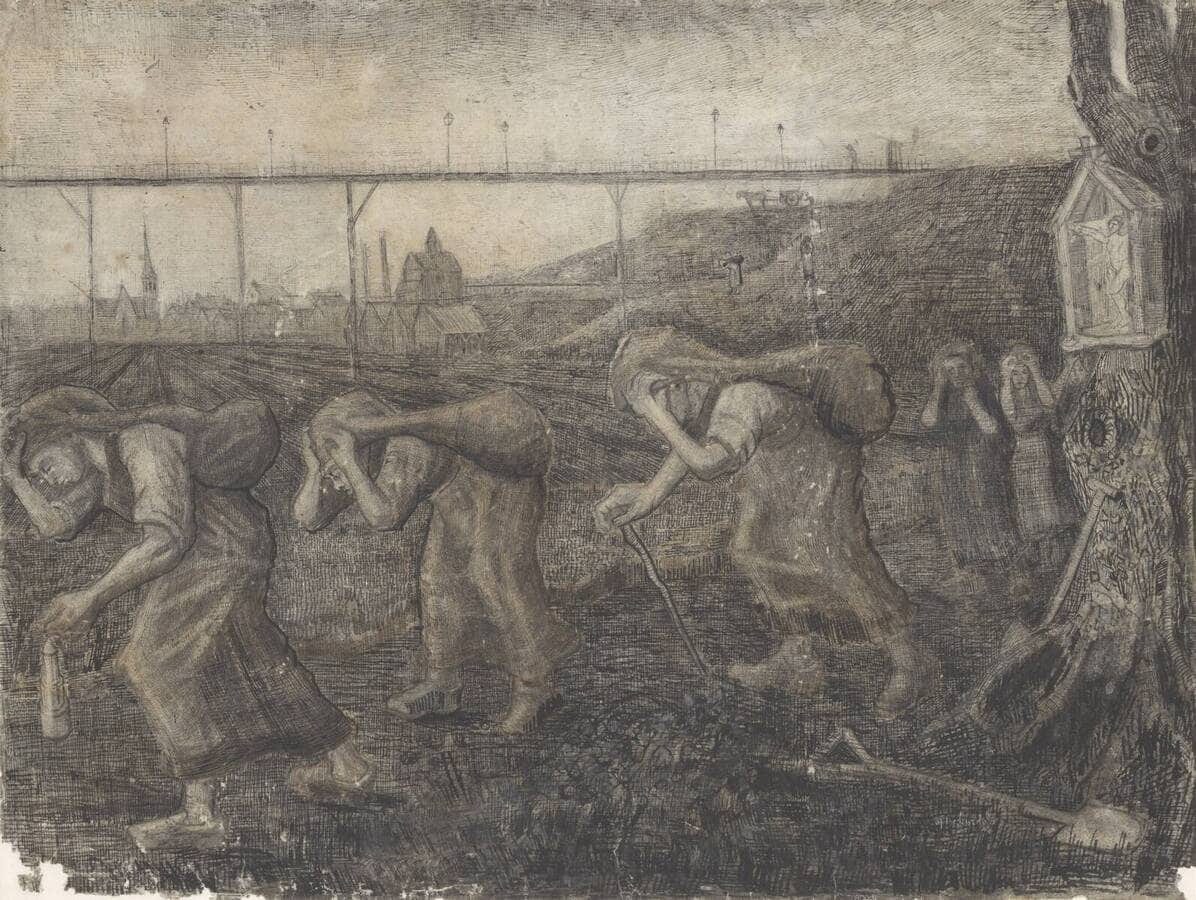
Industrial Age (19th c.) · Europe
Women Miners Carrying Sacks (The Bearers of the Burden)
Vincent van Gogh, 1882
The drawing shows women miners bent under sacks of coal in the Borinage.
Vincent van Gogh, Women Miners Carrying Sacks (The Bearers of the Burden), 1882. Kroller-Muller Museum, Otterlo. Public domain via Wikimedia Commons.
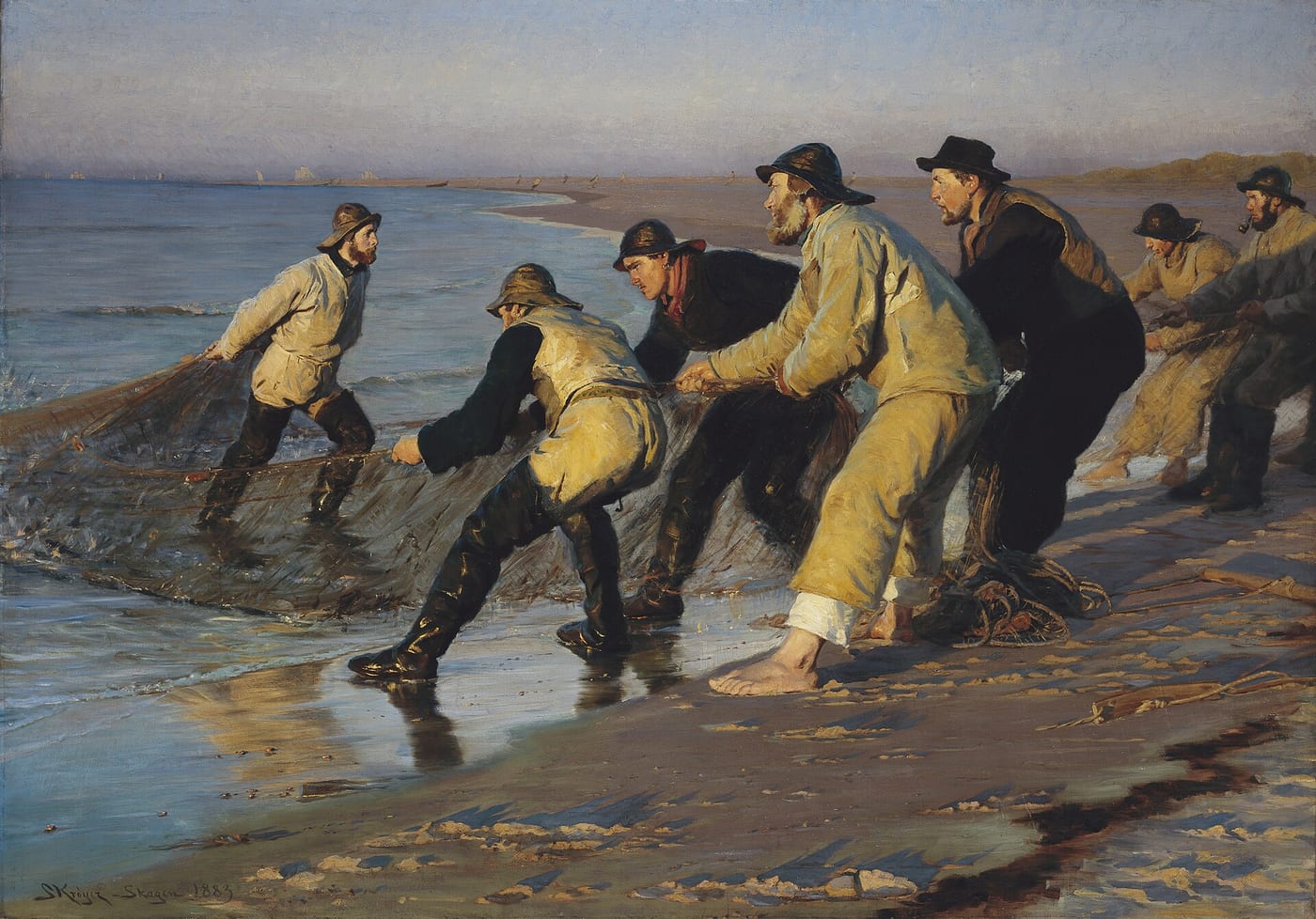
Industrial Age (19th c.) · Europe
Fishermen Hauling Nets, North Beach, Skagen
P. S. Kroyer, 1883
The painting shows fishermen dragging a seine net onto Skagen's north beach in the late afternoon.
P. S. Kroyer, Fishermen Hauling Nets, North Beach, Skagen, 1883. Statens Museum for Kunst. Public domain via Wikimedia Commons.
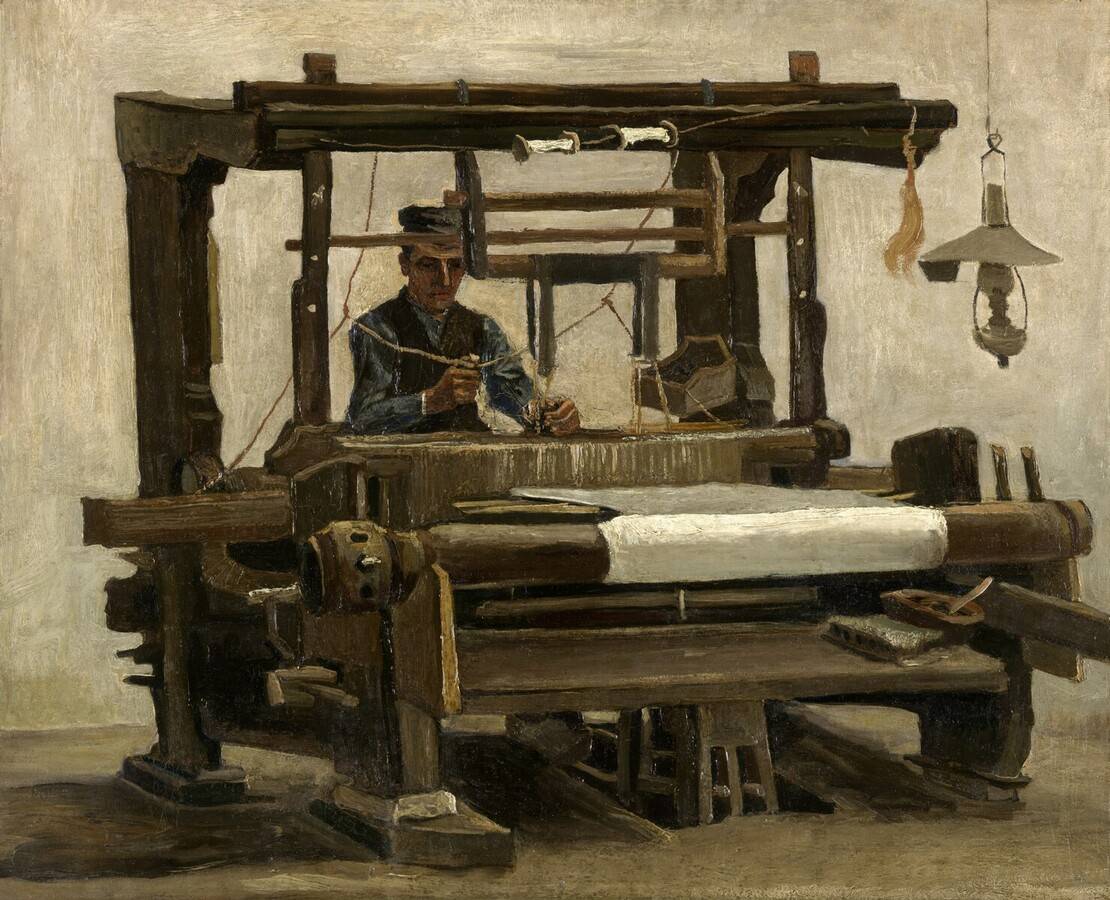
Industrial Age (19th c.) · Europe
The Weaver
Vincent van Gogh, 1884
A weaver boxed inside his great wooden loom, the machine almost swallowing the man who runs it.
Kröller-Müller Museum, Otterlo, via Wikimedia Commons
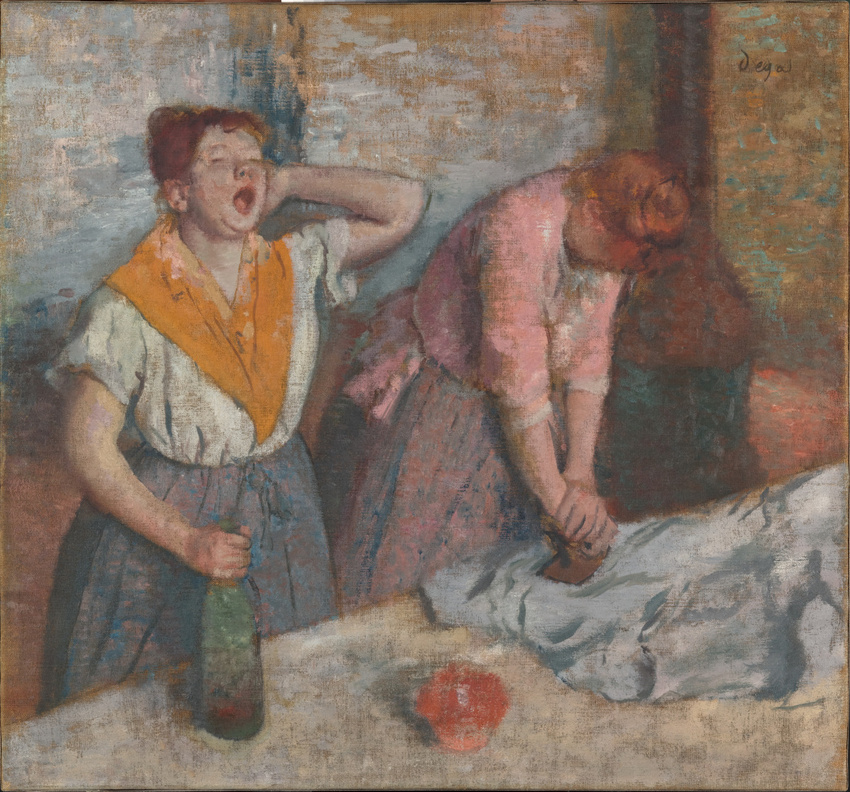
Industrial Age (19th c.) · Europe
Women Ironing (The Laundresses)
Edgar Degas, c. 1884
Two laundresses, one yawning over a bottle, the other pressing hard, the exhaustion of paid domestic work shown without softening.
Musée d'Orsay, Paris, via Wikimedia Commons
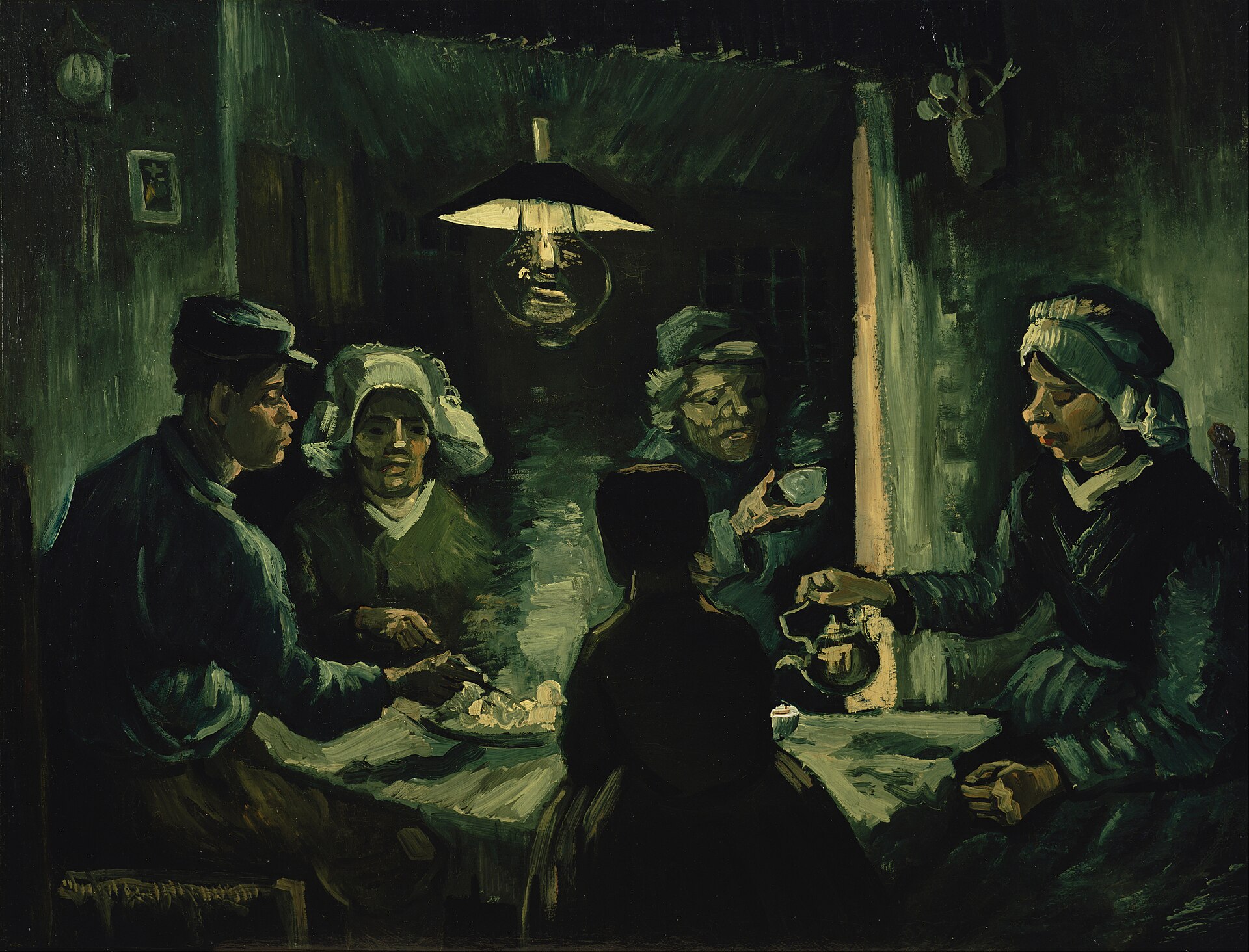
Industrial Age (19th c.) · Europe
The Potato Eaters
Vincent van Gogh, 1885
A peasant family eating the potatoes their own hands dug, painted to show the honesty of people who earn their food by labor.
Van Gogh Museum, Amsterdam, via Wikimedia Commons
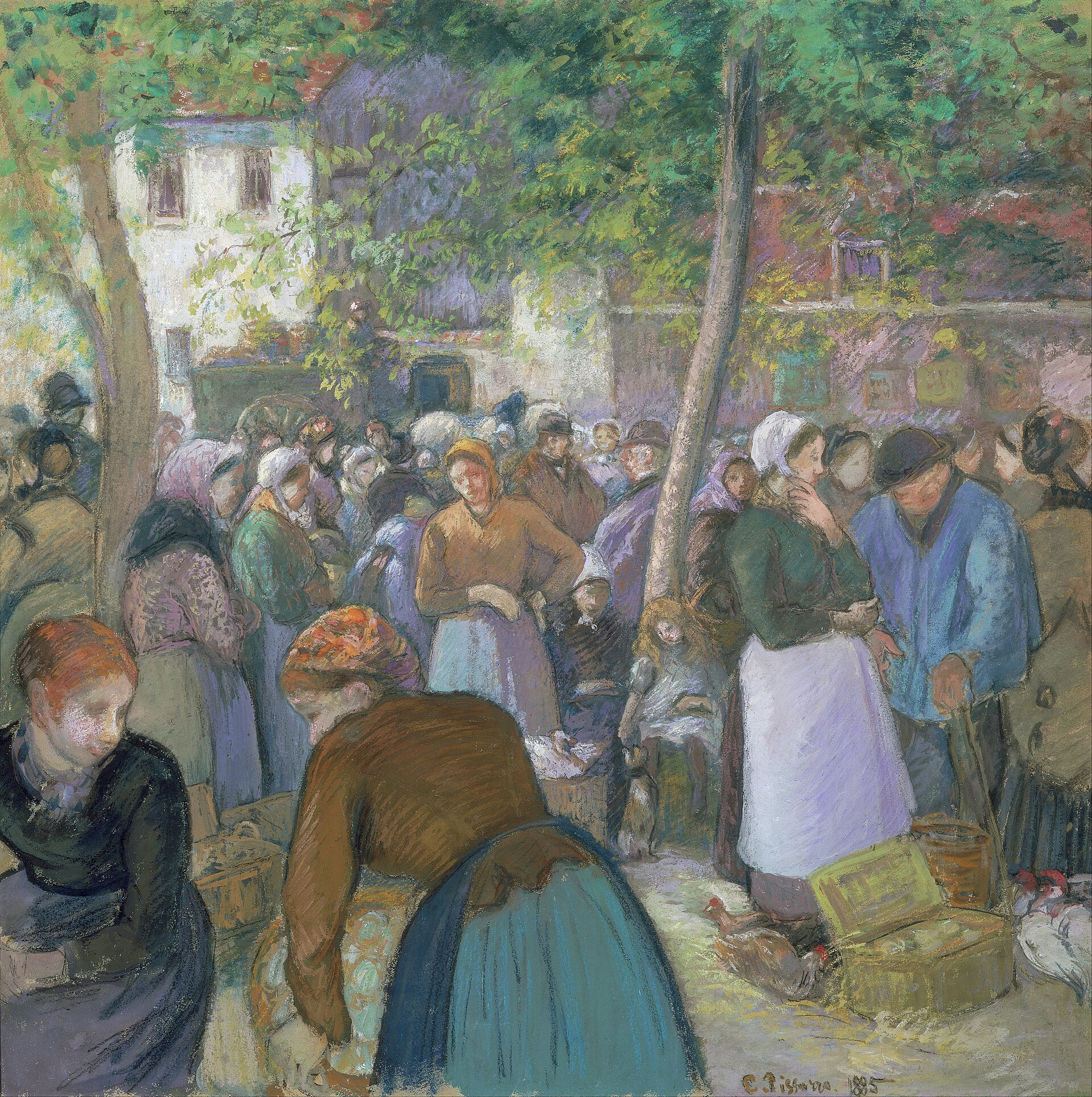
Industrial Age (19th c.) · Europe
The Market at Gisors
Camille Pissarro, c. 1885
The weekly market as a crowd of sellers and buyers, the ordinary commerce of a country town.
Museum of Fine Arts, Boston, via Wikimedia Commons
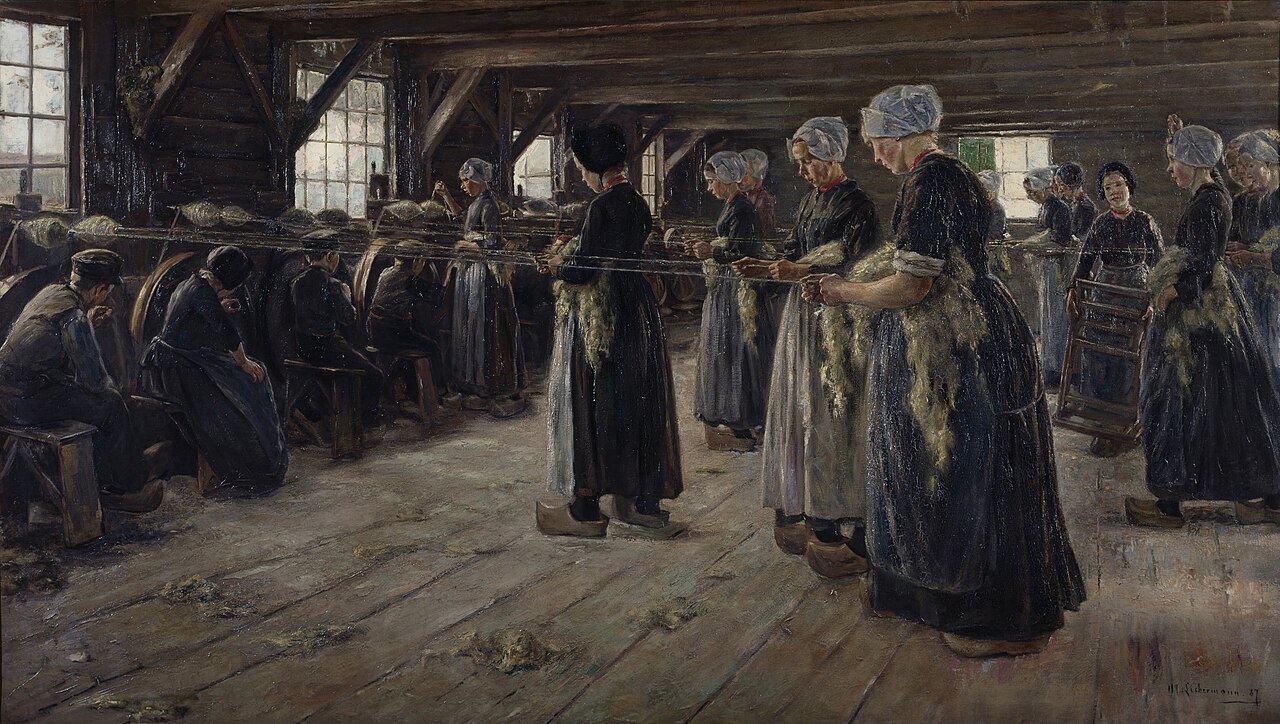
Industrial Age (19th c.) · Europe
Flax Barn at Laren
Max Liebermann, 1887
Rows of women spinning flax in a long shed, hand labor organized into something already close to a factory line.
Alte Nationalgalerie, Berlin, via Wikimedia Commons (Google Art Project)
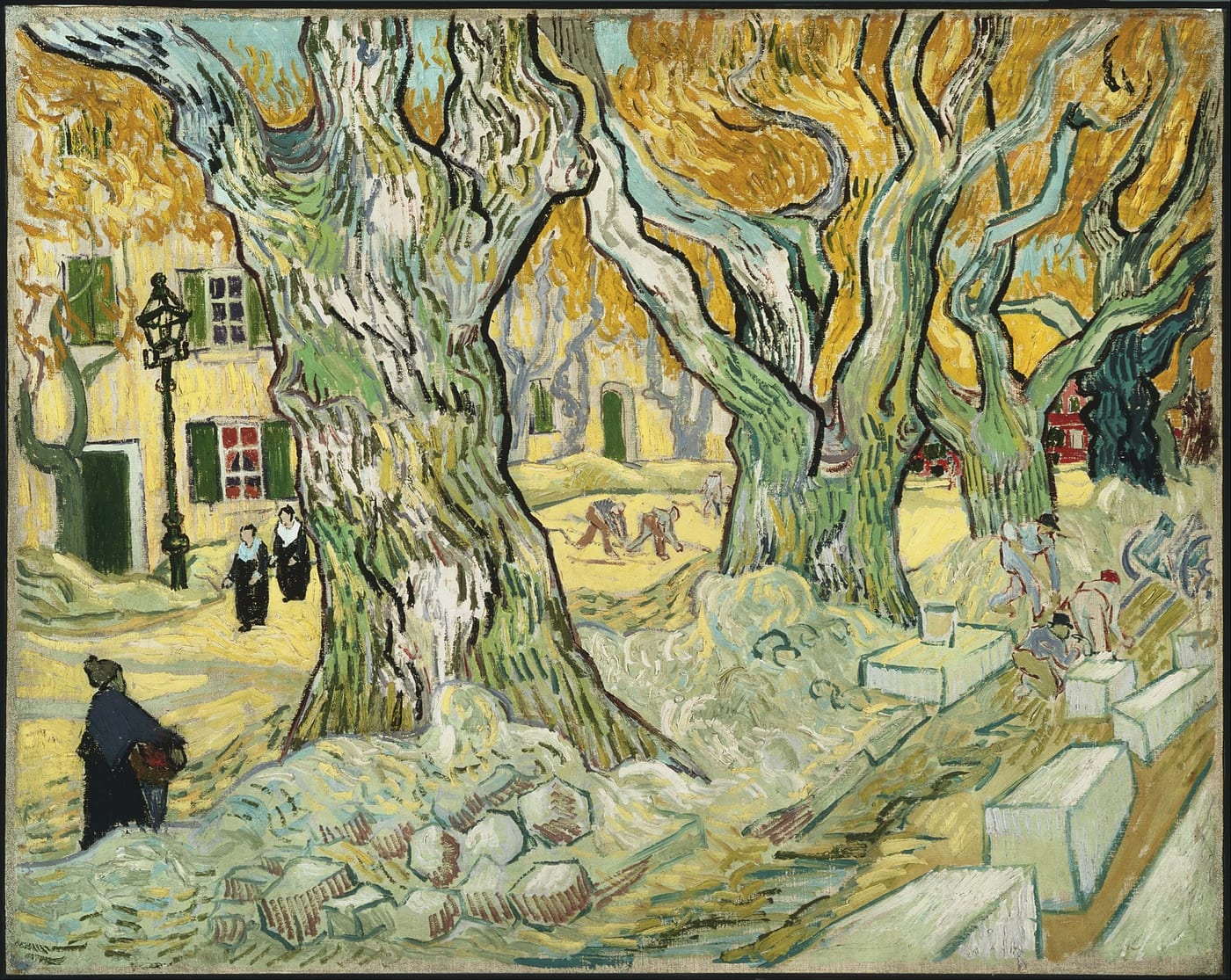
Industrial Age (19th c.) · Europe
The Road Menders
Vincent van Gogh, 1889
The painting shows road menders working beneath large plane trees at Saint-Remy.
Vincent van Gogh, The Road Menders, 1889. The Phillips Collection. Public domain via Wikimedia Commons.
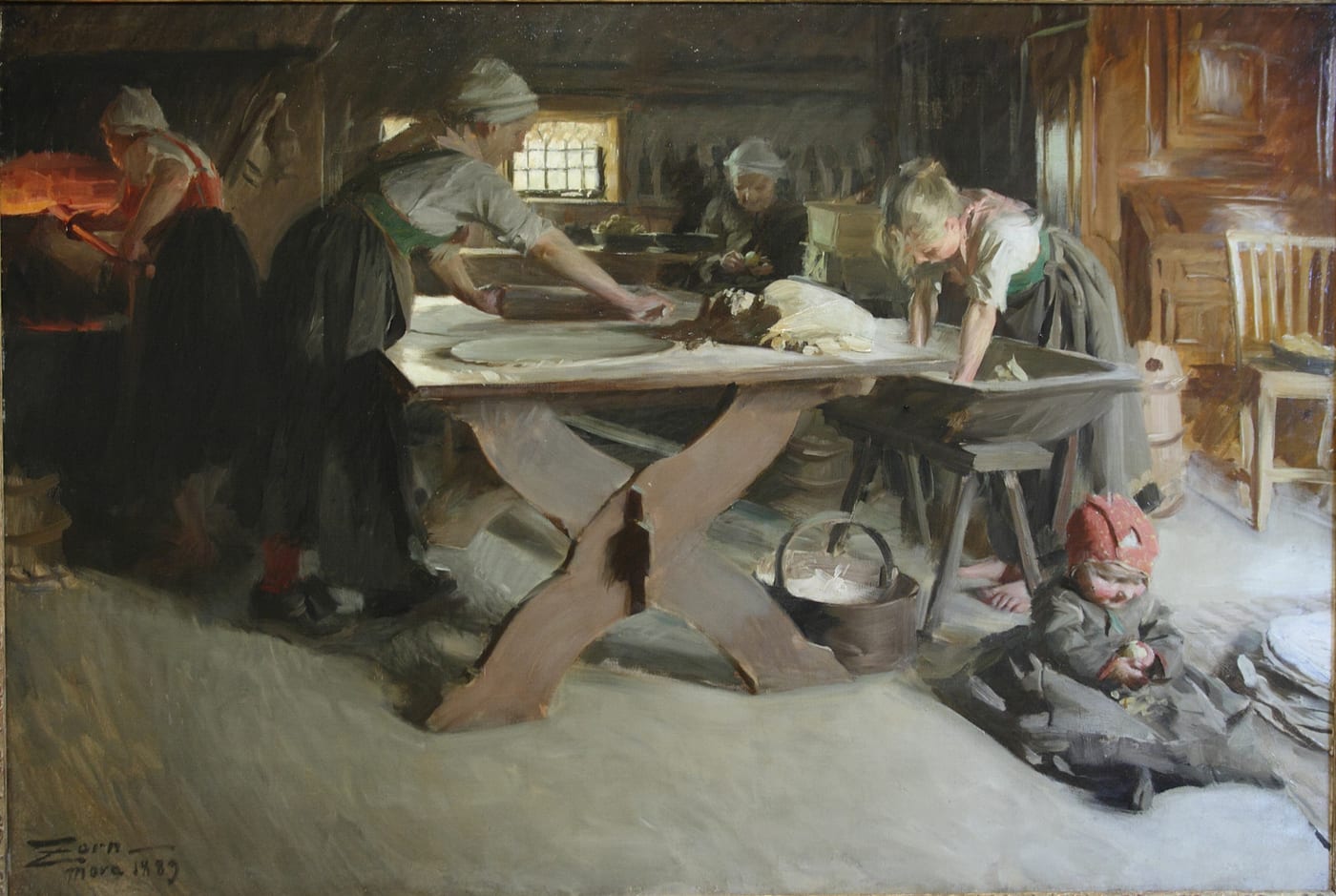
Industrial Age (19th c.) · Europe
Bread Baking
Anders Zorn, 1889
The watercolour shows women baking bread at an outdoor oven.
Anders Zorn, Bread Baking, 1889. Zorn Collections, Mora. Public domain via Wikimedia Commons.
Industrial Age (19th c.) · Europe
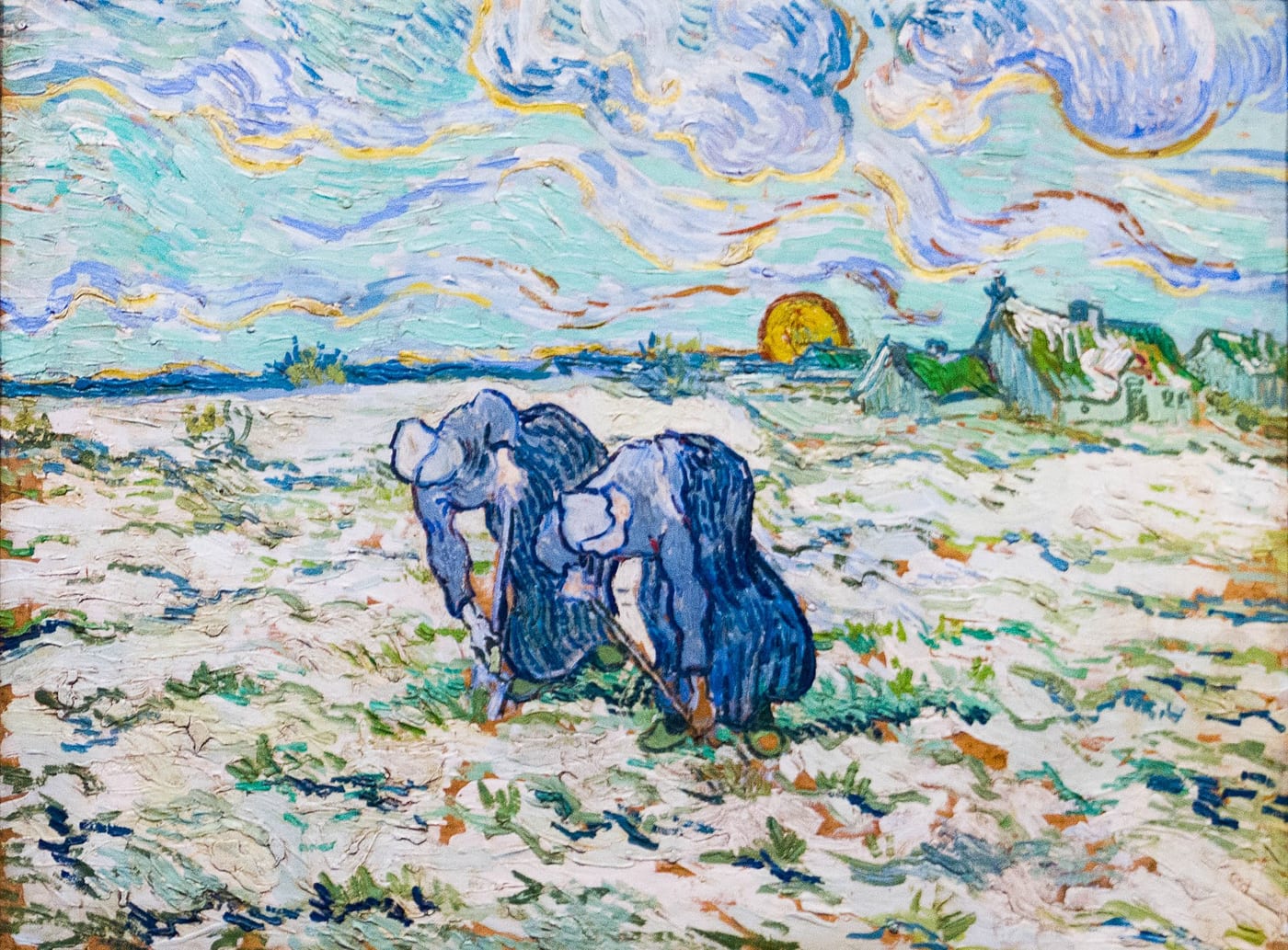
Two Peasant Women Digging in a Snow-Covered Field
Vincent van Gogh, 1890
Two women bend to dig in a frozen field, depicting agricultural labor continuing through hard winter conditions.
Vincent van Gogh, Two Peasant Women Digging in a Snow-Covered Field, 1890. Foundation E.G. Buhrle Collection. Public domain via Wikimedia Commons.
Industrial Age (19th c.) · Europe
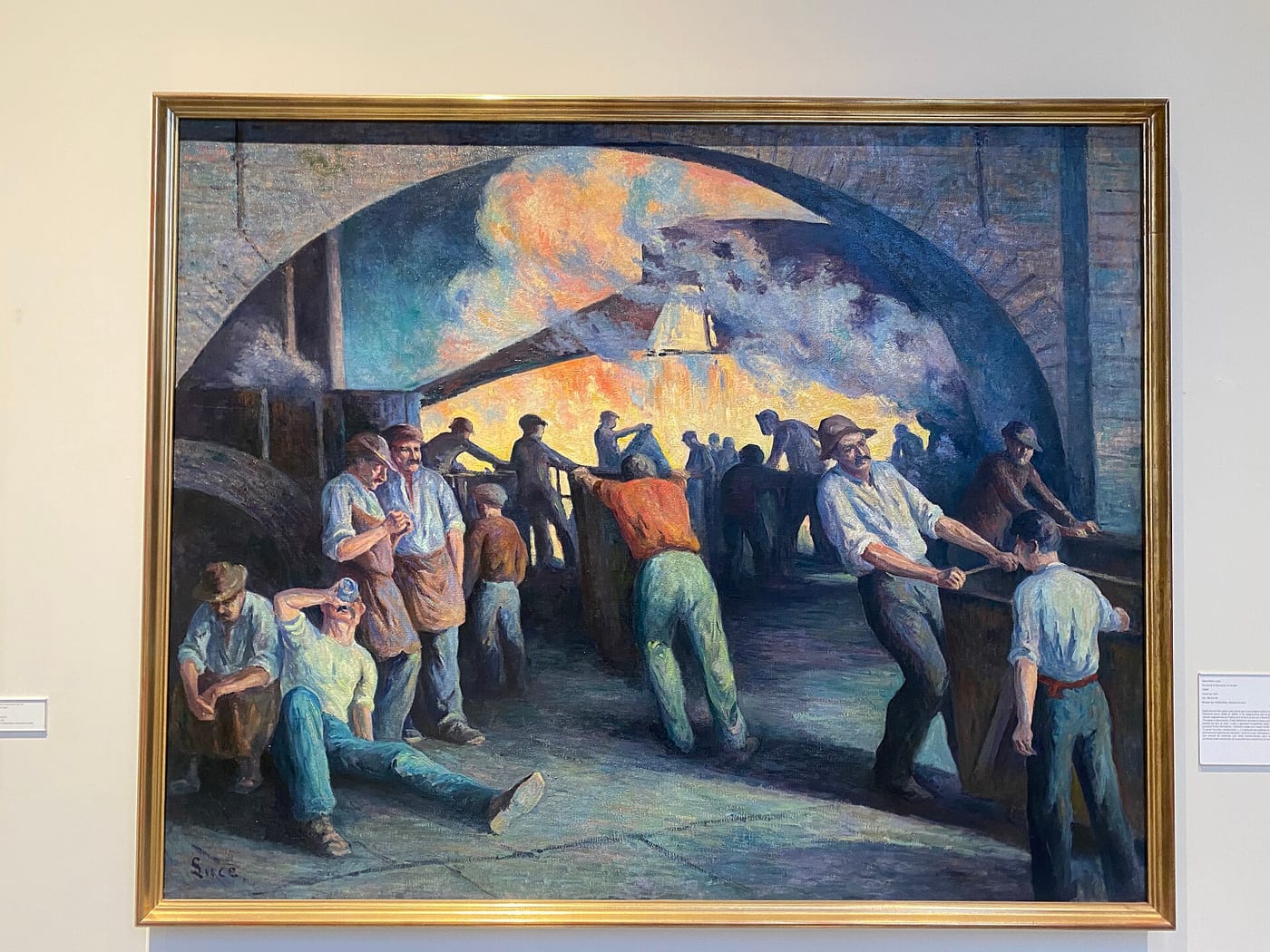
The Steelworkers (Fonderie a Charleroi)
Maximilien Luce, 1895
The painting depicts workers at the pour in a Charleroi iron foundry.
Maximilien Luce, The Steelworkers (Fonderie a Charleroi), 1895. Musee de l'Hotel-Dieu, Mantes-la-Jolie. Public domain via Wikimedia Commons.
Industrial Age (19th c.) · Europe
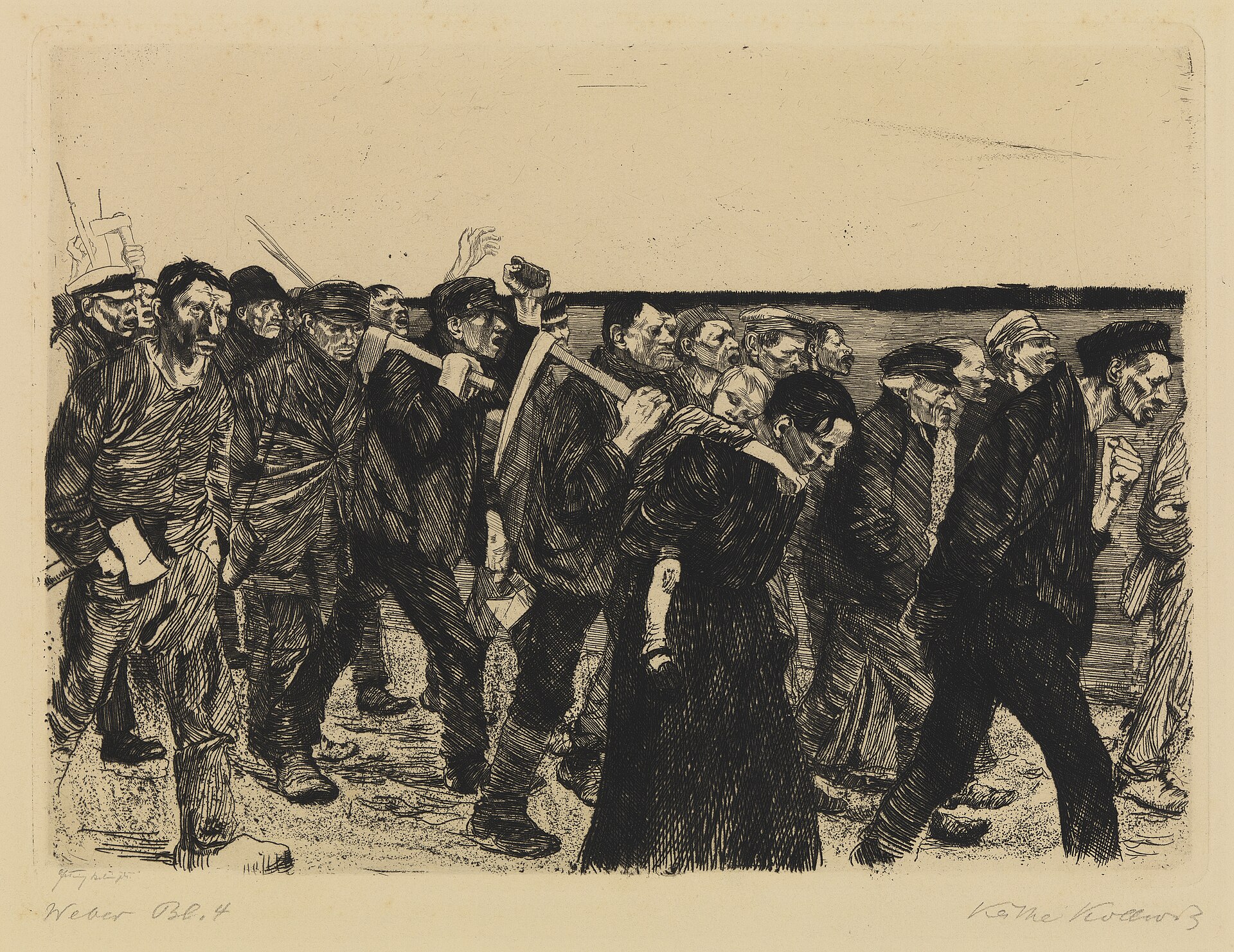
A Weavers' Revolt (March of the Weavers)
Kathe Kollwitz, 1897
A cycle following weavers from misery to uprising to death, labor drawn as a matter of survival, not picturesque toil.
Statens Museum for Kunst (SMK Open), via Wikimedia Commons
VI. Early 20th Century
39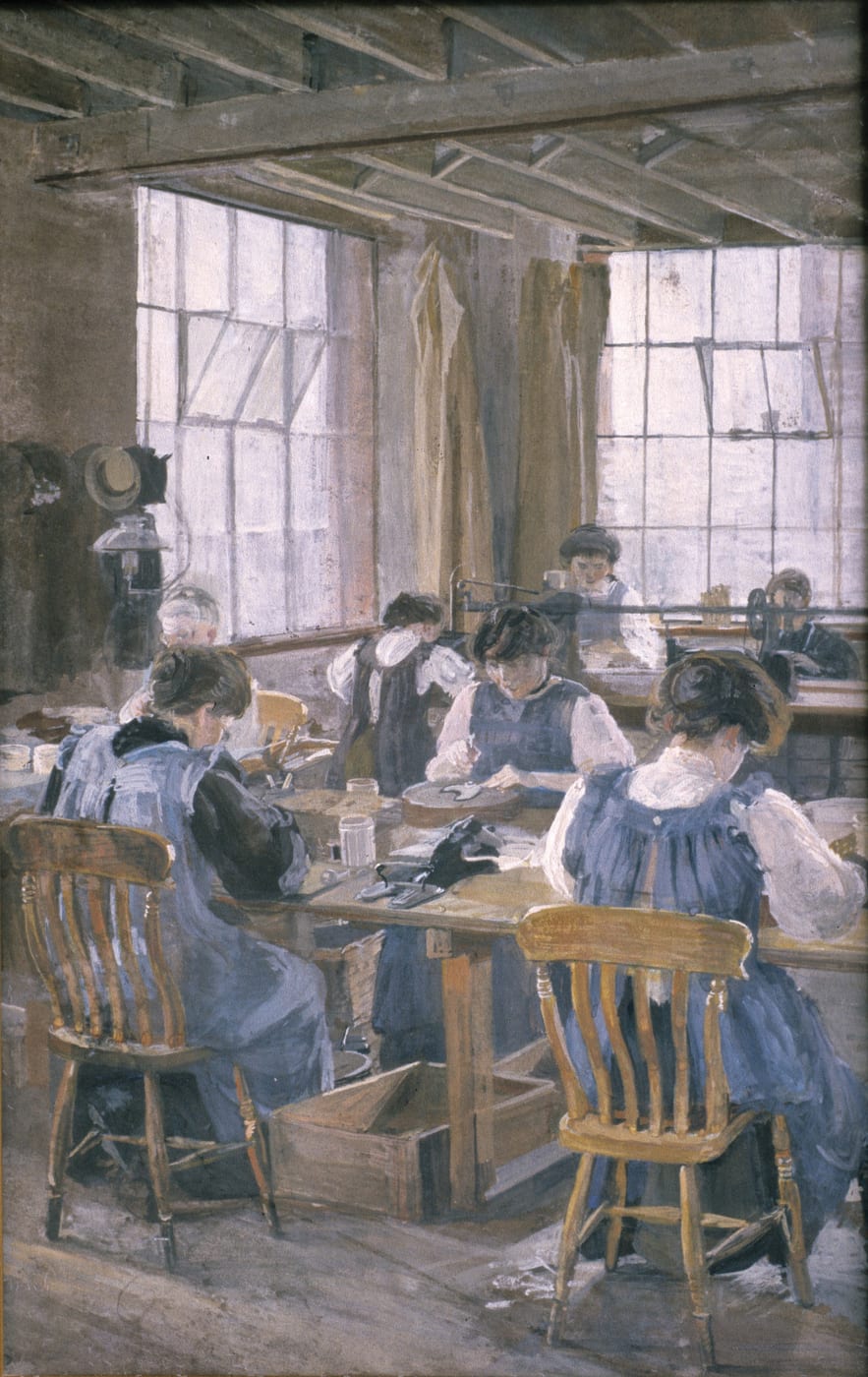
Early 20th Century · Europe
In a Leicester Boot Factory
Sylvia Pankhurst, 1907
One of Pankhurst's 1907 studies of women in Leicester's boot trade, showing a worker at her machine as part of her documentary Women Workers series.
Sylvia Pankhurst, In a Leicester Boot Factory, 1907. Sylvia Pankhurst estate. Public domain via sylviapankhurst.com.
Early 20th Century · Americas
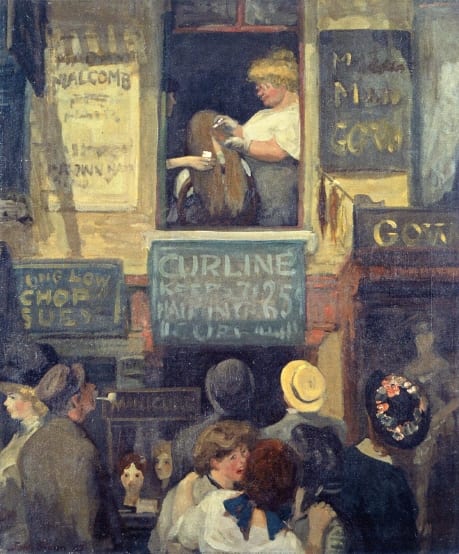
Hairdresser's Window
John Sloan, 1907
Passersby look up at a hairdresser coloring a woman's hair in a lit second-floor window on a New York street.
John Sloan, Hairdresser's Window, 1907. Wadsworth Atheneum Museum of Art. Public domain via WikiArt.
Early 20th Century · Americas
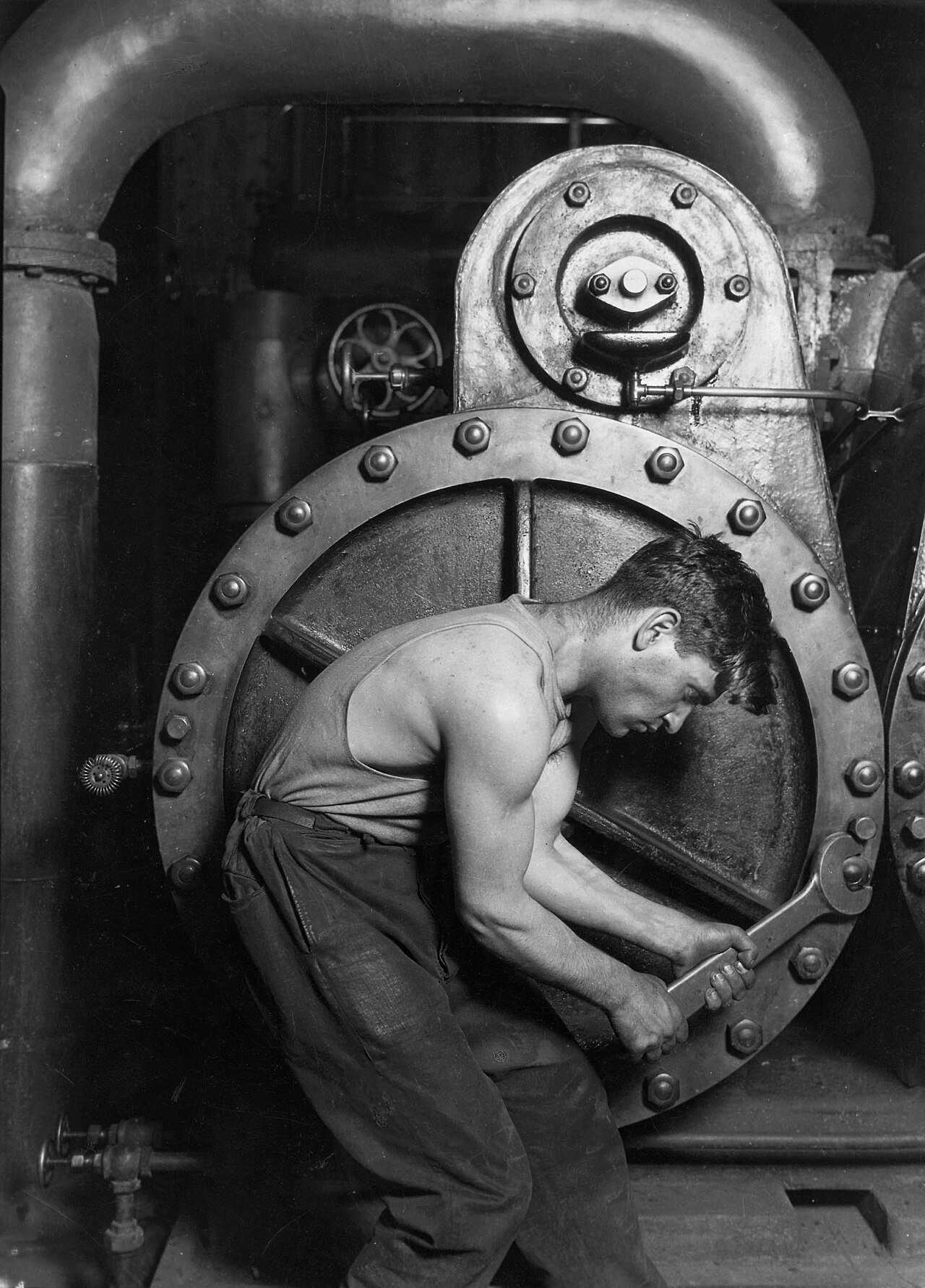
Breaker Boys / Powerhouse Mechanic / girder workers
Lewis Hine, 1908-31
A sociologist with a camera photographed children in the mills and men on the girders, evidence disguised as portraiture.
Lewis W. Hine, 'Power house mechanic working on steam pump', 1920, Library of Congress, public domain, via Wikimedia Commons
Early 20th Century · Europe
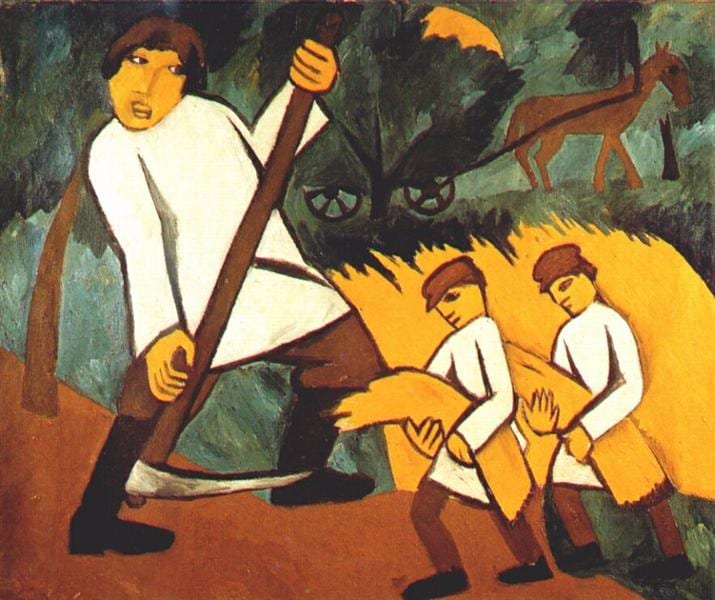
Haycutting
Natalia Goncharova, 1910
The painting shows peasants cutting and gathering hay in a Neo-Primitivist style drawn from Russian folk prints.
Natalia Goncharova, Haycutting, 1910. State Tretyakov Gallery, Moscow. Public domain via WikiArt.
Early 20th Century · Europe
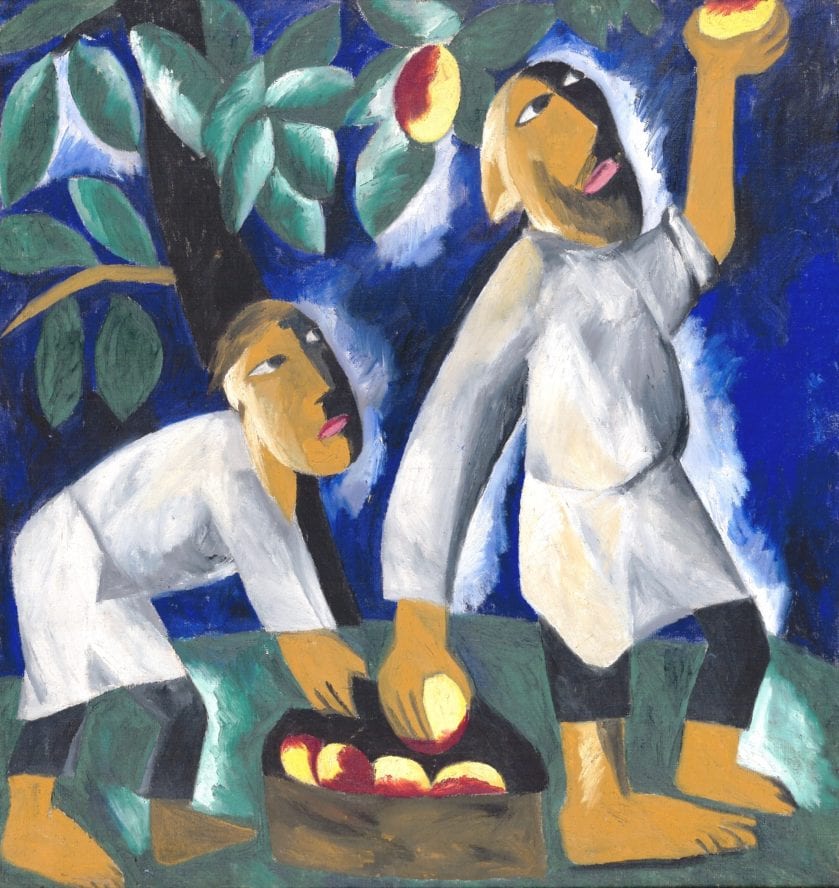
Peasants Picking Apples
Natalia Goncharova, 1911
Goncharova depicts monumental peasant figures gathering apples, rendering their faces as mask-like forms drawn from Russian folk and Neo-primitivist sources.
Natalia Goncharova, Peasants Picking Apples, 1911. State Tretyakov Gallery, Moscow. In copyright via The Sketchline.
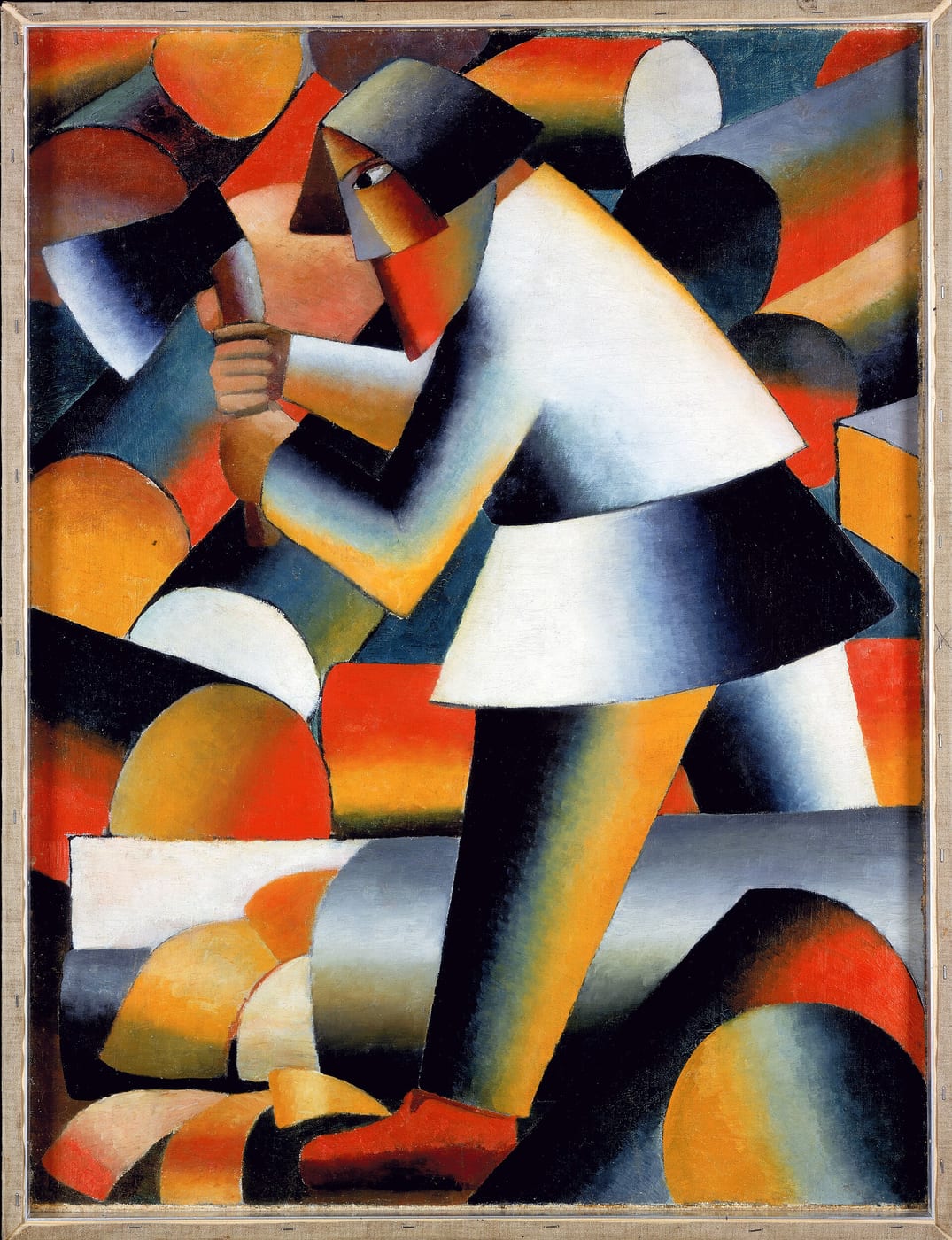
Early 20th Century · Europe
The Woodcutter
Kazimir Malevich, 1912-13
Malevich renders a woodcutter in tubular, metallic Cubo-Futurist forms, treating manual rural labor as a subject for geometric abstraction.
Kazimir Malevich, The Woodcutter, 1912-13. Stedelijk Museum, Amsterdam. Public domain via Wikimedia Commons.
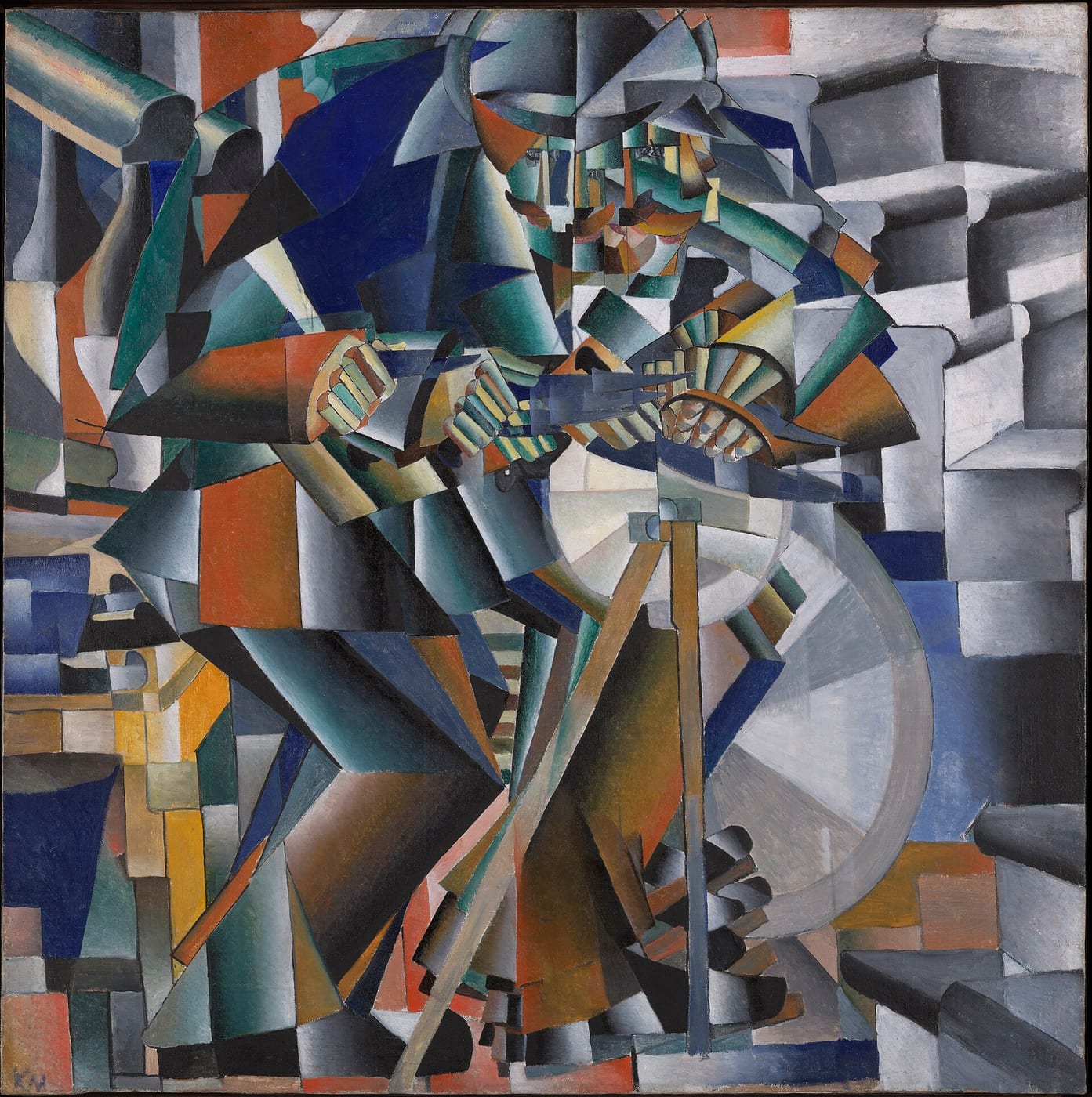
Early 20th Century · Europe
The Knife Grinder
Kazimir Malevich, 1912-13
The repeated limbs and glinting facets of the grinder at his wheel translate the motion of manual labor into a Cubo-Futurist study of movement.
Kazimir Malevich, The Knife Grinder, 1912-13. Yale University Art Gallery, New Haven. Public domain via Wikimedia Commons.
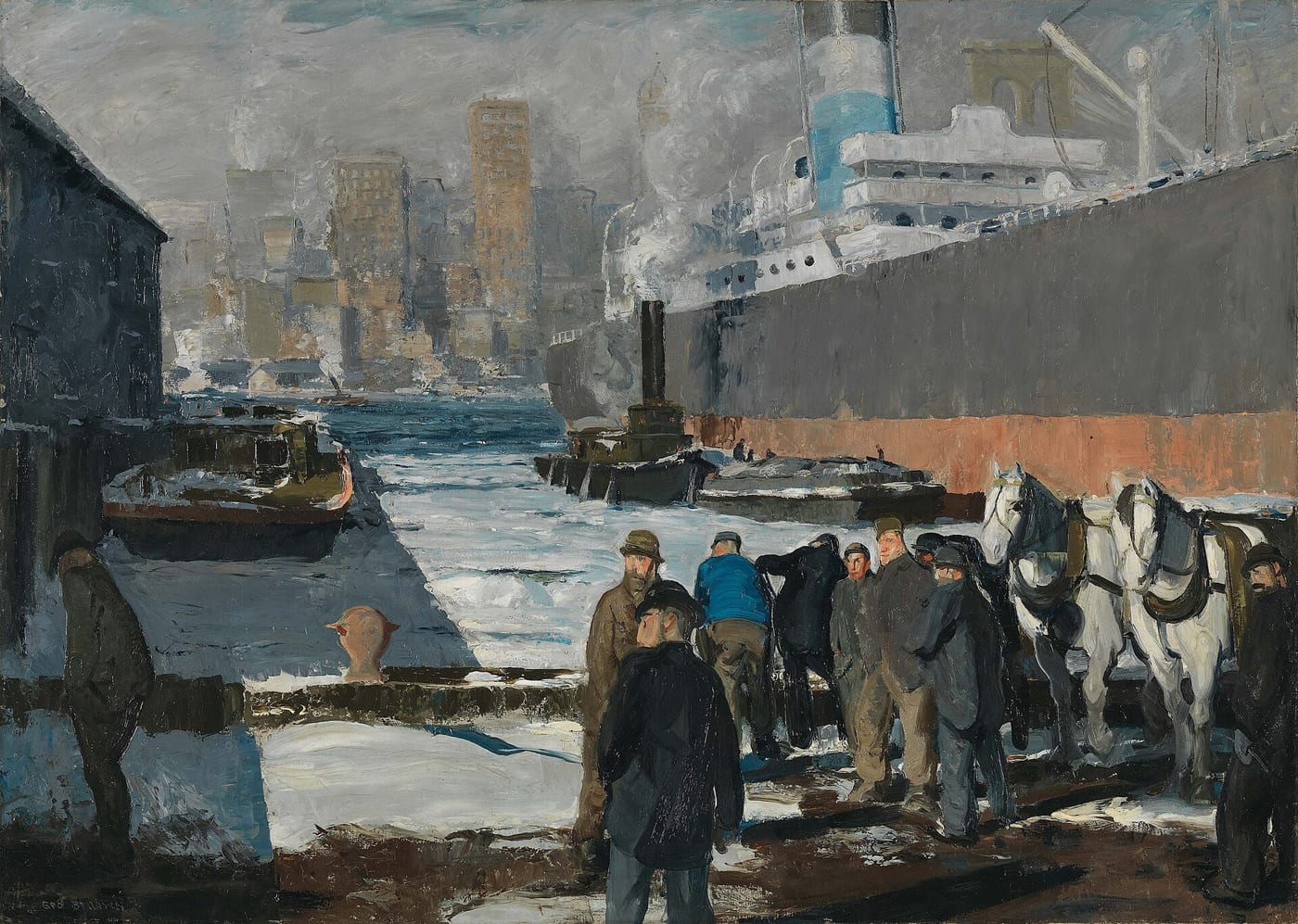
Early 20th Century · Americas
Men of the Docks
George Bellows, 1912
Dockworkers and horses gather beside a snow-covered New York wharf as a steamship looms behind them.
George Bellows, Men of the Docks, 1912. The National Gallery, London. Public domain via Wikimedia Commons.
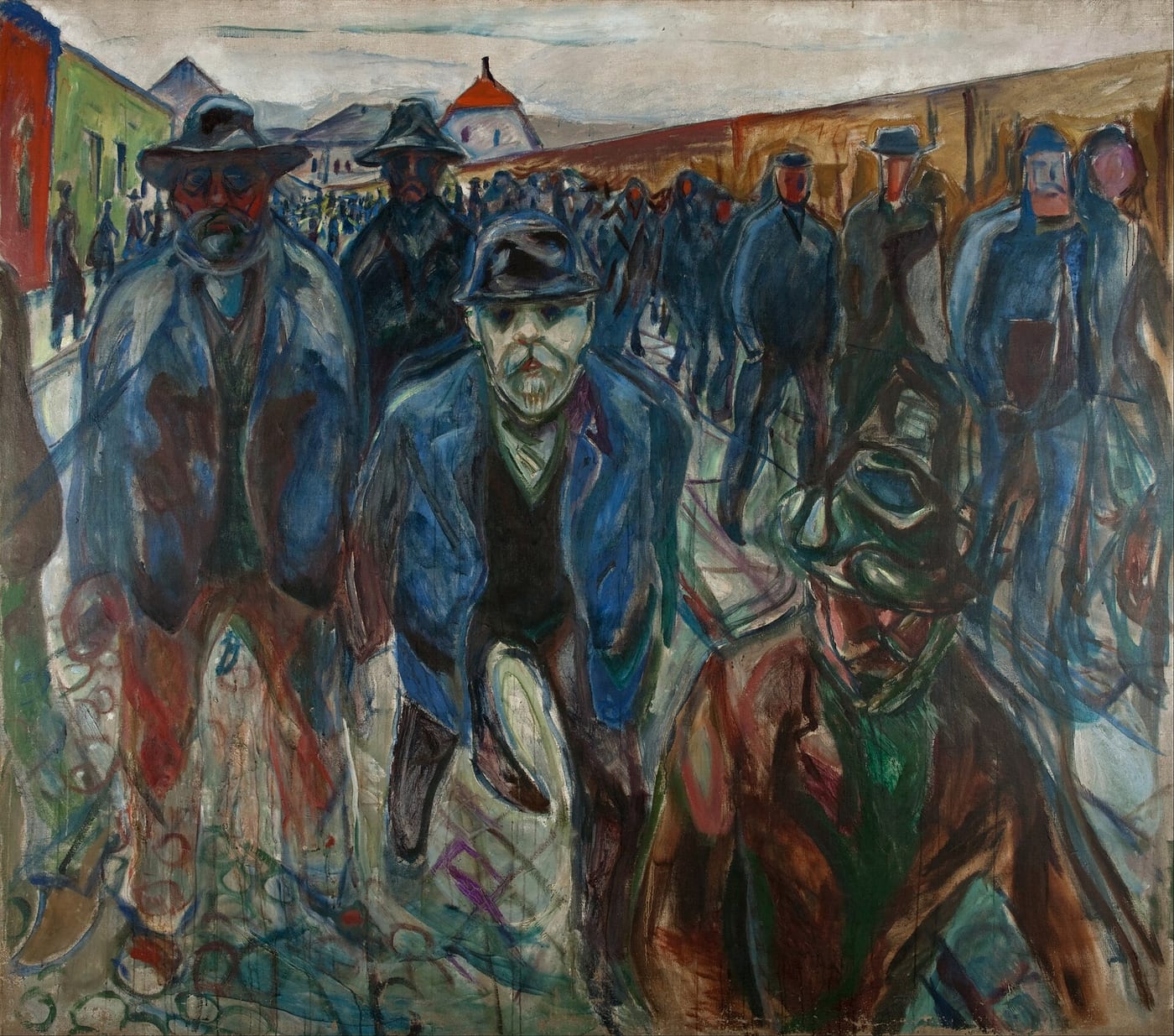
Early 20th Century · Europe
Workers on Their Way Home
Edvard Munch, 1913-14
A dense column of industrial workers advances toward the viewer at the end of a shift, filling the street in Munch's late urban composition.
Edvard Munch, Workers on Their Way Home, 1913-14. Munch Museum, Oslo. Public domain via Wikimedia Commons.
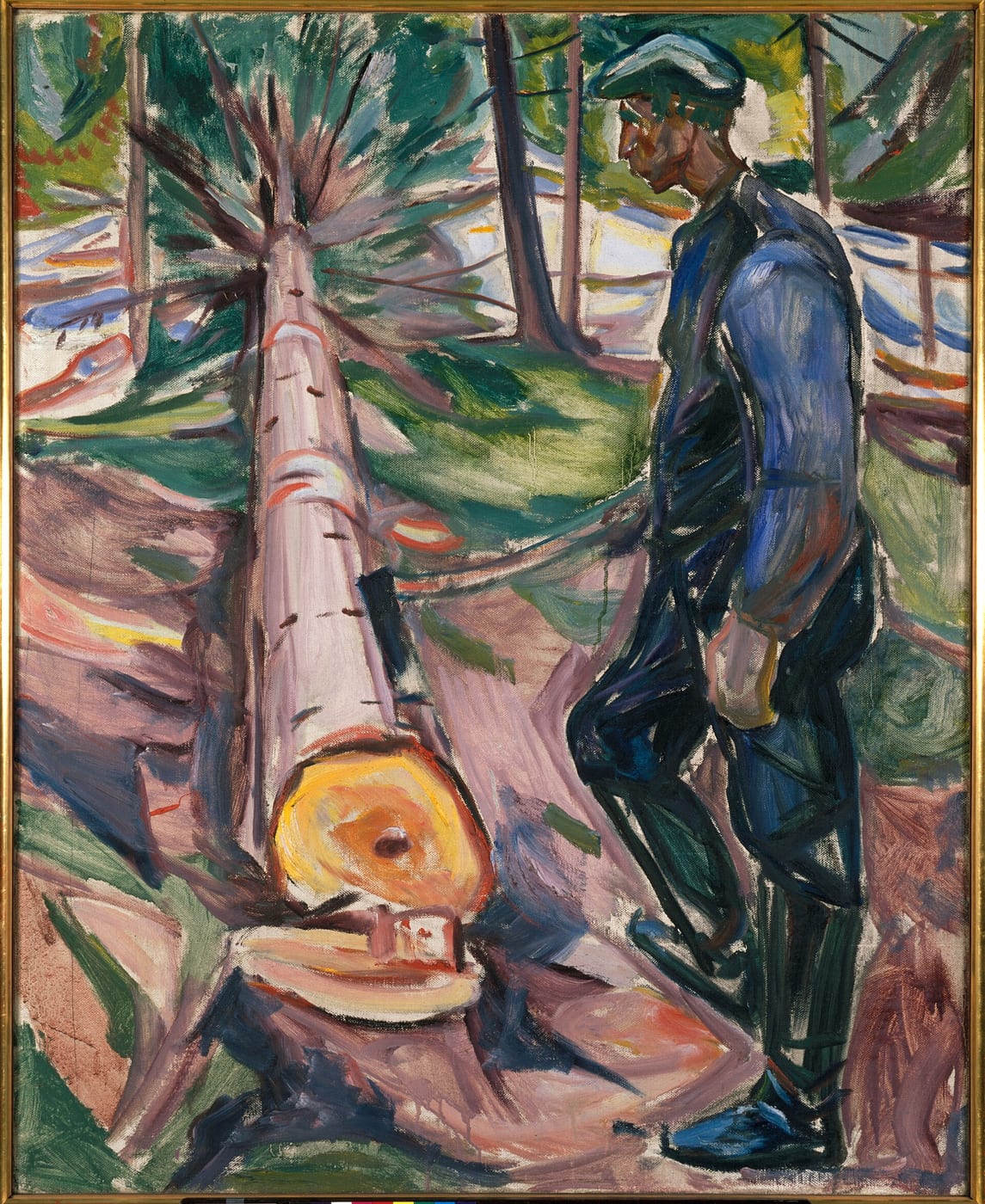
Early 20th Century · Europe
The Lumberjack
Edvard Munch, 1913
Munch shows a lumberjack mid-swing against a felled trunk, the broad brushwork emphasizing the physical effort of the cut.
Edvard Munch, The Lumberjack, 1913. Munch Museum, Oslo. Public domain via Wikimedia Commons.
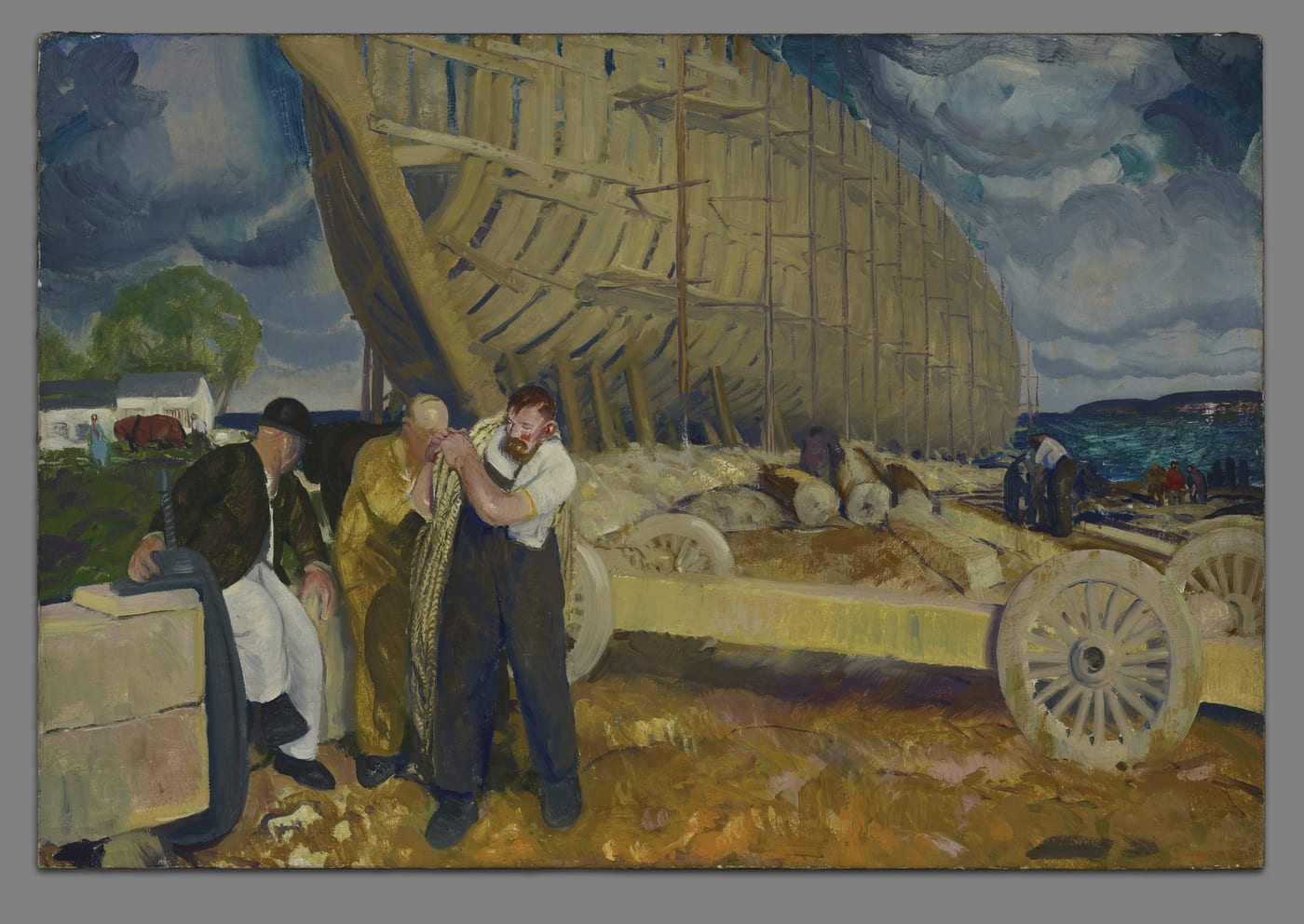
Early 20th Century · Americas
Builders of Ships
George Bellows, 1916
Workers labor over the timber framework of a ship under construction.
George Bellows, Builders of Ships, 1916. Yale University Art Gallery. Public domain via Wikimedia Commons.
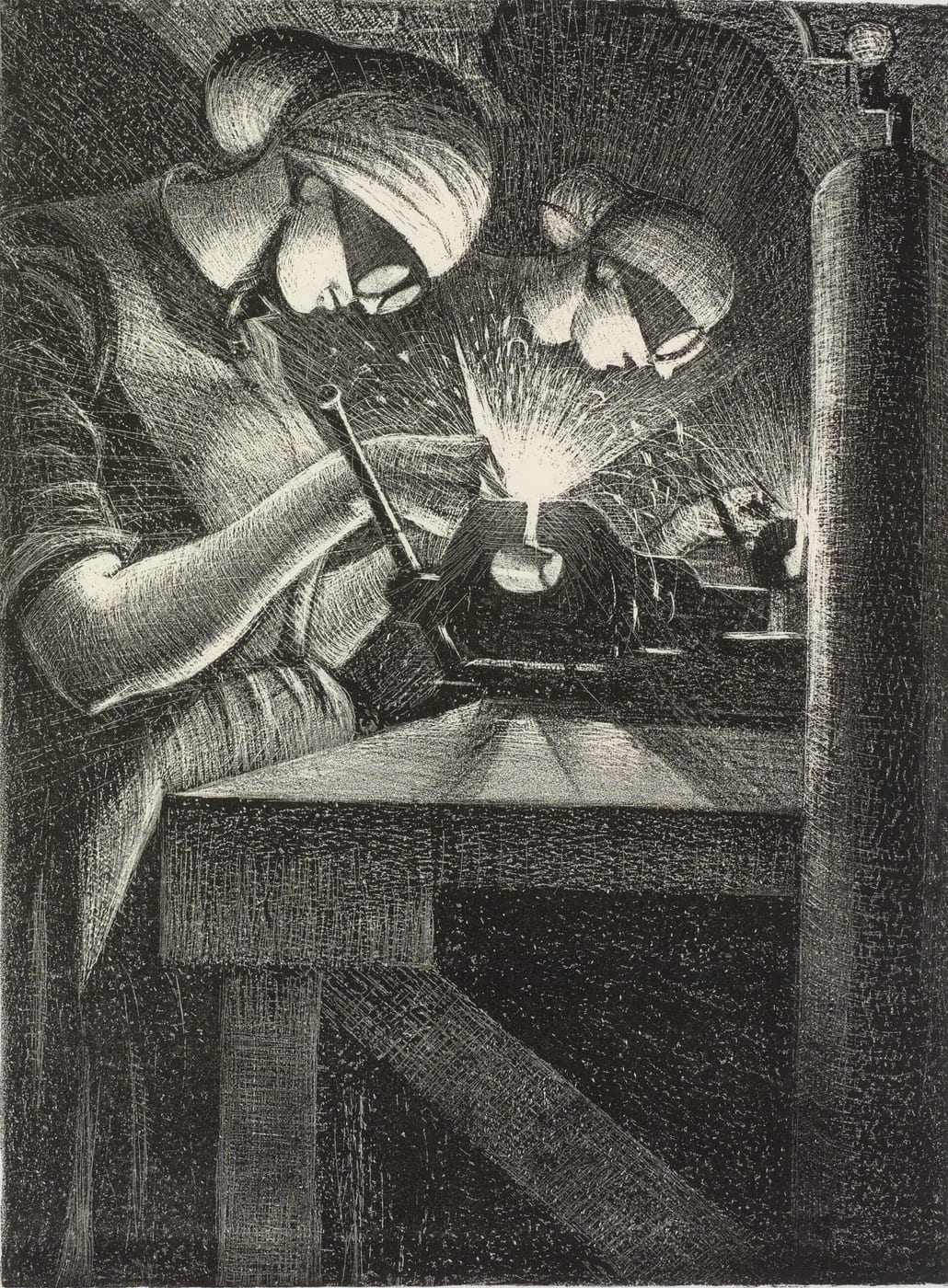
Early 20th Century · Europe
Making Aircraft (Acetylene Welder)
C. R. W. Nevinson, 1917
The lithograph shows a welder using an acetylene torch in an aircraft factory during the First World War.
C. R. W. Nevinson, Making Aircraft (Acetylene Welder), 1917. Imperial War Museum. Public domain via Wikimedia Commons.
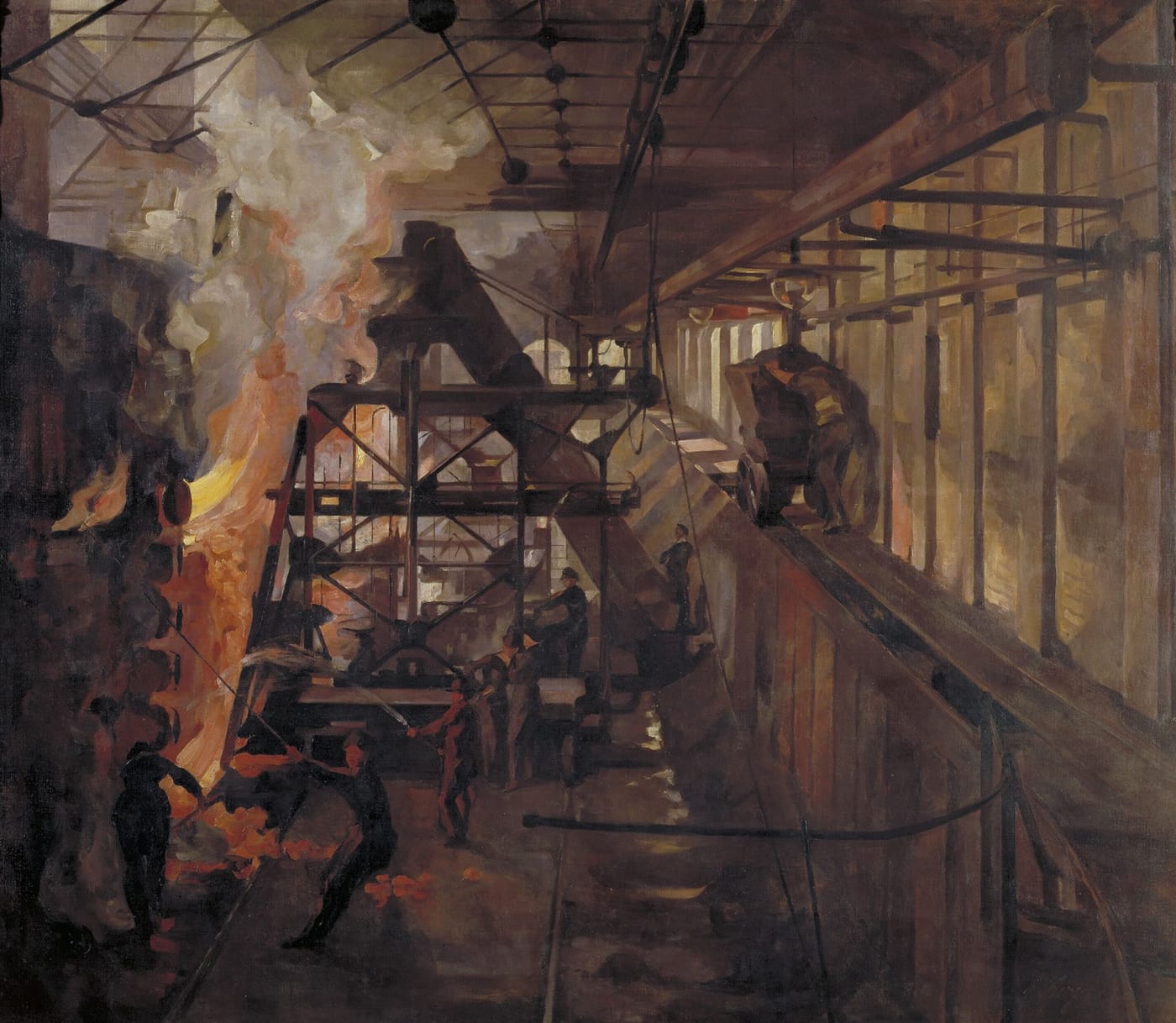
Early 20th Century · Europe
Women Working in a Gas Retort House
Anna Airy, 1918
Commissioned as a First World War record, Airy shows women stoking the retorts of the South Metropolitan Gas Company amid heat and glare.
Anna Airy, Women Working in a Gas Retort House, 1918. Imperial War Museum, London. Public domain via Wikimedia Commons.
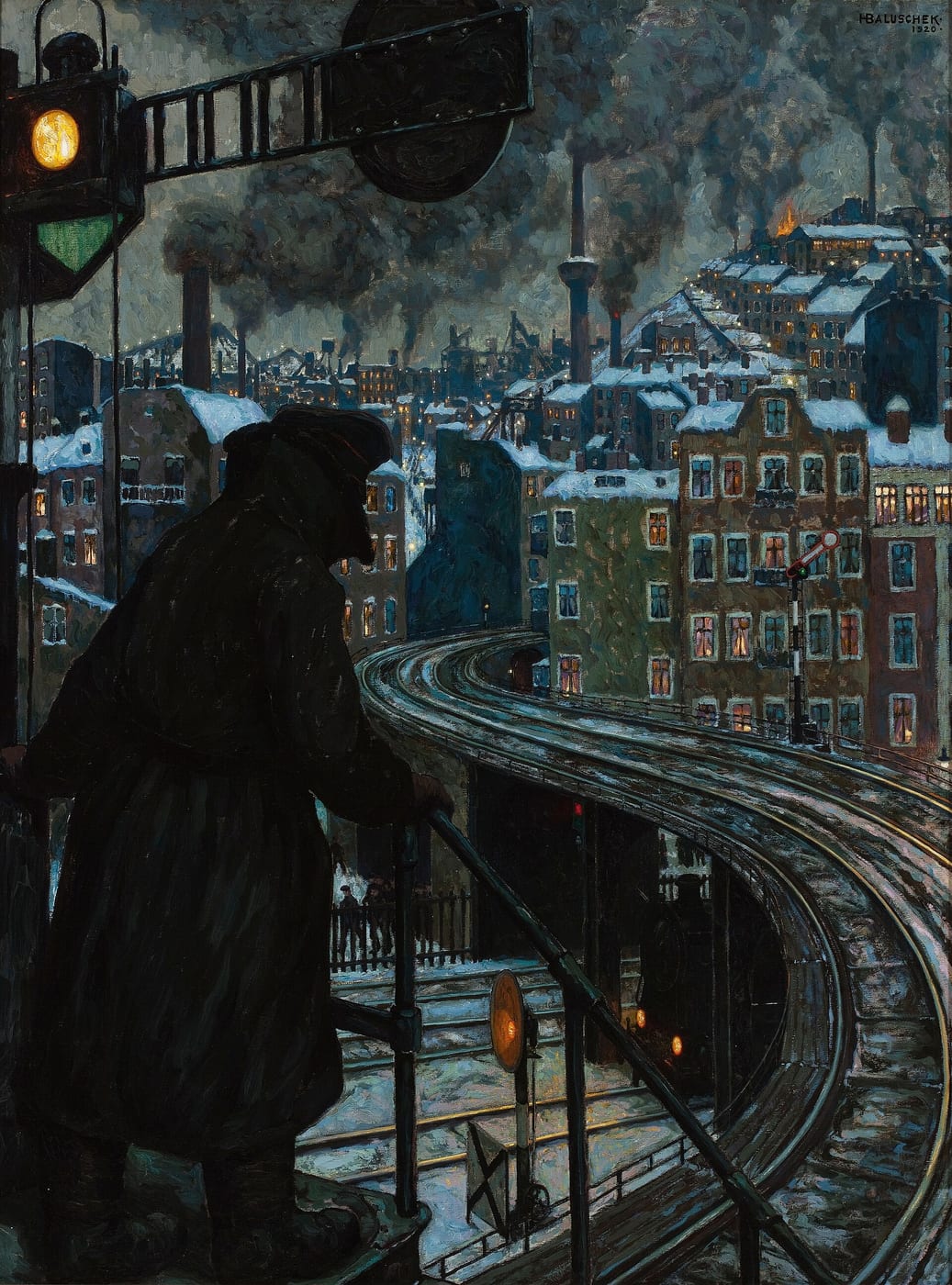
Early 20th Century · Europe
City of Workers
Hans Baluschek, 1920
Baluschek surveys a sprawling proletarian district of smokestacks and tenements, a hallmark of his sympathetic realist views of Berlin's industrial poor.
Hans Baluschek, City of Workers (Arbeiterstadt), 1920. Private collection. Public domain via Wikimedia Commons.
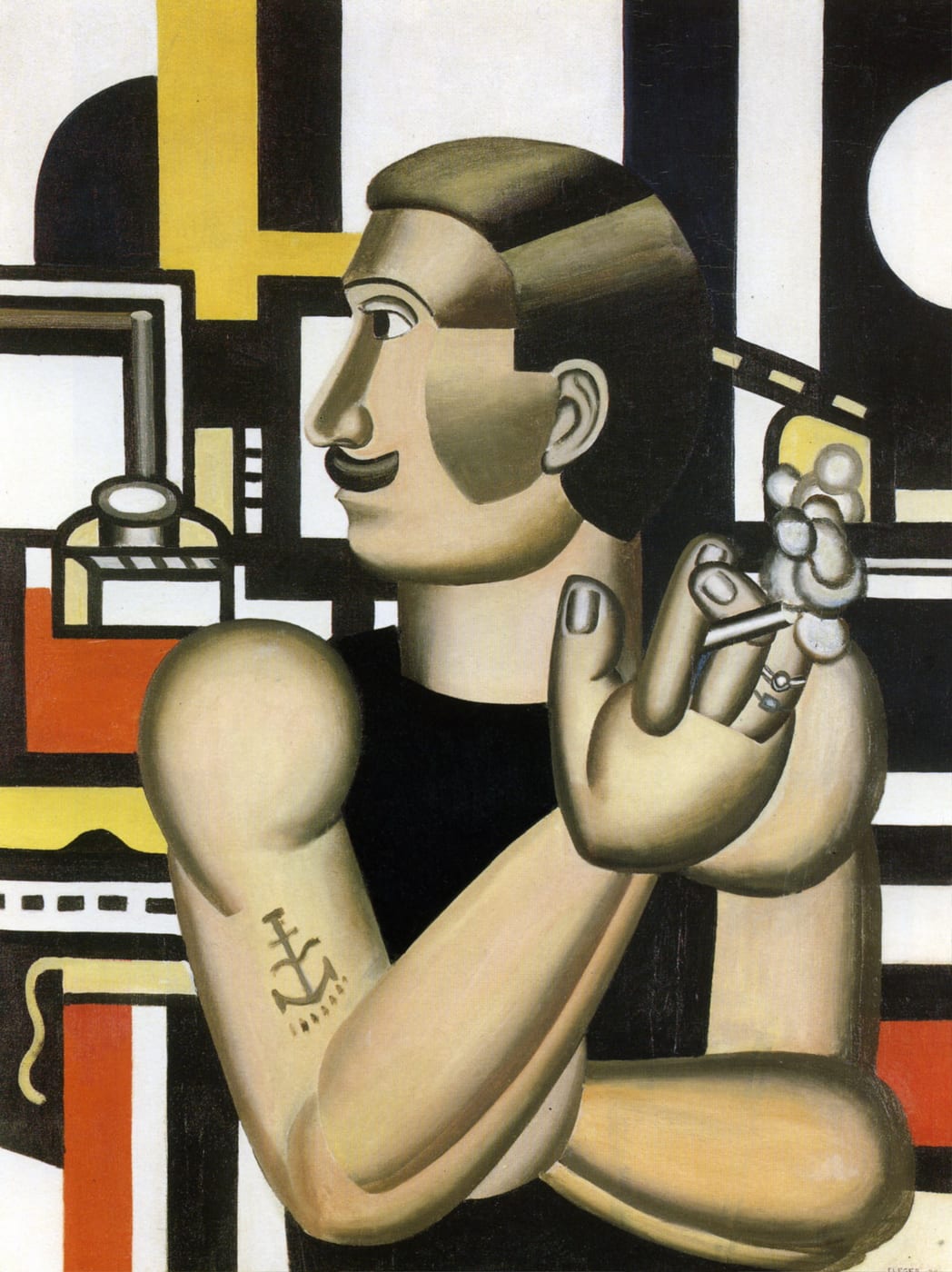
Early 20th Century · Europe
The Mechanic
Fernand Leger, 1920
Leger presents the machinist as a monumental, tubular figure among mechanical forms, celebrating the modern industrial worker.
Fernand Leger, The Mechanic (Le Mecanicien), 1920. National Gallery of Canada, Ottawa. Public domain via Wikimedia Commons.
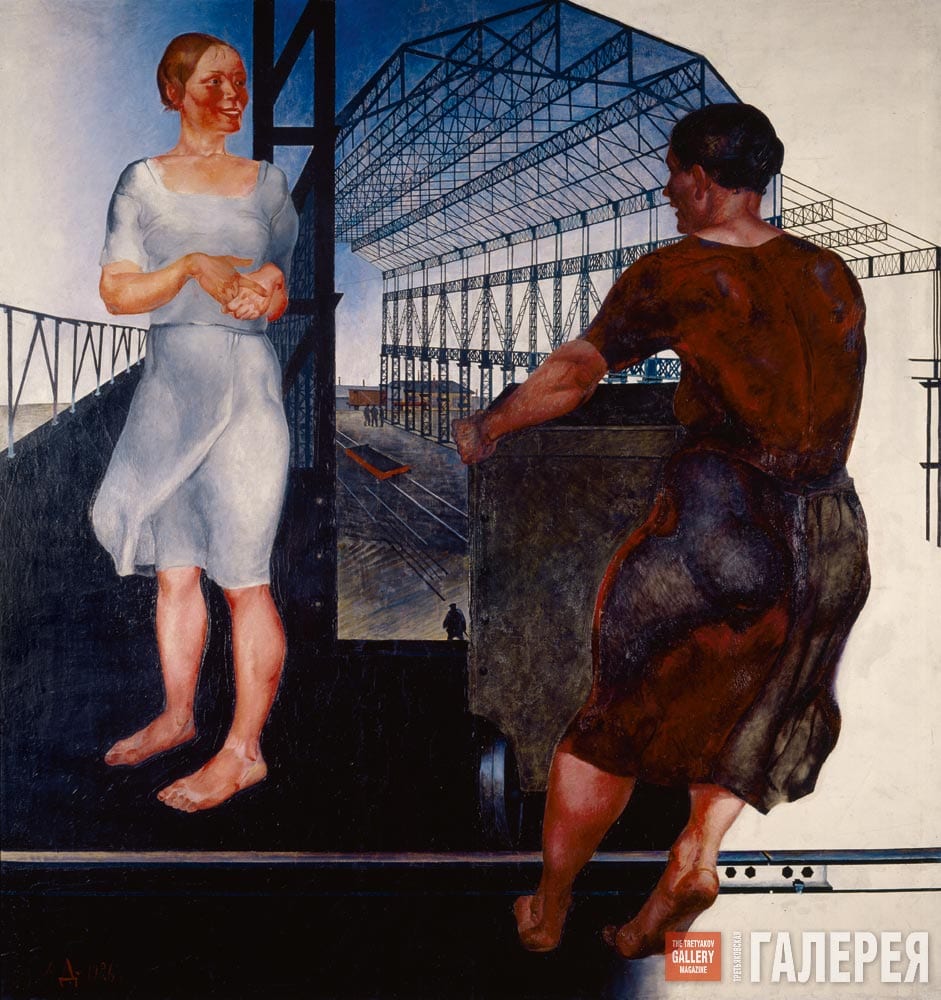
Early 20th Century · Europe
Building New Factories
Aleksandr Deyneka, 1926
Soviet labor as lean, athletic, and heroic, the worker rebuilt as a symbol of the state.
Aleksandr Deyneka, Building New Factories (Building of New Industrial Plants), 1926. State Tretyakov Gallery, Moscow. In copyright.
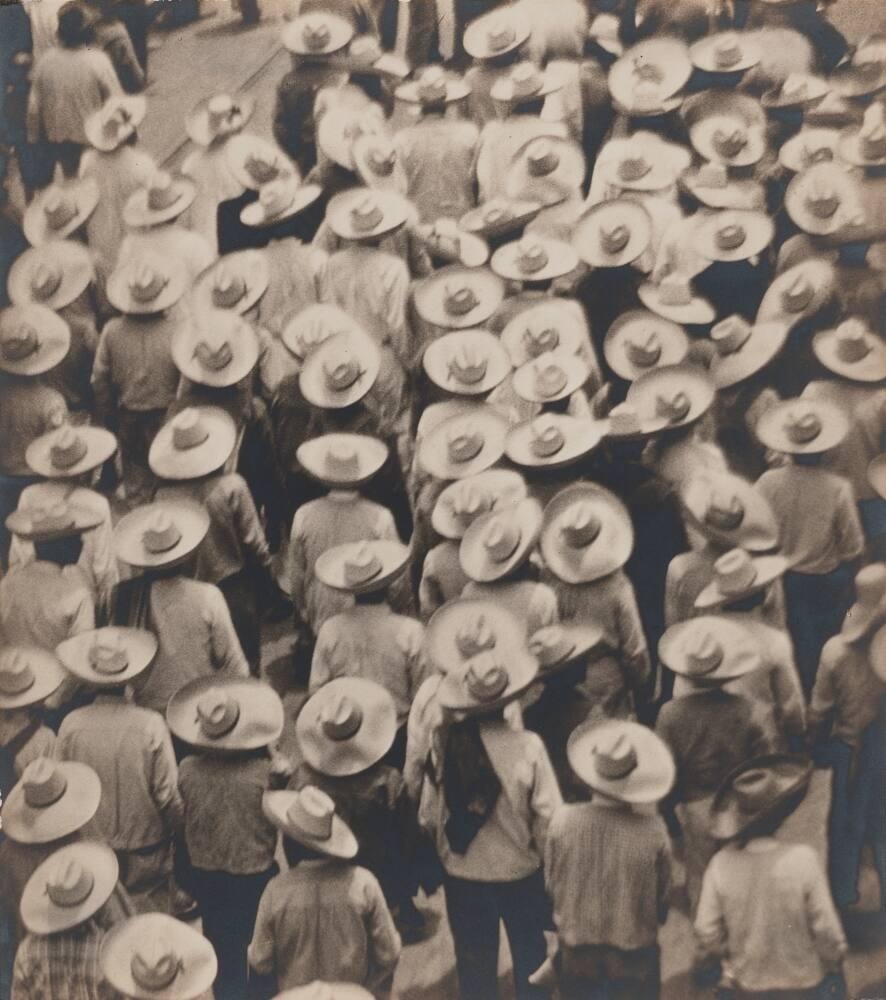
Early 20th Century · Americas
Workers' Parade
Tina Modotti, 1926
Tina Modotti photographed a workers' demonstration from above, a mass of straw hats moving as one.
Tina Modotti, Workers' Parade, 1926. Via Wikimedia Commons. Public domain.
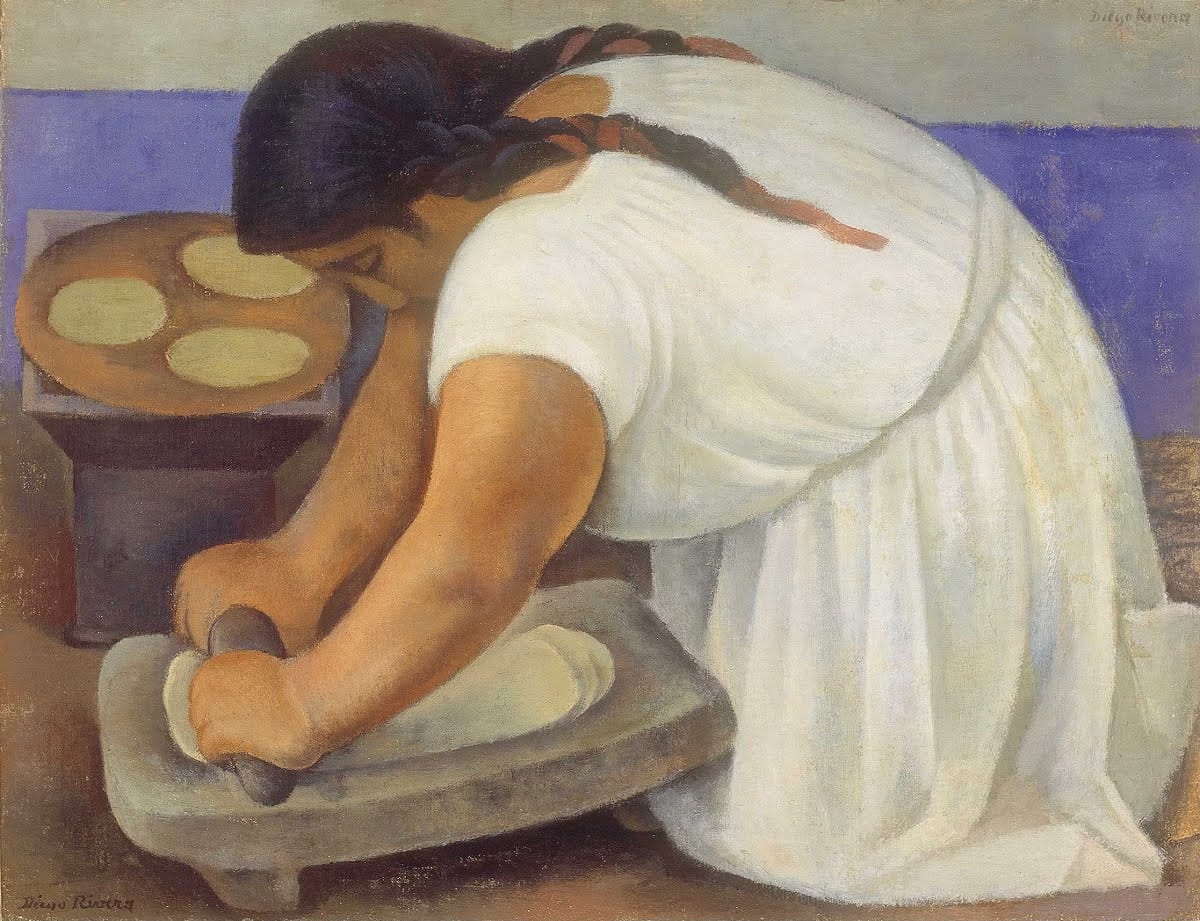
Early 20th Century · Americas
The Tortilla Maker (La Molendera)
Diego Rivera, 1926
A woman kneels to grind maize on a stone metate, a scene of everyday Mexican domestic labor.
Diego Rivera, The Tortilla Maker (La Molendera), 1926. Museo de Arte Moderno, Mexico City. Public domain via Wikimedia.
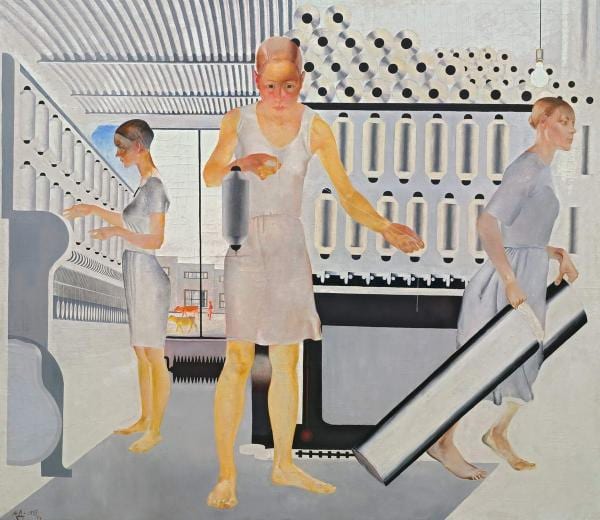
Early 20th Century · Europe
Textile Workers
Aleksandr Deineka, 1927
Deineka arranges barefoot young women among rhythmic looms and bobbins in a pale, light-filled mill, a key image of early Soviet labor.
Aleksandr Deineka, Textile Workers, 1927. State Russian Museum, St. Petersburg. In copyright via State Russian Museum.
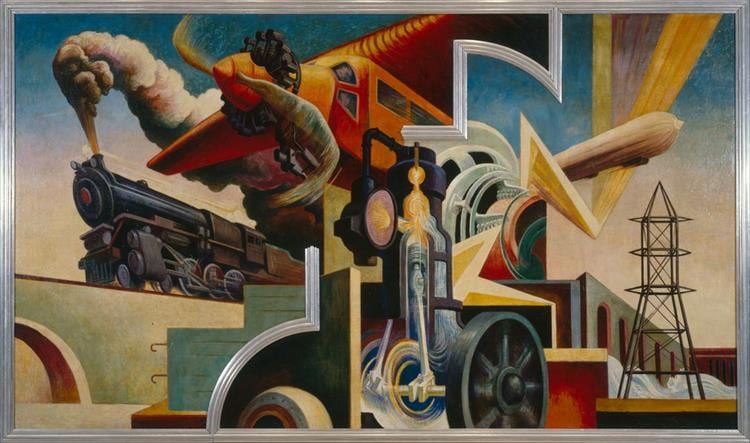
Early 20th Century · Americas
America Today
Thomas Hart Benton, 1930-31
A ten-panel mural racing across the whole working country at once, steel and cotton and coal and city, all in motion.
Thomas Hart Benton, America Today (Instruments of Power panel), 1930-31. The Metropolitan Museum of Art. In copyright.
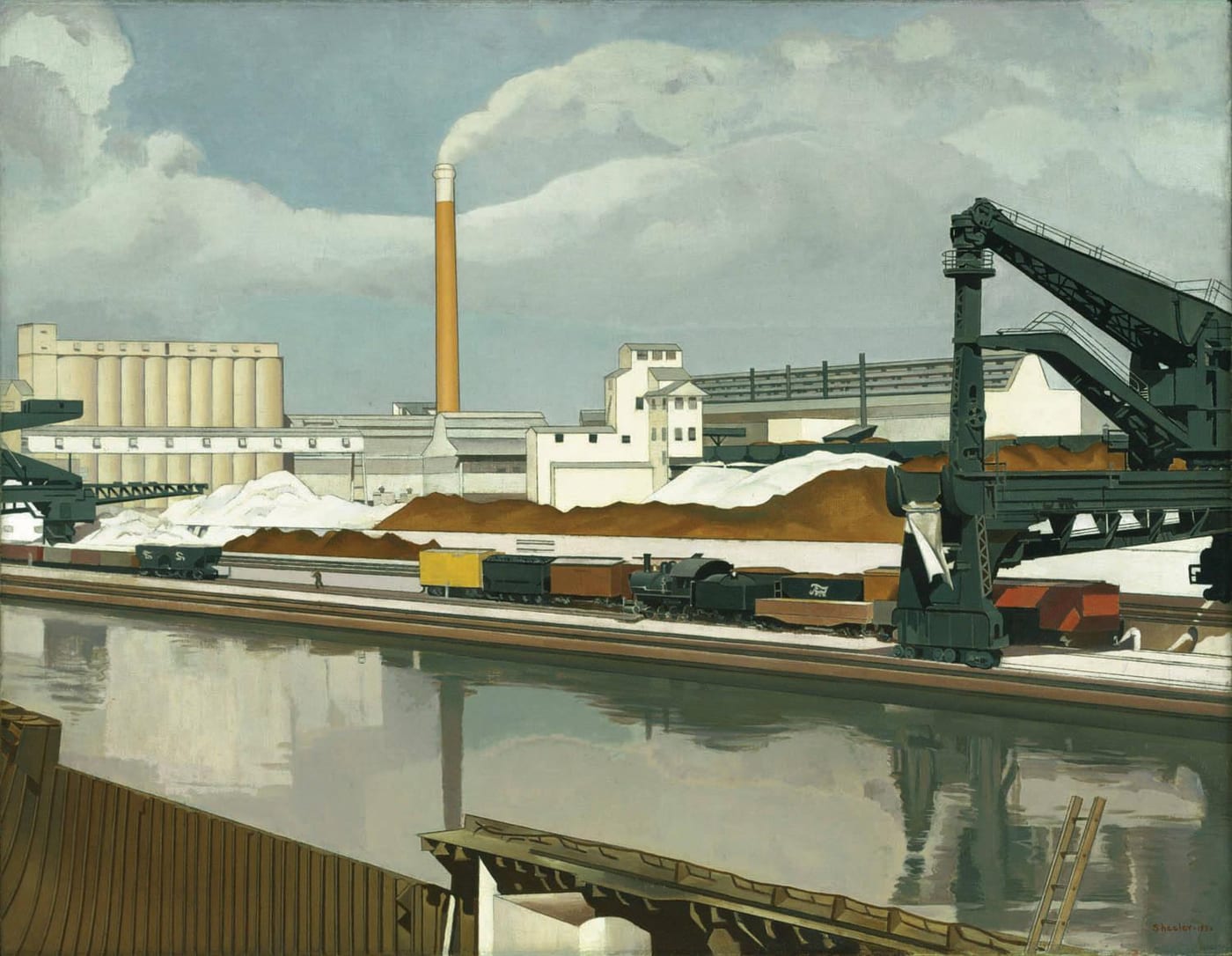
Early 20th Century · Americas
American Landscape
Charles Sheeler, 1930
Ford's River Rouge plant painted with the cold clarity of a cathedral, industry as the new American sublime.
Charles Sheeler, American Landscape, 1930. Museum of Modern Art, New York. In copyright.
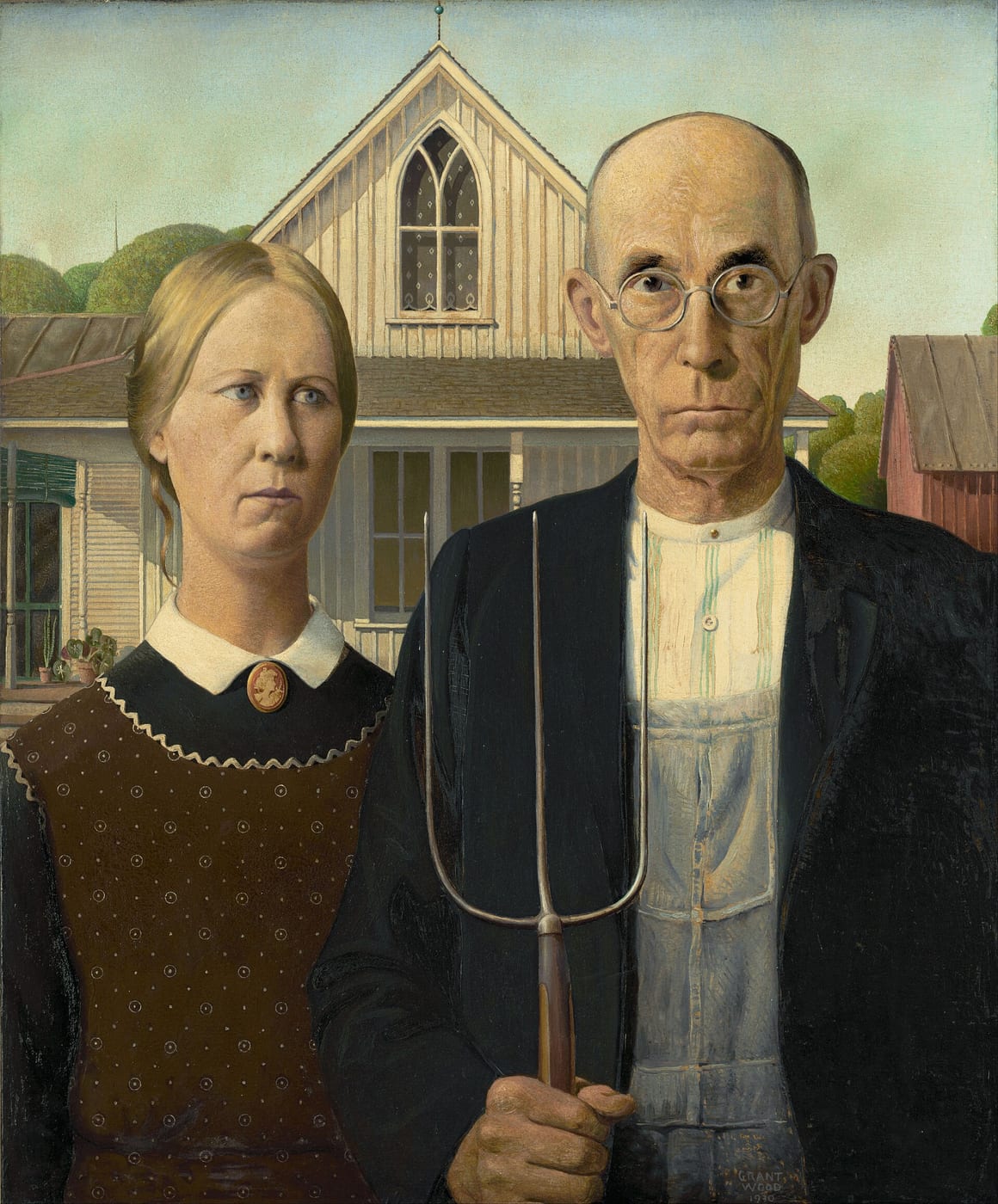
Early 20th Century · Americas
American Gothic
Grant Wood, 1930
The farmer and his pitchfork became the national image of rural labor, half tribute and half question.
Art Institute of Chicago, via Wikimedia Commons (Google Art Project). Public domain.
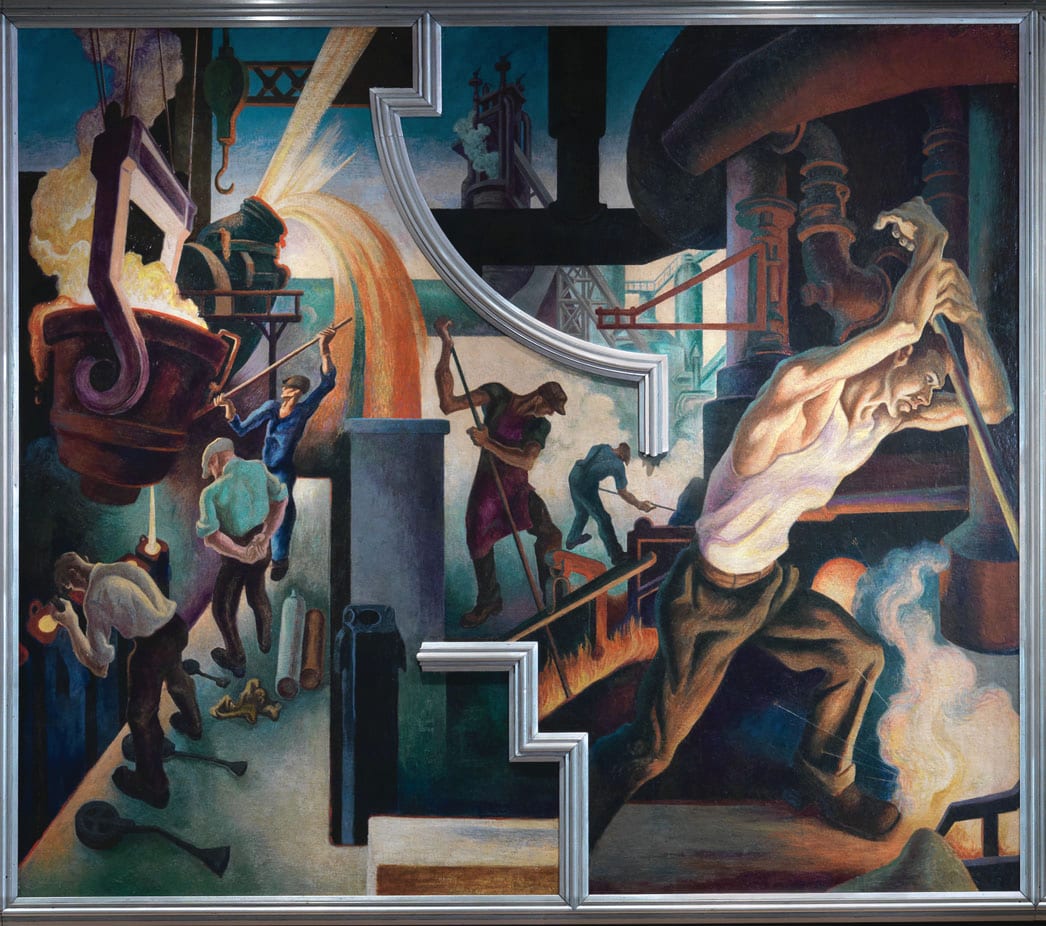
Early 20th Century · Americas
Steel (America Today)
Thomas Hart Benton, 1930
Muscular workers tend furnaces and machinery in a steel mill, one panel of Benton's America Today mural cycle.
Thomas Hart Benton, Steel (America Today), 1930. The Metropolitan Museum of Art. In copyright via Art Deco Society of California.
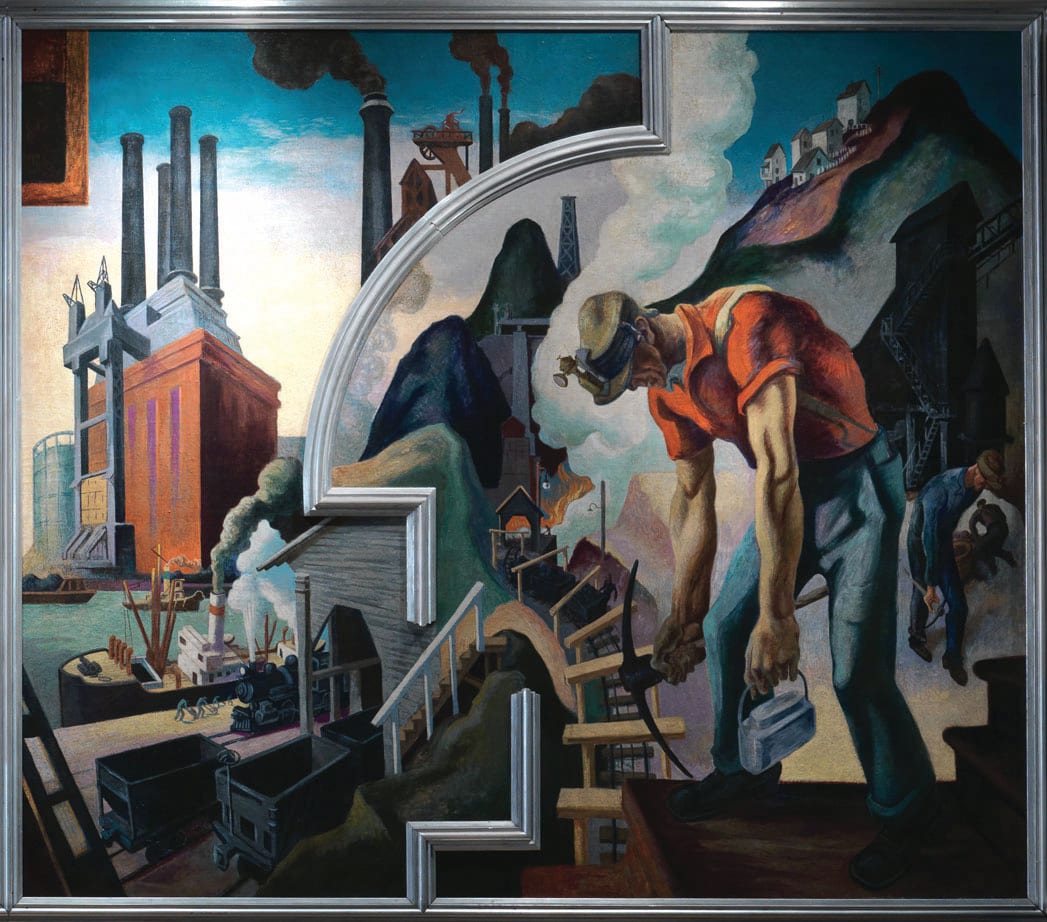
Early 20th Century · Americas
Coal (America Today)
Thomas Hart Benton, 1930
Miners and laborers work at a coal operation, one panel of Benton's America Today mural cycle.
Thomas Hart Benton, Coal (America Today), 1930. The Metropolitan Museum of Art. In copyright via Art Deco Society of California.
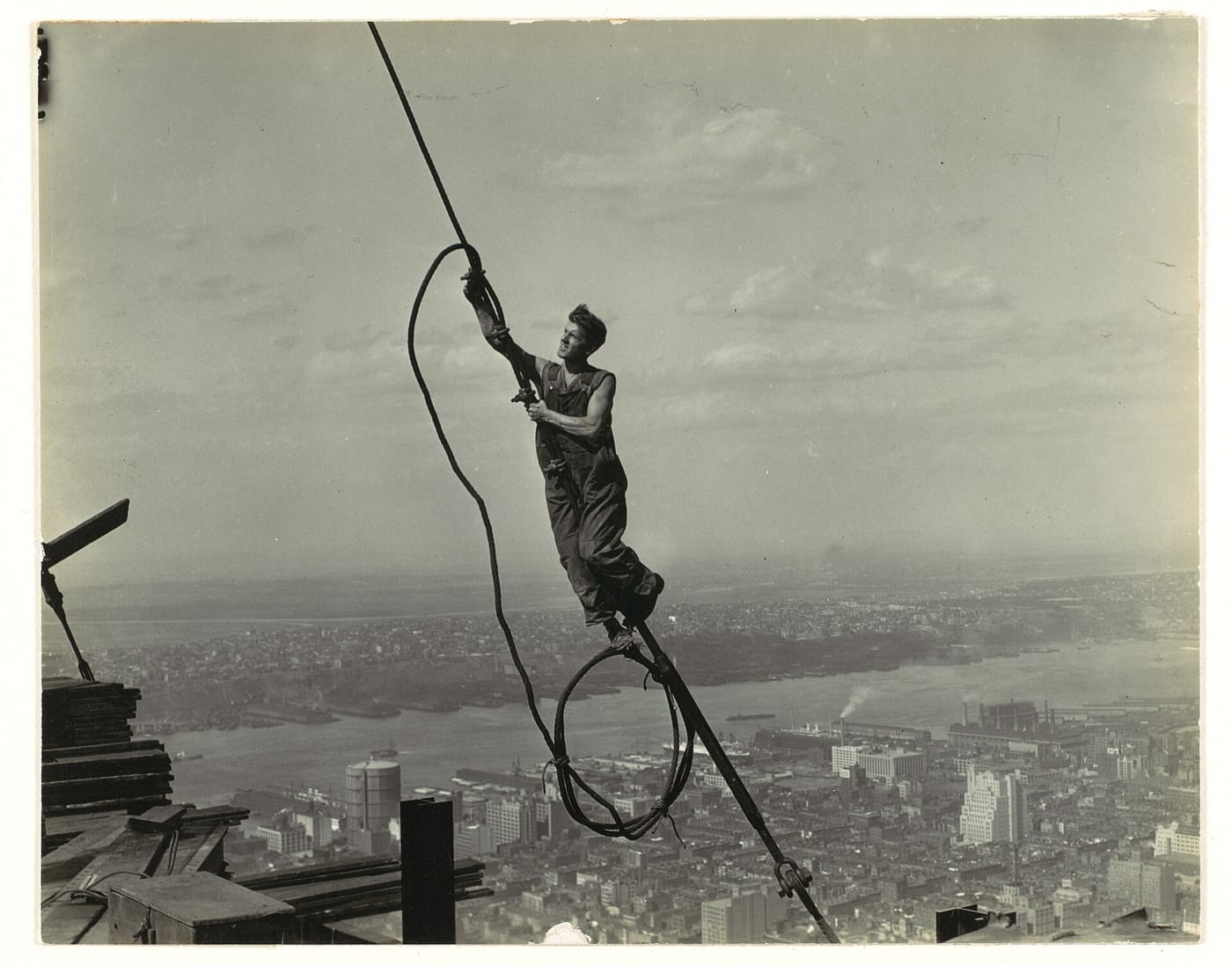
Early 20th Century · Americas
Icarus, Empire State Building
Lewis Hine, 1930
From Hine's Men at Work series documenting the construction of the Empire State Building.
Lewis Hine, Icarus, Empire State Building, 1930. Metropolitan Museum of Art. Public domain via Wikimedia Commons.
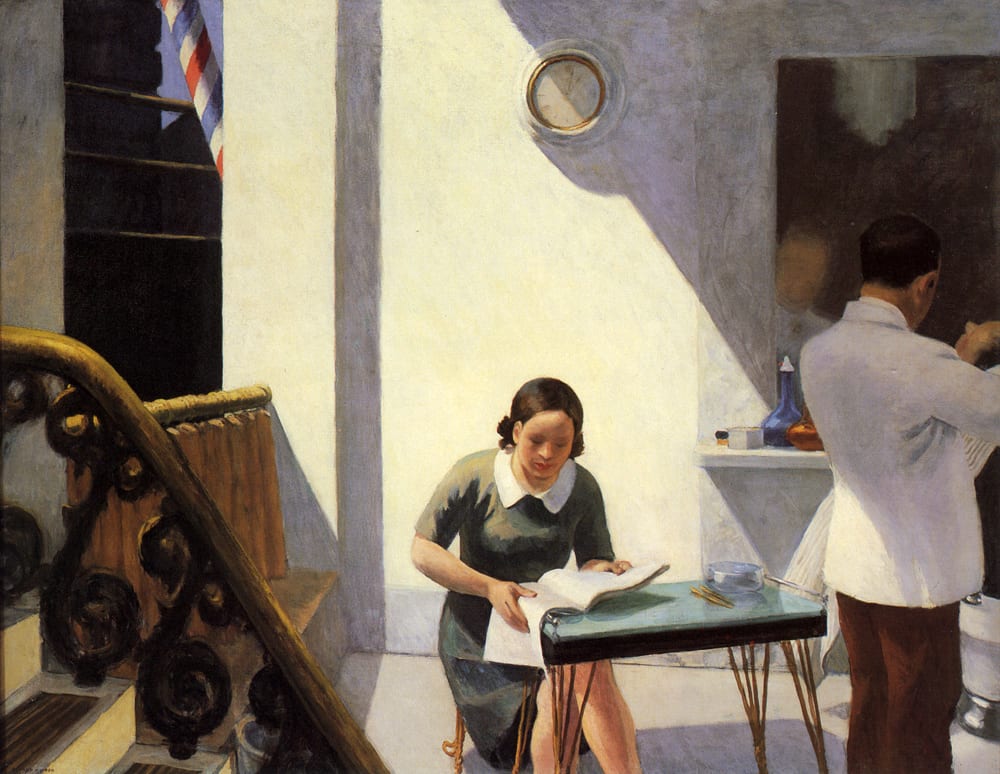
Early 20th Century · Americas
Barber Shop
Edward Hopper, 1931
A sunlit barber shop interior with a manicurist in the foreground and a barber tending a customer.
Edward Hopper, Barber Shop, 1931. Neuberger Museum of Art, Purchase College, SUNY. In copyright via Wikimedia Commons.
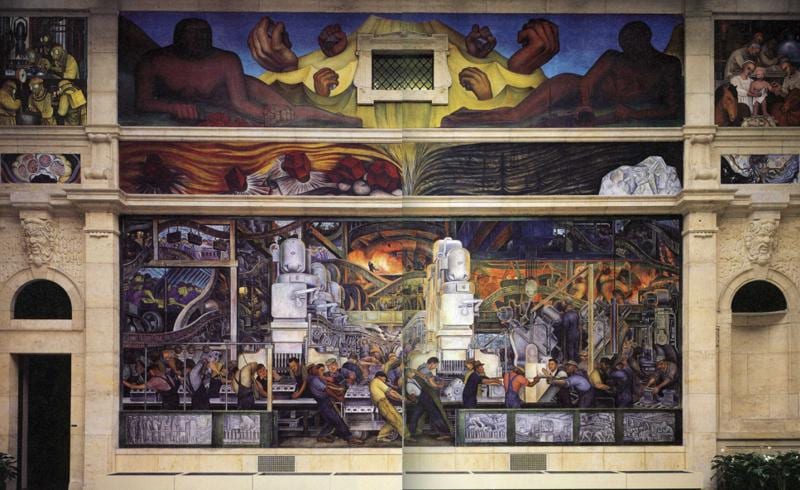
Early 20th Century · Americas
Detroit Industry Murals
Diego Rivera, 1932-33
Twenty-seven fresco panels wrapping a courtyard in the assembly line, the Ford plant painted as a modern creation myth.
Diego Rivera, Detroit Industry Murals (North Wall), 1932-33. Detroit Institute of Arts. In copyright.
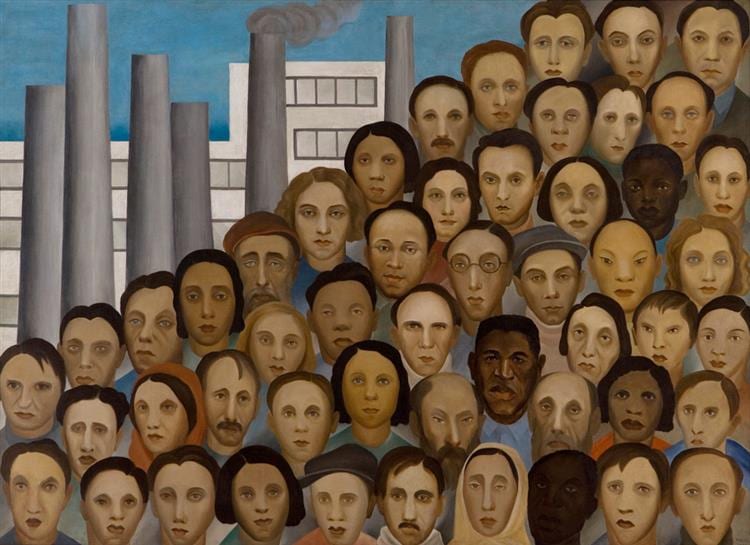
Early 20th Century · Americas
Operários (Workers)
Tarsila do Amaral, 1933
A densely stacked crowd of factory workers of different races fills the canvas above a São Paulo industrial skyline.
Tarsila do Amaral, Operários (Workers), 1933. Acervo Artístico-Cultural dos Palácios do Governo do Estado de São Paulo. In copyright via WikiArt.
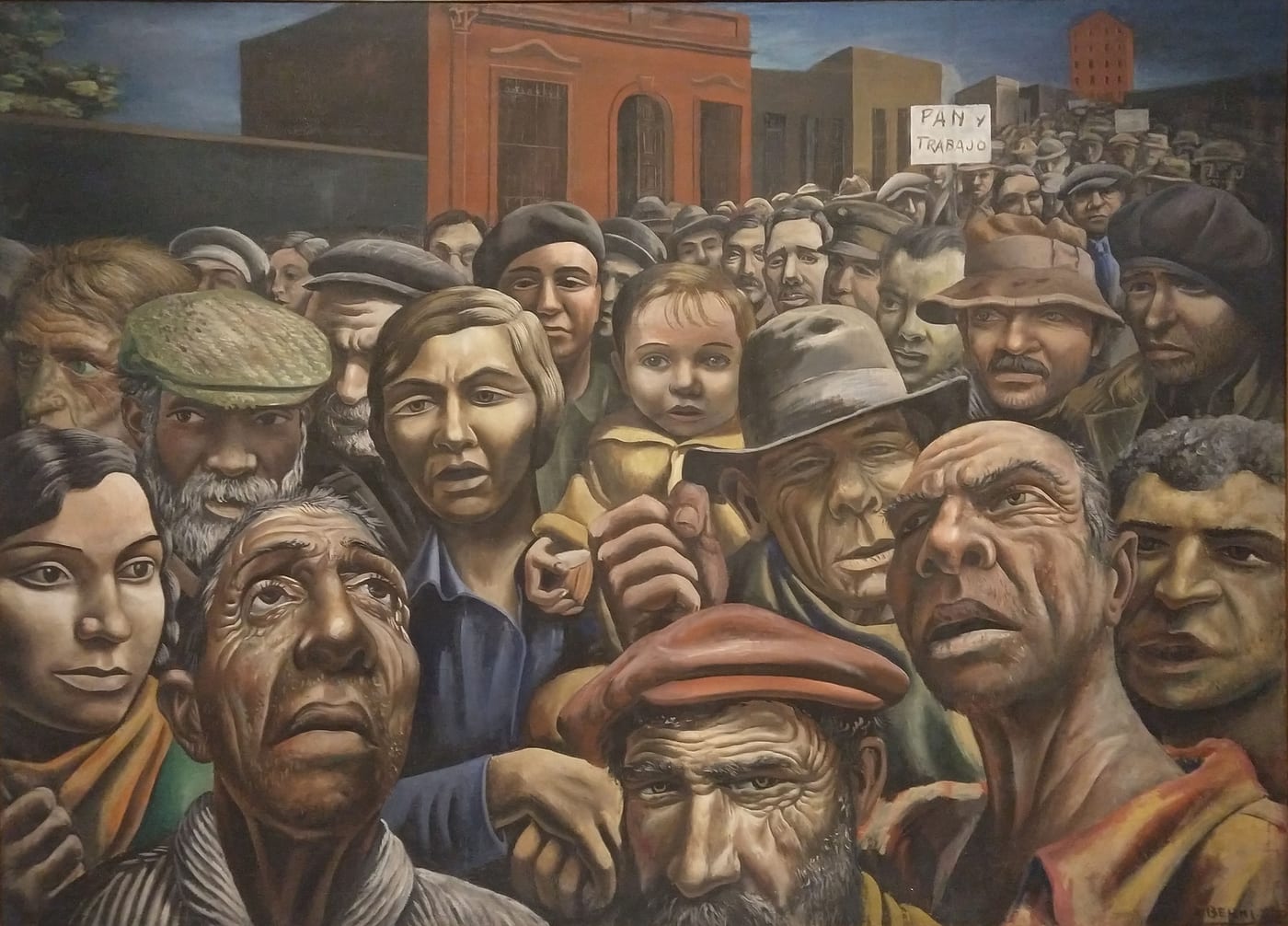
Early 20th Century · Americas
Manifestacion (Public Demonstration)
Antonio Berni, 1934
A crowd of workers presses forward beneath a banner demanding bread and work.
Antonio Berni, Manifestacion (Public Demonstration), 1934. MALBA, Buenos Aires. In copyright via Wikimedia Commons.
Early 20th Century · Americas
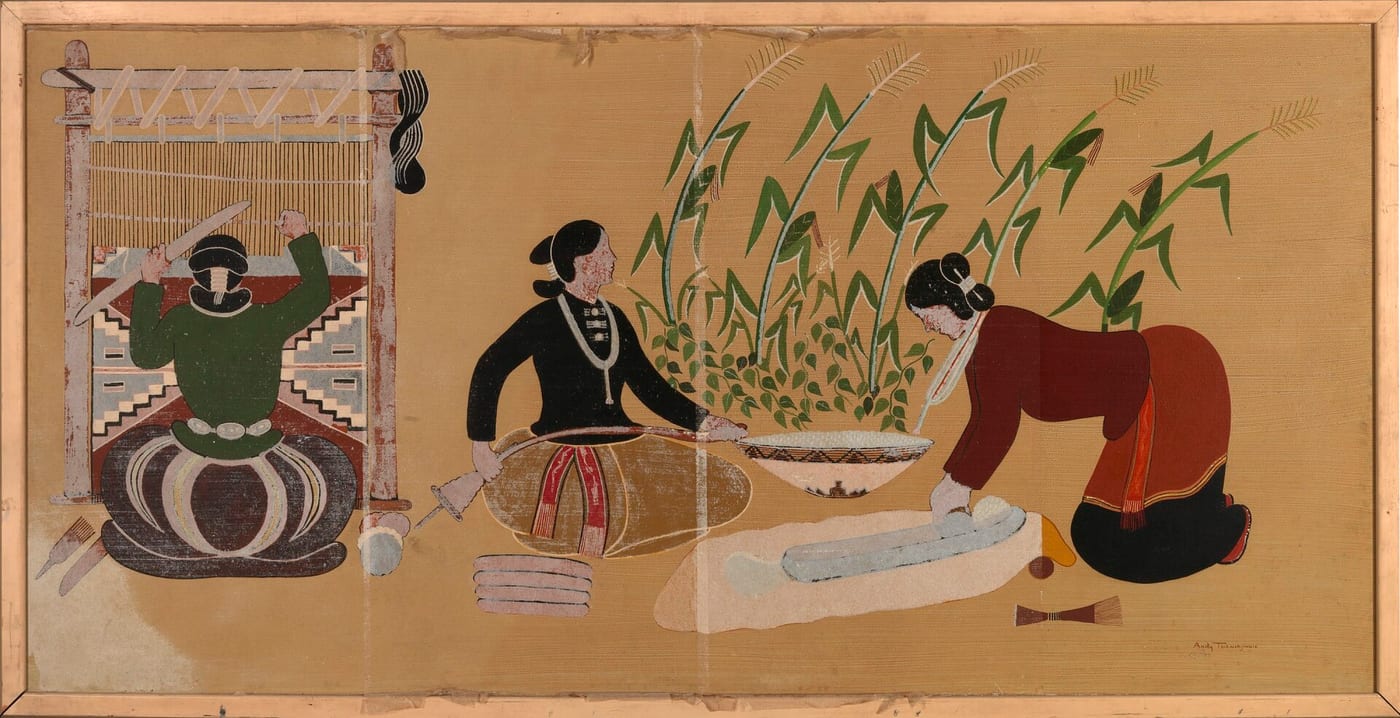
Navajo Women
Andy Tsinajinnie, 1934
The painting by the Navajo artist shows women at work weaving on an upright loom and grinding corn.
Andy Tsinajinnie (Tsihnahjinnie), Navajo Women, 1934. Smithsonian American Art Museum. Public domain via Wikimedia Commons.
Early 20th Century · Americas
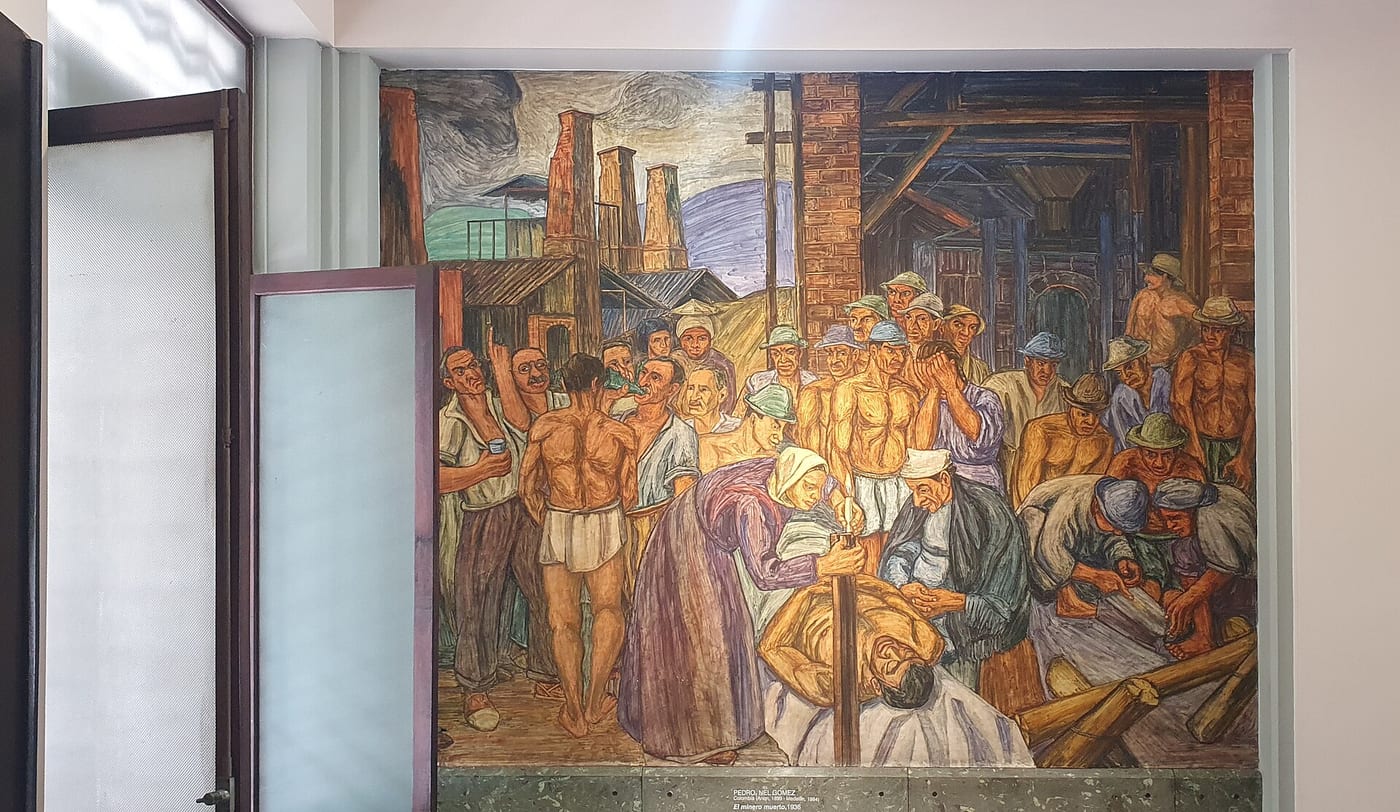
El Minero Muerto (The Dead Miner)
Pedro Nel Gomez, 1936
A fresco by the Colombian muralist depicting miners and the hazards of extractive labor in Antioquia.
Pedro Nel Gomez, El Minero Muerto, 1936. Museo de Antioquia, Medellin. In copyright via Wikimedia Commons.
Early 20th Century · Americas
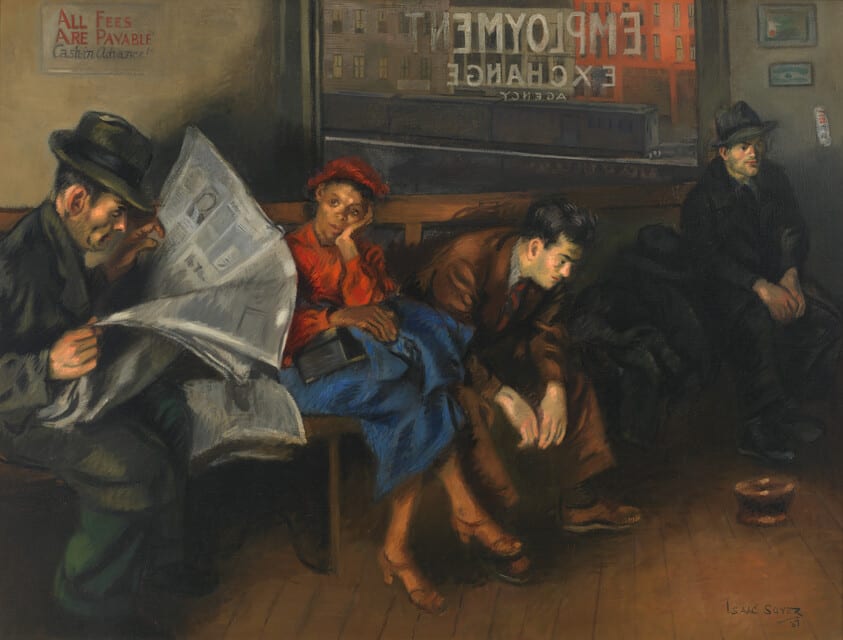
Employment Agency
Isaac Soyer, 1937
Men and women waiting on hard chairs for work that may not come, the job hunt itself painted as a room.
Isaac Soyer, Employment Agency, 1937. Whitney Museum of American Art, New York. In copyright.
Early 20th Century · India
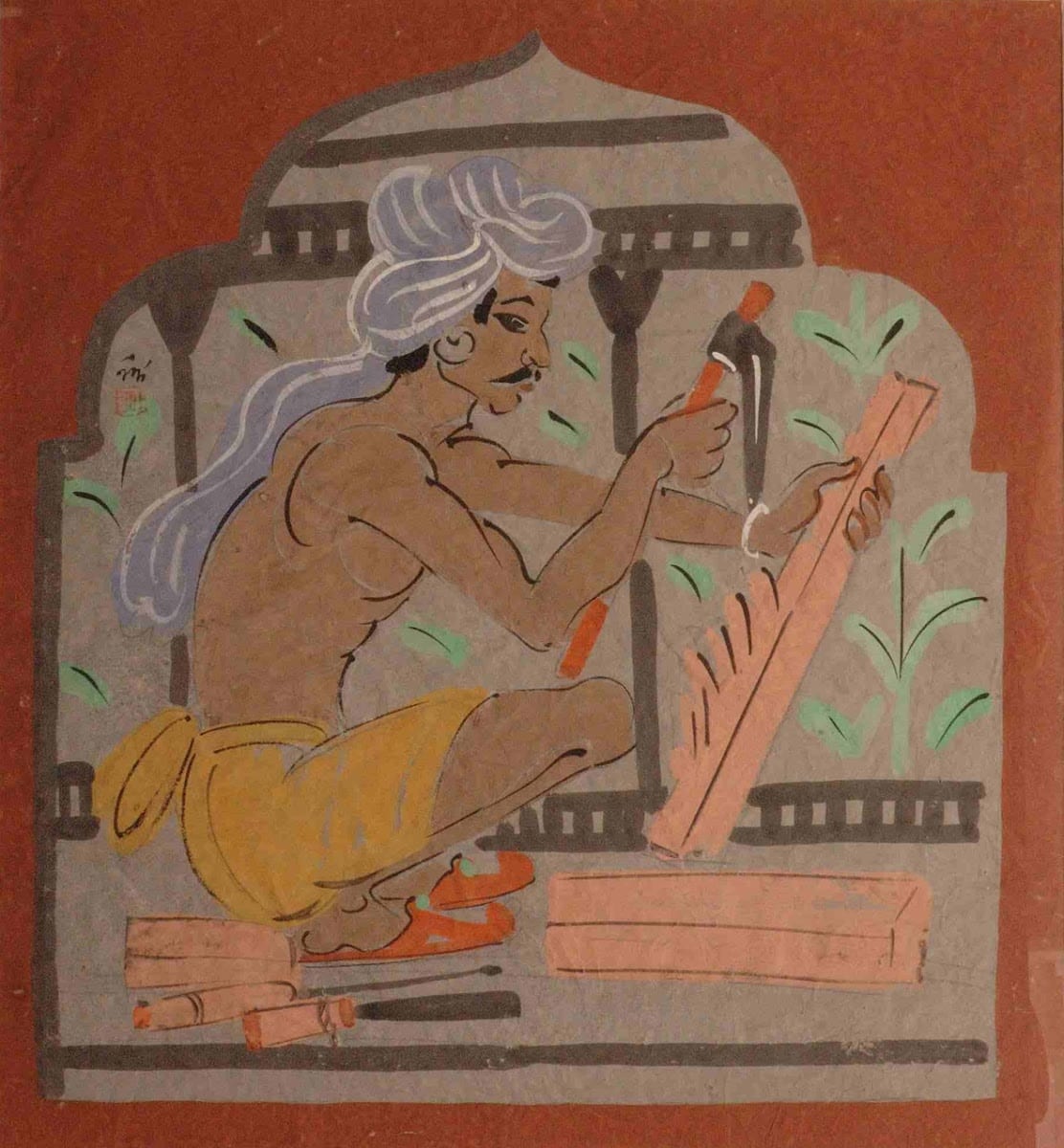
Haripura Poster: The Carpenter
Nandalal Bose, 1938
A village carpenter works at his craft, painted in natural pigments for the 1938 Haripura Congress panels.
Nandalal Bose, Haripura Poster: The Carpenter, 1938. National Gallery of Modern Art, New Delhi. In copyright via Google Arts & Culture.
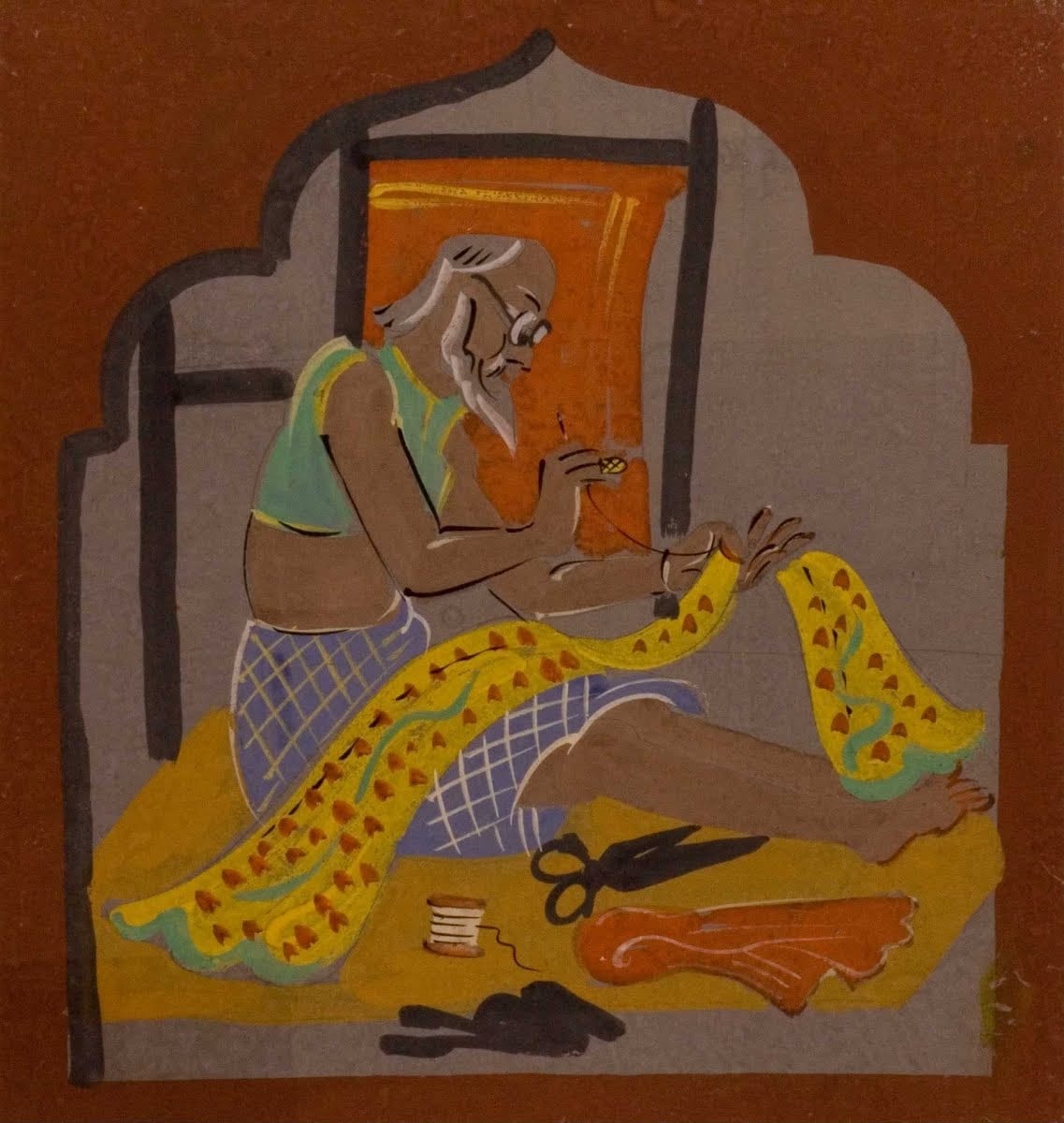
Early 20th Century · India
Haripura Poster: The Tailor
Nandalal Bose, 1938
A seated tailor at work, one of the Haripura Congress panels painted in natural pigments in 1938.
Nandalal Bose, Haripura Poster: The Tailor, 1938. National Gallery of Modern Art, New Delhi. In copyright via Google Arts & Culture.
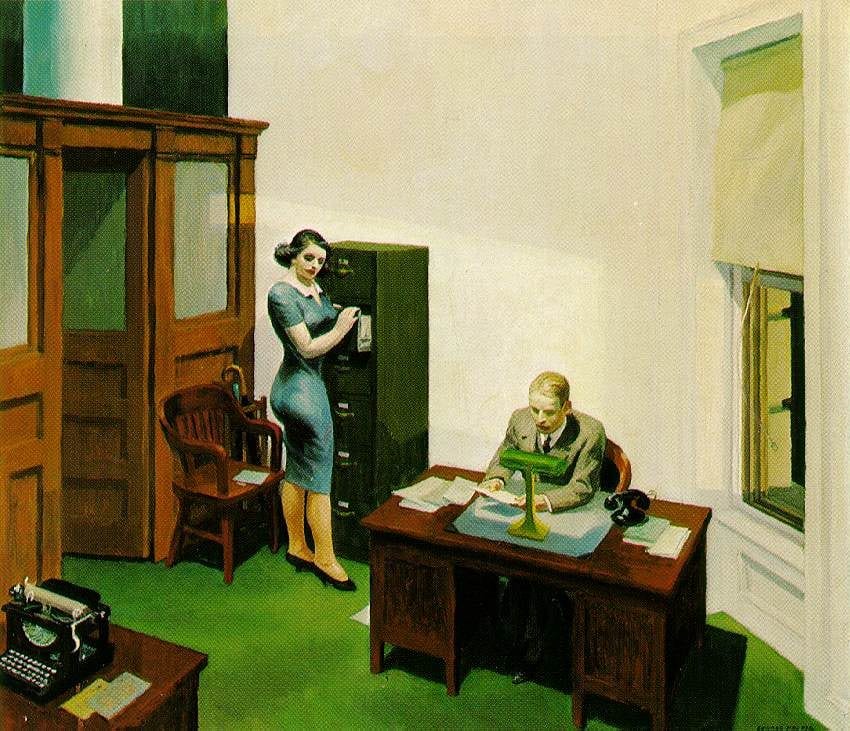
Early 20th Century · Americas
Office at Night
Edward Hopper, 1940
A secretary and her boss alone in a lit office after hours, the loneliness and tension of white-collar work made a subject.
Edward Hopper, Office at Night, 1940. Walker Art Center, Minneapolis. In copyright.
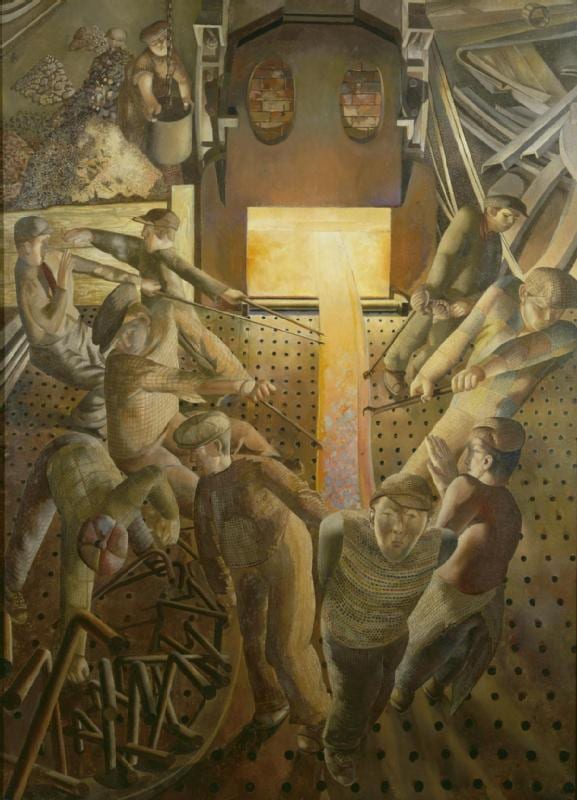
Early 20th Century · Europe
Shipbuilding on the Clyde
Stanley Spencer, 1940-46
Wartime shipyards painted panel by panel, welders and riveters shown with the crowded intimacy of a religious scene.
Stanley Spencer, Shipbuilding on the Clyde: The Furnaces, 1940-46. Imperial War Museum, London. In copyright.
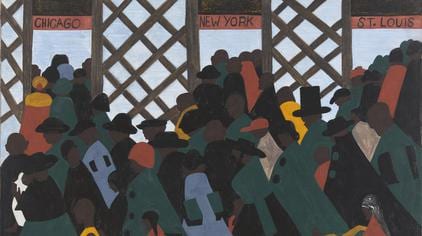
Early 20th Century · Americas
The Migration Series
Jacob Lawrence, 1941
Sixty small panels following Black workers north to the factories, the Great Migration told as a story of labor in motion.
Jacob Lawrence, The Migration Series (Panel 1), 1941. Museum of Modern Art / The Phillips Collection. In copyright.
Early 20th Century · Europe
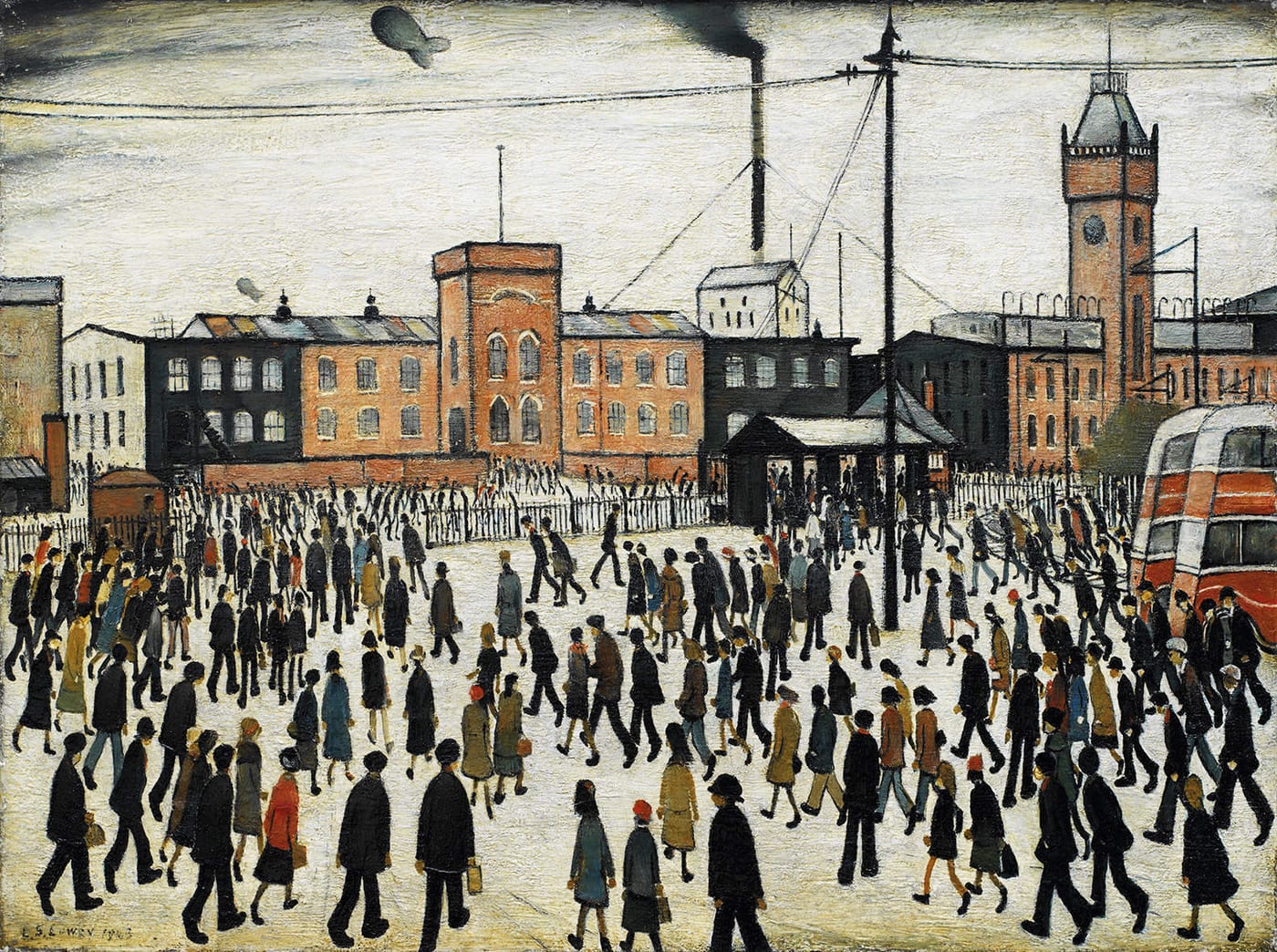
Going to Work
L. S. Lowry, 1943
Commissioned as war art, Lowry's crowd of matchstick figures streams toward the mill gates through a smoky industrial townscape.
L. S. Lowry, Going to Work, 1943. Imperial War Museum, London. In copyright via Wikimedia Commons.
Early 20th Century · Europe
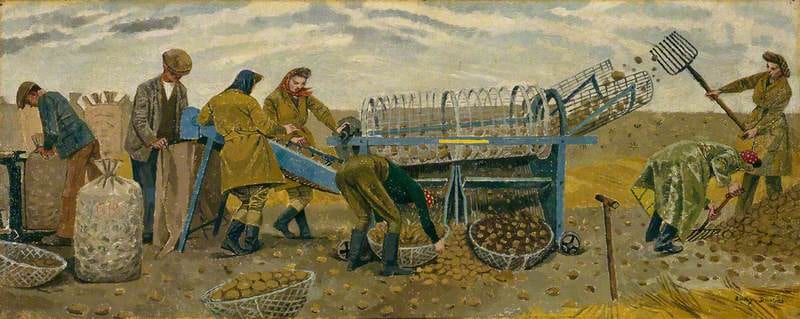
Potato Sorting, Berwick
Evelyn Dunbar, 1943
Members of the Women's Land Army sort potatoes at a farm near Berwick during the Second World War.
Evelyn Dunbar, Potato Sorting, Berwick, 1943. Manchester Art Gallery. In copyright via Art UK.
VII. Contemporary
6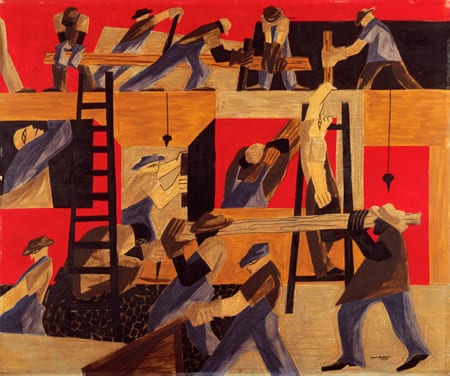
Contemporary · Americas
The Builders
Jacob Lawrence, 1947
Construction workers and carpenters labor amid tools, lumber, and an interlocking lattice of beams.
Jacob Lawrence, The Builders, 1947. The White House. In copyright via WikiArt.
Contemporary · Europe
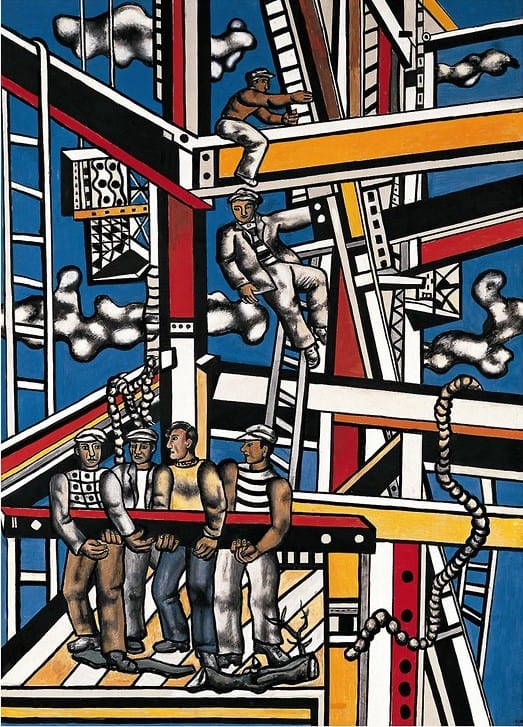
The Builders (Les Constructeurs)
Fernand Leger, 1950
Ironworkers among girders and cables, the human figure and the steel given equal weight, labor as modern architecture.
Fernand Leger, Les Constructeurs (etat definitif), 1950. Musee national Fernand Leger, Biot. In copyright.
Contemporary · Americas
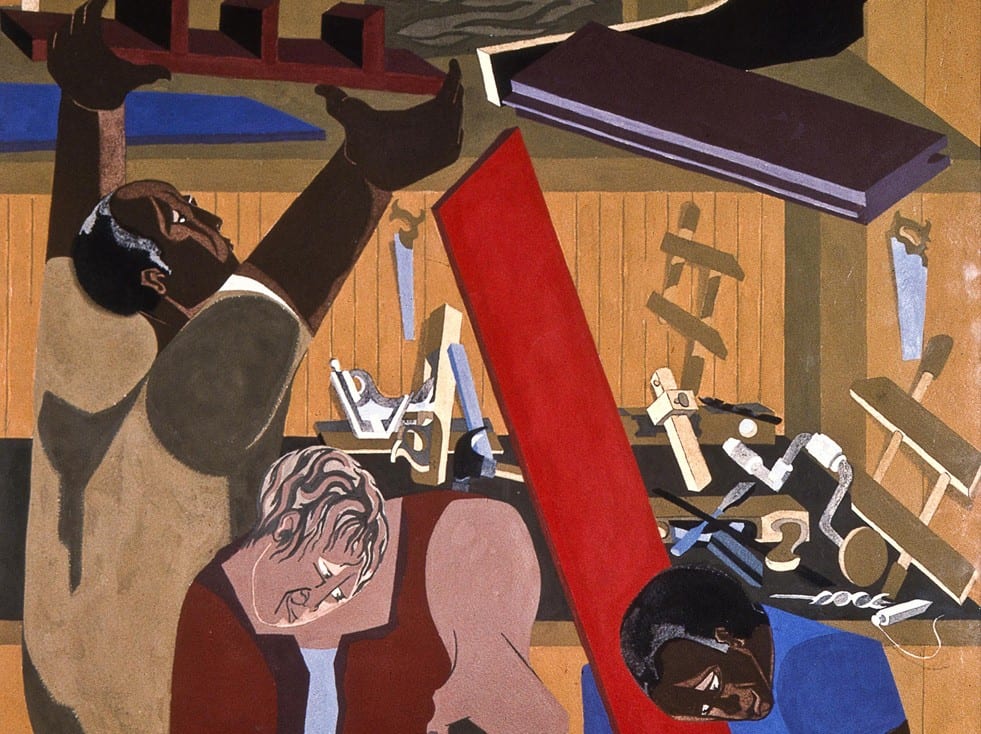
Builders No. 1
Jacob Lawrence, 1972
A carpenter works among tools and lumber in Lawrence's Builders series; the available image is a detail.
Jacob Lawrence, Builders No. 1, 1972. Vatican Museums, Collection of Modern and Contemporary Art. In copyright via Vatican Museums.
Contemporary · Americas
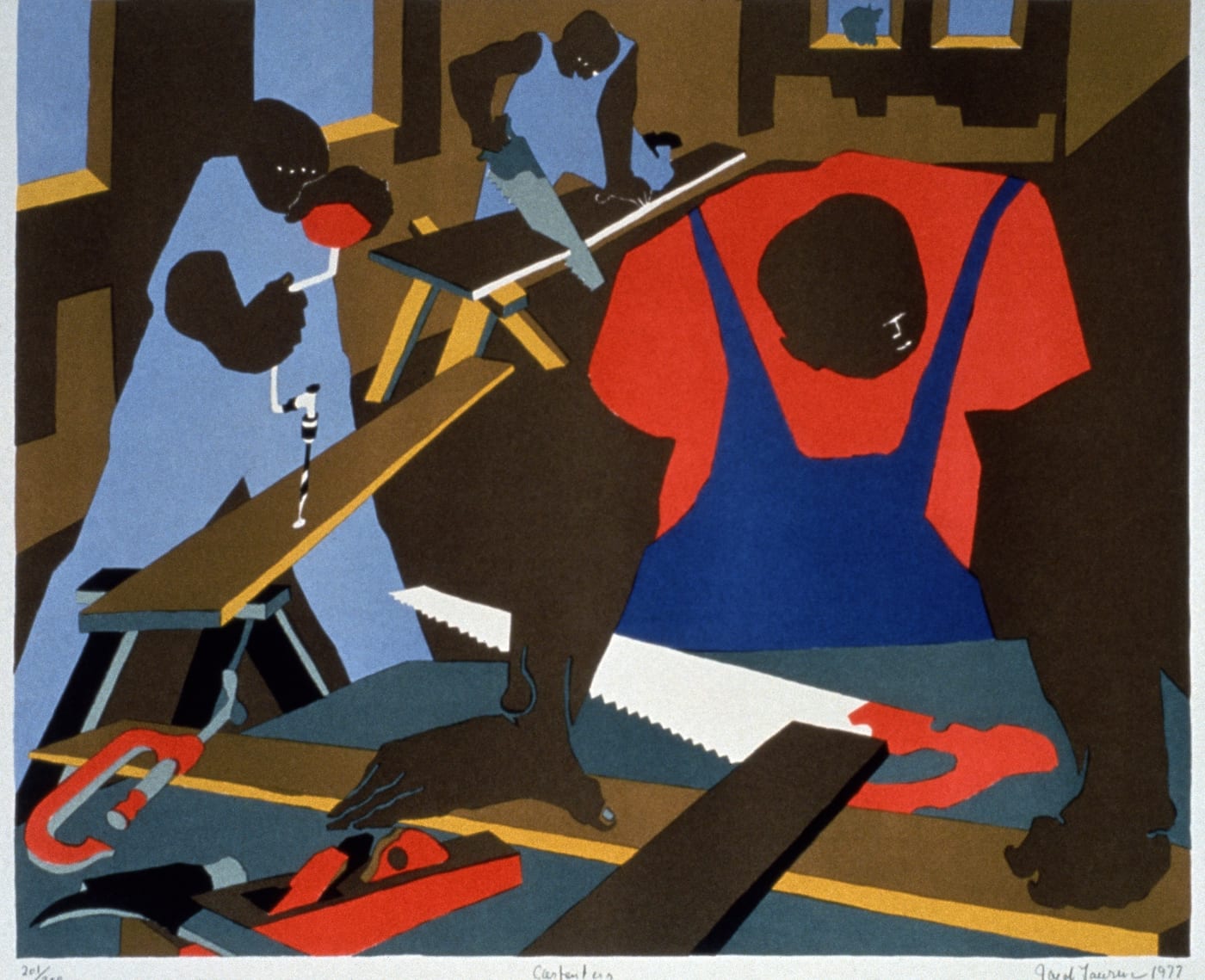
Carpenters
Jacob Lawrence, 1977
Carpenters handle tools and timber in a print from Lawrence's building and construction theme.
Jacob Lawrence, Carpenters, 1977. Washington State Art Collection (ArtsWA). In copyright via ArtsWA.
Contemporary · Europe
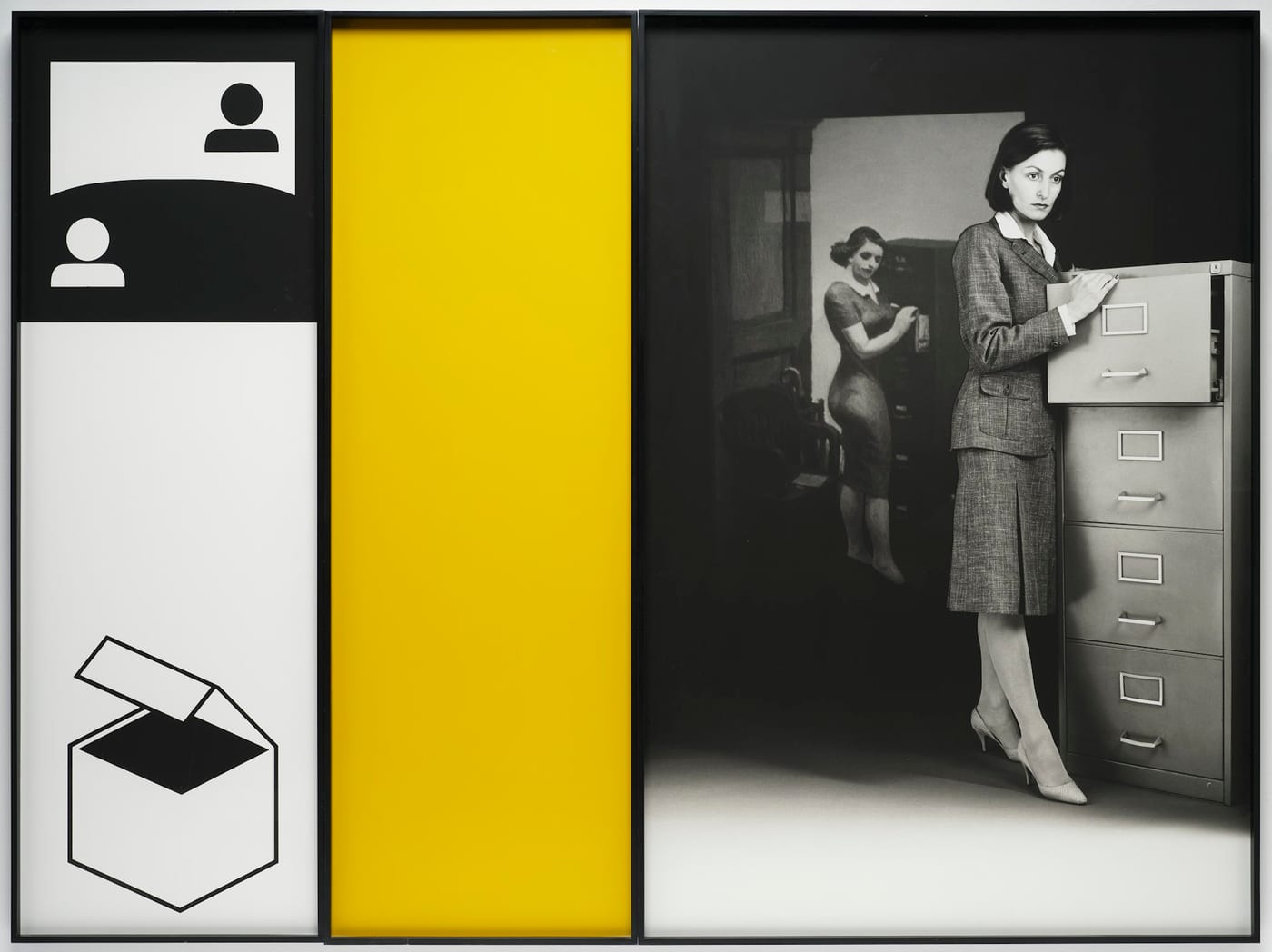
Office at Night #1
Victor Burgin, 1986
A photo-text conceptual work restaging the office scene of Edward Hopper's 1940 painting Office at Night.
Victor Burgin, Office at Night #1, 1986. Walker Art Center, Minneapolis. In copyright via Walker Art Center.
Contemporary · Americas
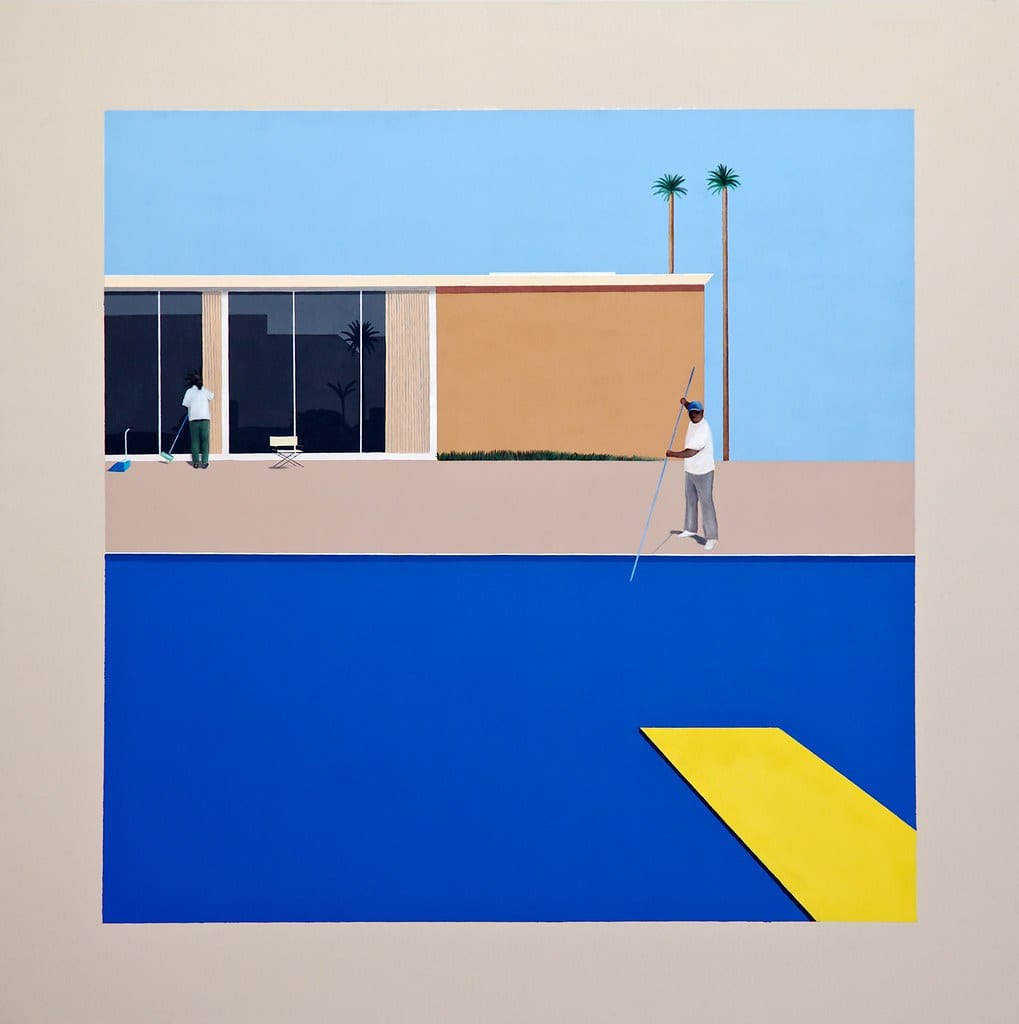
Domestic and garden workers
Ramiro Gomez, 2010s
The nannies, gardeners, and housekeepers painted back into the glossy California homes that usually erase them.
Ramiro Gomez, No Splash (after David Hockney's A Bigger Splash, 1967), 2013. Museum of Contemporary Art San Diego. In copyright.